

Topchubashov Center
Report 1 min read

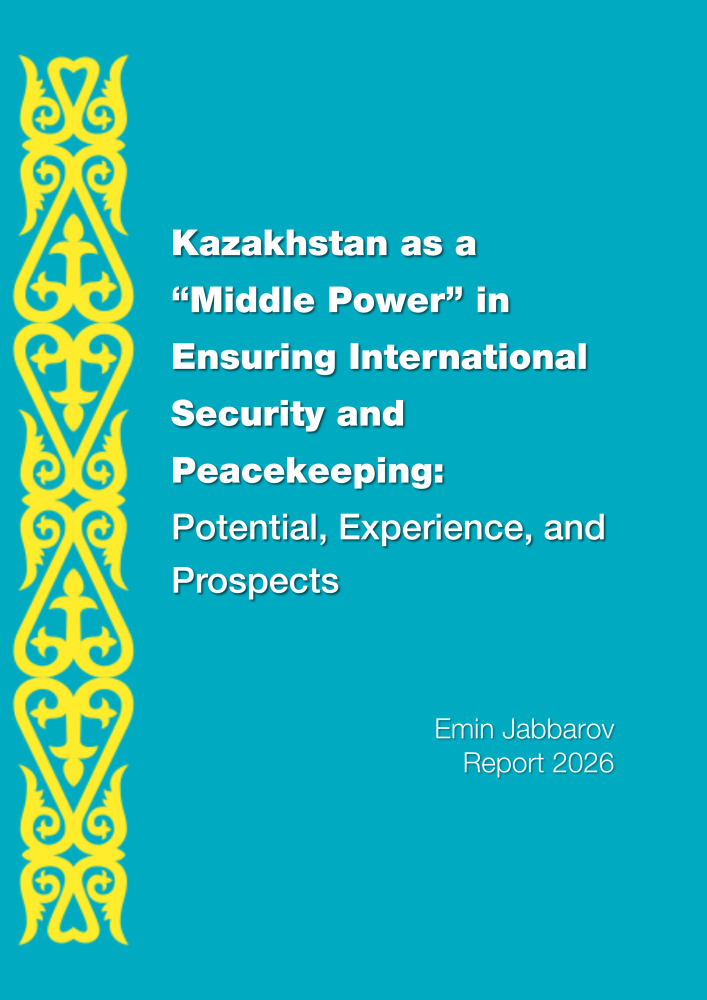
Kazakhstan as a “Middle Power” in Ensuring International Security and Peacekeeping: Potential, Experience, and Prospects

Kazakhstan as a “Middle Power” in Ensuring International Security and Peacekeeping: Potential, Experience, and Prospects
Emin Jabbarov Expert Published

Listen to this article Read by an AI voice

The contemporary international environment is characterized by an unprecedented intensification of competition among global actors and, as a consequence, the erosion of multilateral international institutions (including the UN), which constitute the foundation of the global order. Growing instability creates a strategic vacuum that can be filled by proactive “middle powers,” acting as mediators, bridge-builders, and guarantors of international law (states with “middle power” status are becoming critically important stabilizing elements in world politics).

In this context, the Republic of Kazakhstan, as a “middle power” (it is important to understand that this status entails responsibility), deliberately and systematically uses peacekeeping activities as a primary practical instrument for stabilizing the global situation. At present, Kazakhstan’s policy in this direction represents a “national brand” in the foreign policy domain, aimed at converting its practical contribution into global security. Kazakhstan’s participation in peacekeeping operations is not an isolated direction of foreign policy but is organically embedded in a broader strategy of positioning the country as an influential and responsible actor at both regional and global levels.

The analytical report consistently examines the theoretical foundations underlying “middle power” diplomacy, provides a detailed analysis of the doctrinal, institutional, and material basis of Kazakhstan’s peacekeeping potential, and also evaluates its practical experience. It also presents proposals to expand the country’s role and influence, including the transformation of its peacekeeping potential and the promotion of initiatives for UN reform.

Download the full report.
Related work

Report

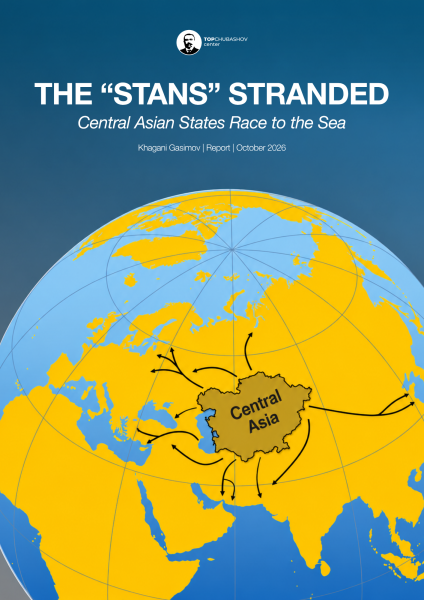
The “STANS” Stranded - Central Asian States Race to the Sea

Central Asia is increasingly caught between wars and economic sanctions in neighbouring countries. These disruptions have constrained established trade routes, forcing the region to improvise and rely more heavily on alternative corridors. Yet many alternative...

Khagani Gasimov, 23 October 2026

Report

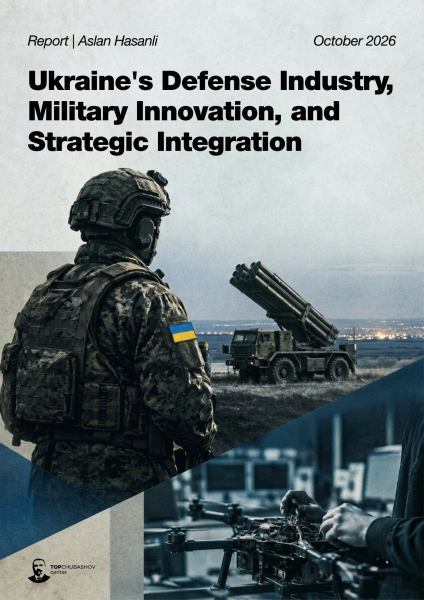
Ukraine's Defense Industry, Military Innovation, and Strategic Integration

One of the defining characteristics of Ukraine's defense-industrial transformation has been the restructuring of military procurement mechanisms. Conventional defense procurement systems are generally designed for peacetime environments, emphasizing lengthy pl...

Aslan Hasanli, 13 October 2026

Report

Abkhazia as Russia Security Multiplier on the Black Sea

Among all the post-Soviet de facto entities arising from the USSR's secessionist conflicts, Abkhazia stands out as one of the most developed and multidimensional cases of patron-client relationships and dependency. Since unilaterally declaring independence fro...

Alberto Carrer, 30 June 2026

Report

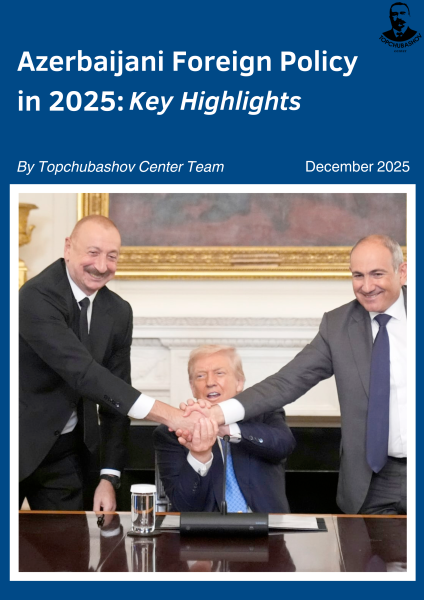
Azerbaijani Foreign Policy in 2025: Key Highlights

The year 2025 marked a period of adjustment and consolidation in Azerbaijan’s foreign policy. From its immediate vicinity to neighboring regions, Baku approached its external environment not as a challenge to be reacted to, but as an emerging architecture to b...

Rusif Huseynov, Murad Muradov, Simona Scotti, Mahammad Mammadov, Gulkhanim Mammadova, 24 December 2025

Report

The EU's response to China's growing influence in Central and Eastern Europe

The 16+1 Initiative, introduced by the People’s Republic of China in 2012, represents a strategic framework aimed at deepening economic and diplomatic engagement with sixteen Central and Eastern European (CEE) states. As a complementary mechanism to China’s Be...

Nifti Naghiyev, 26 July 2025