

Sovereignty without a monopoly: Iraq after the Americans
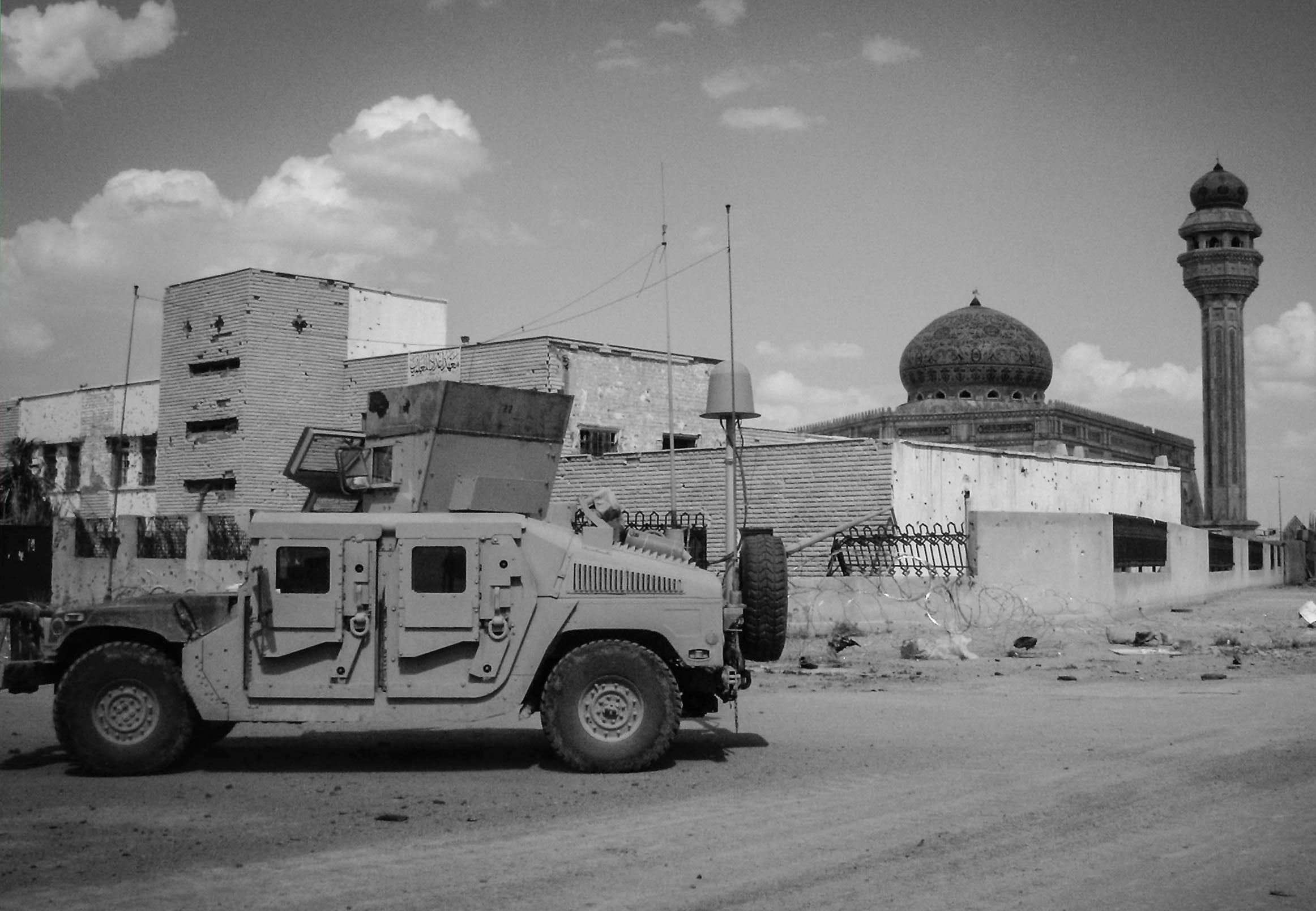
Picture Source: Pixabay/mikecook1
The last American soldiers left Iraq on 30 September 2026, but the question their departure was supposed to settle, who decides when Iraqi guns are fired, has been postponed to June 2027. The bargain struck so far moves the weapons without moving the authority over them.
Who holds the guns
Any honest account of Iraqi sovereignty has to begin with a map of the people who can fire weapons without the prime minister's order. That map is not a single hierarchy. It is four overlapping layers, and most of the confusion in Western coverage comes from the fact that the same organisation sits in several of them at once.
The first layer is political. The Coordination Framework is the Shia alliance that forms governments; it chose Ali al-Zaidi in April as a compromise after Washington vetoed Nouri al-Maliki. The second is institutional: the Popular Mobilization Forces (PMF, or Hashd al-Shaabi), a state body of some 70 armed groups that draws state salaries and is legally part of the armed forces. The third is operational: the Islamic Resistance in Iraq, which is not an organisation at all but a banner, born in October 2023, under which a core of PMF factions claim attacks on American, Israeli and Gulf targets. The fourth is clerical: Najaf's Grand Ayatollah Ali al-Sistani, whose 2014 fatwa created the PMF, and Muqtada al-Sadr, who has spent years attacking Iran's clients
|
|
|
|
|
|
|
|
|
|
|
|
|
|
|
|
|
|
|
|
|
|
|
|
|
|
|
|
|
|
|
|
|
|
|
|
|
|
|
|
|
|
|
|
|
|
|
|
|
|
|
|
|
|
|
|
|
|
|
|
|
|
|
|
|
|
*CF — Coordination Framework, PMF — Popular Mobilization Forces, IRI — Islamic Resistance in Iraq, IRGC — Islamic Revolutionary Guard Corps.
Seats are from the November 2025 election. Inside the PMF, the division of labour matters more than the org chart: chairman Falih al-Fayyadh runs administration and money, while operations and weapons sit with chief of staff Abu Fadak al-Muhammadawi, a Kataib Hezbollah commander who, according to a former adviser quoted by MBN, coordinates most faction movements directly with their leaders, even against the government's line.
Read this way, the map yields three camps, not two. A defecting camp (Sadr, Asaib Ahl al-Haq, Kataib Imam Ali) has accepted some version of state control. A hard core (Kataib Hezbollah, Nujaba, Kataib Sayyid al-Shuhada) has not, and its power is military, not electoral. Between them sits a brokering camp, Maliki and Amiri above all, that is inside the system and negotiates on the hard core's behalf. Iraq's sovereignty problem lives in the space between the second and third camps: the men who hold the guns have no seats, and the men with seats speak for the guns.
American withdrawal
The departure completed on 30 September 2026 was decided long before this government. Its political origin is January 2020. On 3 January a US drone strike at Baghdad airport killed Qasem Soleimani, commander of Iran's Quds Force, and Abu Mahdi al-Muhandis, the PMF's deputy chairman and the founder of Kataib Hezbollah. Two days later parliament passed a resolution demanding an end to the foreign military presence and a ban on foreign use of Iraqi land, water and airspace.
That session was attended by roughly 170 of 329 MPs, according to Rudaw, and passed by a show of hands. Its backing came almost entirely from Shia blocs: Fatah, the Badr-led alliance that carried the militia parties including Sadiqoun; Sadr's Sairoon; Maliki's State of Law; and Hakim's Hikma. The Kurds boycotted, as did most Sunni MPs, who warned that a withdrawal would open the door to the Islamic State and hand ground to the armed factions. Few noticed a second clause in the same resolution: it also required exclusive state control of weapons. Six years on, the first clause has been executed and the second has been rescheduled.
The timetable itself came from a September 2024 joint statement: the coalition's military mission in federal Iraq would end by September 2025, with support for operations in Syria continuing from Iraqi soil until September 2026. It closed a cycle that had already turned twice. The 2008 agreement led to a partial exit in 2011; the collapse of 2014 brought the Americans back under a counter-terrorism mandate, with their centre of gravity around Erbil rather than Mosul, the Islamic State's Iraqi capital. After 2017, US forces stepped back from the front line altogether.
Washington's conditions for leaving were never only military. In talks with Sudani, then Zaidi, and in Zaidi's channel with envoy Tom Barrack, the US tied its exit to bringing non-state armed groups under the army's roof, to Baghdad's legal processes, and to bureaucratic fixes letting American oil and electricity companies enter Iraq without legal obstacles. It is also important to not that not every PMF unit answers to Tehran. Shia Turkmen and Sunni tribal units sit inside the same umbrella.
What left with US troops
Baghdad staged the exit as a victory. Posters went up, and the government declared a holiday of four "Sovereignty Days" from 30 September 2026. Zaidi called 1 October the day of full sovereignty and promised to buy complete air defence systems, according to The National. Behind the ceremony sit four gaps.
The first is air defence. Iraq's air defence and much of its intelligence picture were in practice run by the United States. Within 72 hours the US moved eight Patriot batteries to Jordan and Britain shipped its Rapid Sentry system to Cyprus, Rudaw reported; US systems had intercepted roughly three quarters of projectiles fired at the Kurdistan Region. Baghdad has signed for systems from South Korea, Turkey and the United States, but none have been delivered.
The second is a national army that was never fully built, and the question nobody can yet answer about the chain of command once factions fold into it. The third is the Islamic State, which still runs cell-type networks inside Iraq; in February 2026 the US completed the transfer of more than 5,700 suspected ISIS detainees from Syria into Iraqi custody. The fourth is political: a security vacuum is exactly the condition in which sectarianism returns.
Roughly 2,500 American troops were left, and most were redeployed to the region, Jordan above all, not sent home. Intelligence sharing, advising and training continue under the bilateral security relationship the 2024 statement envisaged. Reading the exit as an American retreat from the Middle East is a mistake; Tehran nonetheless reads it as exactly that (or pretend to do that), a strategic victory, and its Iraqi allies behave accordingly.
On 11 September 2026, drones launched from Iraq hit Saudi Arabia's East-West pipeline, the kingdom's route to the Red Sea that bypasses Hormuz. Baghdad confirmed the launch point and dismissed the commander responsible for Maysan province, AGSI's Yerevan Saeed notes. No group claimed it, but the likeliest authors are Iran-backed Shia factions; Riyadh held off retaliating at Baghdad's request while reserving the right to respond.
That restraint has a history. On 29 July 2026, after more than 30 drone attacks in 72 hours on US positions and Saudi oil sites, American and Saudi jets struck faction sites in eastern Iraq in their first joint operation; the PMF said at least 20 members died. A Houthi operative was among the dead, the Middle East Forum reports, and Iraqi intelligence sources told MBN that Houthis now work out of sites shared with Iraqi factions, some near the Saudi border. Iraqi territory has become a launch pad in a regional war Baghdad did not choose.
Iraq also cannot afford a fight with the PMF. The IMF projects a 6.8% contraction in 2026, and the closure of Hormuz cut federal revenue by more than 40%. Every attack from Iraqi soil risks reprisals against the infrastructure that pays salaries, and high oil prices mean little if the crude cannot reach market.
The bargain between government and PMF
Zaidi took office in May promising to end what he called the law of the jungle, and for a while the momentum looked real. On 27 May 2026, Sadr detached Saraya al-Salam from his movement and placed it under the commander-in-chief. Within a week Asaib Ahl al-Haq and Kataib Imam Ali announced they would leave the PMF and put their weapons under state control. The government set 30 September 2026, the same day the coalition would leave, as the deadline for everyone else. After that date, government statements warned, any armed activity outside state authority would be treated under the counter-terrorism law.
More than 200,000 armed men sit inside the PMF, and their commanders are woven into commercial networks and into the state's decision-making itself. The US Treasury has documented how the Muhandis General Company diverted funds from state contracts to Kataib Hezbollah. Disarmament threatens contracts, appointments and patronage, not only rockets. And the factions' best public argument is a question the state cannot yet answer: if we lay down our arms, who protects the country?
Qaani's night in Baghdad
The turning point came on the night of 10 August, 2026. Quds Force commander Esmail Qaani arrived unannounced. According to Coordination Framework sources who spoke to MBN, one piece of intelligence brought him. The factions had learned that Zaidi had placed Counter-Terrorism Service units on standby to enter Jurf al-Sakhar, and faction leaders leaked it to Tehran.
Jurf al-Sakhar, renamed Jurf al-Nasr, is the place where the whole argument becomes physical. It is a closed zone in Babil, 60 km southwest of Baghdad, whose mostly Sunni residents have not been allowed home for nearly twelve years. Even government and military officials cannot enter. It is reported to hold faction headquarters, depots and drone workshops, and in 2018 Reuters named it as a site for Iranian-assisted missile work. In the same days, the CTS and intelligence service broke up a network in Babil that was preparing drone attacks.
Qaani's message had two halves. To the factions he said, per a source who spoke to Al Jazeera, no handover of weapons "at the present time", because Tehran expected another round of war. To the Framework he said avoid a clash, but tell Zaidi not to "break" or weaken the factions. Mediators floated a deal in which the factions would keep their arms but stop attacking US interests and the Gulf. Zaidi's office called it unconvincing, and Qaani left without meeting the prime minister, whose aides said he wanted a political relationship with Iran, not a military one. Days later Badr's leadership warned of internal strife if force were used, and set three conditions of its own.
Qalibaf and the retreat
The second Iranian visit was more public and more consequential. Parliament speaker Mohammad Bagher Qalibaf spent three days in Iraq from 19 August 2026, laid a wreath at Muhandis's grave in Najaf, and told Iraqi leaders that the factions should either keep their weapons or deposit them with the PMF "in case of an emergency", rather than give them to the government. Three sources told MBN he called the Iraqi government a creature of Washington; in public he said Iran respects Iraq's constitution.
Baghdad's retreat began while he was still in the country. On 21 August 2026, government spokesman Haider al-Aboudi said 30 September was the date of the American withdrawal, not the deadline for faction weapons, AFP reported. The next day, first deputy speaker Adnan Fayhan, a Sadiqoun man, spoke of storing the weapons in PMF warehouses. On 23 August national security adviser Qasim al-Araji called weapons control a gradual process that would start only after the coalition left. Ammar al-Hakim told the US chargé d'affaires that the arms should go to the PMF because it is an official institution.
The vocabulary shifted with the policy. Iraqi leaders stopped saying "bringing weapons under state control" and began saying "regulating weapons". An Asaib Ahl al-Haq leader, Ahmed Adnan, put the new doctrine precisely: the issue is not handing over weapons but transferring the authority to order their use to the commander-in-chief, while the weapons themselves stay inside PMF formations. Five factions, including Kataib Hezbollah, Kataib Sayyid al-Shuhada and Nujaba, went further and proposed declaring their arms and premises and freezing activity for two years while staying intact as organisations.
Conditions
On 29 August Kataib Sayyid al-Shuhada published ten conditions: a full US exit by land, sea and air; no use of Iraqi airspace to attack other countries; passage of the PMF laws; advanced air defences under Iraqi command; expulsion of PKK fighters and Turkish troops; Iraqi army control of the Kurdistan Region's borders; and removal of Iranian opposition groups. Kataib Hezbollah added the dissolution of the Peshmerga.
This list deserves to be read as a programme, not a stalling tactic. It turns disarmament into a sovereignty package whose every item points at someone other than Iran: the US, Turkey, the Kurds, Iranian dissidents. The factions present themselves as the true guardians of sovereignty and make their own disarmament conditional on everyone else's.
By mid-September the government had folded. Four government sources told MBN of a two-stage deal: from 1 October 2026 the factions stop issuing statements and stop using Iraqi territory for military activity; heavier weapons pass gradually to the state over nine months, with strategic weapons handed over between March and June 2027. Araji said the committee overseeing the process had no fixed deadline. Zaidi formally moved the date to 30 June 2027 just before flying to the UN General Assembly.
The government says an integration agreement exists; the Islamic Resistance says it is bound by no timetable. Hours after the last US aircraft left, Kataib Hezbollah's Hamidawi denied any deal, declared that "the resistance has won this round", and ordered his fighters to stop operations except against "hostile aircraft" in Iraqi airspace until the government's air defences are complete. The group has since claimed US flights and personnel movements will continue until 30 October 2026, without evidence, and Ashab al-Kahf said on 29 September that giving up its weapons would require a written religious ruling. On 5 October Zaidi said five factions had agreed to hand over arms and three had done so; he did not say which.
Why Sadiqoun is in a hurry
The least discussed part of the bargain is the law, and it explains a puzzle: why is Sadiqoun, the political wing of a faction that says it is leaving the PMF, pushing hardest to pass the PMF bills? Its MPs call the law a priority and an "entitlement" for fighters who sacrificed against ISIS, and deny it is designed to restructure the force or retire its commanders. The cabinet approved the draft on 29 September and sent it to parliament, though some provisions still face what Iraqi sources call a US veto.
The answer is sequencing. The service and retirement law gives PMF members the ranks, pensions and status of regular soldiers before any weapon is surrendered. Kataib Sayyid al-Shuhada lists the same law among its conditions, and a political proposal explicitly links weapons transfers to its passage. Statute first, weapons later: the factions are converting their arsenals into permanent legal entitlements while the arsenals still give them leverage.
Weapons move from faction depots into PMF custody now; only strategic arms are promised to the state, in 2027. The orders that matter still run through a chief of staff from Kataib Hezbollah.
Why time is on the factions' side
The deal's architecture becomes clear when we put particles together. Weapons move from faction depots into PMF custody. The PMF's operations and weapons are run by a Kataib Hezbollah commander. The law turns fighters into pensioned state employees before anything strategic changes hands. What Baghdad gains is a registry and a ceasefire; what the hard core keeps is the ability to say no. The distinction that will decide whether this counts as disarmament is the one between ownership, custody and command, and so far only custody is moving.
The delay has value of its own. A politician close to the Coordination Framework told Iraqi media that the extra months give Iran time to reach a favourable settlement with Washington, and the same reporting said Tehran wants stored weapons to stay within the factions' reach. Some Iraqi analysts argue the factions are also waiting for the US midterms in November, which could weaken Trump. Either development could reshape their position long before June 2027. Until then, their arsenals are their main source of leverage, and leverage is worth more unspent.
The levers Washington still holds
The United States left Iraq's bases but not its economy, and that is where the real pressure now sits. Iraq's oil revenue is deposited at the Federal Reserve Bank of New York. In April the Treasury paused a shipment of about $500 million in banknotes and froze parts of security cooperation, to push Baghdad on the militias and on the choice of prime minister. Shipments resumed in July, after Zaidi's first month. The financial screening goes back further: since 2023 more than two dozen Iraqi banks, many tied to the militias, have been barred from dollar transactions.
The airspace fight in late September showed how this pressure meets Iranian counter-pressure in real time. From 23 September 2026 Washington threatened to cut off any company servicing Iranian aircraft from the dollar system, and Iraq's four airports serving Iran stopped receiving Iranian planes in turn. Factions threatened to bring down the government; Ali Akbar Velayati, adviser to Iran's supreme leader, told Zaidi that legitimacy comes "from the soil of Najaf", not Washington. The US Treasury issued a narrow licence for Iraqi Airways pilgrim flights from Najaf, revocable if Iraq fails to keep Iranian aircraft out of its airspace, and Zaidi then secured up to 40 daily Iranian flights to Najaf, Mahan Air excluded. Factions that had threatened the government praised it within days.
The episode is the whole sovereignty problem in miniature. Iraq's airspace policy was set in Washington, contested in Tehran and enforced by companies afraid of the US Treasury; Baghdad's achievement was to broker a carve-out. A state that negotiates exemptions on its own sky is not yet sovereign over it.
Kurdistan: where the vacuum is felt first
If Baghdad experiences the withdrawal as a symbolic victory, Erbil experiences it as a loss of cover. The Kurdistan Region has been hit more than 1,000 times by Iran and its Iraqi allies since the war began on 28 February 2026. The Patriot batteries that shielded Erbil airport are in Jordan; Britain's counter-drone system is in Cyprus, and British forces left entirely. The Peshmerga ministry's own statement was blunt: the region is left without any air defence, and protecting its airspace is the federal government's job.
That sentence contains a quiet constitutional concession, and it runs straight into the next dispute. Erbil's instinct, rooted in the constitution's provisions on regional security forces (Article 121), is that the Peshmerga should take over the positions the Americans vacated. Baghdad's answer is that those positions were air defence, and air defence is federal: the personnel may be Kurdish, but the decision is Baghdad's. Now add the variable no one in Erbil can ignore. The pro-Iran factions sitting inside Baghdad's coalition are the same actors that have spent the year launching drones at Erbil, and they are now asking for Iraqi army control of the region's borders and the Peshmerga's dissolution.
The real reason behind the Peshmerga unification announced on 21 September 2026 is the American departure. Folding KDP and PUK units under one ministry was a long-standing US demand and the condition for continued aid; it also gives Erbil firmer legal footing in Baghdad. Critics inside the PUK's orbit say the merger is cosmetic and that the two command chains remain. Either way, coalition funding for the Peshmerga ended the week after.
The Iranian front in the north
Tehran's view of the region has hardened. In August Iran struck the office of the Kurdistan Region's foreign intelligence service. The armed Iranian Kurdish groups based inside the region, among them the KDPI, Komala, PAK and PJAK, are the reason: Israel and the United States wanted to use them as ground assets in the war on Iran, and Iran's foreign minister has claimed that Trump personally called Kurdish leaders on the war's fourth day. Iran attacked the region while American troops were present; the open question is what it does now that they are gone. The factions' demand that Iranian opposition groups be expelled from Iraq is, in effect, Tehran's demand delivered in Iraqi voices.
The Israeli angle is the most speculative and the most dangerous. Articles about Kurdish Jews have multiplied in Israel's press and think-tank output, and Erbil may be tempted to signal closeness to Israel as a counterweight. Israel will not limit itself to testing the waters, and the American exit leaves a great deal of empty space. A region that borders Iran, hosts Iran's armed opponents and courts Israel is the place where the next Iranian strike is most likely to land.
Turkey factor
Turkey enters this story through the factions' own demands. Once Kataib Sayyid al-Shuhada and Kataib Hezbollah put the departure of Turkish troops on their lists, Ankara's footprint in the north became part of the disarmament negotiation, whether Ankara liked it or not.
On 23 September 2026 in New York, Erdoğan and Zaidi announced that Turkey would gradually hand over the Bashiqa-Zilkan camp near Mosul to the federal government "in accordance with the agreed-upon mechanism and timeline", though no date was published. In return Baghdad pledged to establish full state authority in Sinjar and end the presence of "banned foreign armed elements", the PKK-linked groups Ankara has targeted for years; the Yazidi YBŞ has agreed to disarm. Tom Barrack, now envoy to both Iraq and Syria as well as ambassador to Ankara, welcomed it as serving Iraqi sovereignty and Turkish security at once.
The analytical point is the linkage. Bashiqa was the Turkish base furthest from the border, about 80 km inside Iraq, set up in 2015 during the ISIS war and never accepted by Baghdad. Giving it up costs Ankara little: the PKK announced its dissolution in May 2025, and Turkey keeps scores of other positions closer to the border. But it hands Zaidi a deliverable he can show the factions: foreign troops are leaving, so the "resistance" justification weakens. Ankara is, in effect, underwriting Baghdad's disarmament argument in exchange for Sinjar.
Corridors and pipelines
The deeper Turkish interest is economic, and Hormuz made it urgent. Turkey is arranging its Iraqi file, the PKK, Sinjar and the bases, around the Development Road, the $17 billion rail, road and pipeline corridor from Basra's Grand Faw port to the Turkish border. With southern exports throttled, the Kirkuk-Ceyhan line became Iraq's main way out; its 1973 treaty expired in July and was replaced by a one-year deal. Ankara now sets much of the timetable for Iraq's northern exports.
When Barrack spoke of Turkey, Iraq and Syria as one space, he was describing a division of labour: Turkey becomes responsible for the security of the oil, gas and electricity lines running through all three. That makes Ankara a stakeholder in exactly the stability the factions threaten, and it is already choosing sides quietly. In September, according to MBN, Turkey refused a request by PMF chairman Falih al-Fayyadh to move his money and assets there from Qatar, judging him too close to Iran and losing influence.
There are two limits on this picture. The crisis in Iran makes the corridor insecure for as long as the war continues; the Development Road ends at a Gulf port that sits on the wrong side of Hormuz. And the Turkey-Israel competition visible in Syria is likely to reappear in Iraq, with the Kurdistan Region, bordering Iran, as its stage.
No single outside power decides Iraq's security policy, but each holds a lever Baghdad cannot ignore: Washington the money and the sky, Tehran the armed factions, Ankara the export routes, Riyadh the threat of retaliation.
What to watch before June 2027
The withdrawal answered the question Iraqi politics argued about for six years and left the one that matters. Sovereignty is not a date on a calendar; it is a monopoly on deciding when force is used. Measured that way, Iraq on 1 October was less sovereign than its ceremonies claimed: foreign troops were gone, but the power to start a war with Saudi Arabia, or to strike Erbil, still sits partly outside the cabinet. Five tests will show whether the June 2027 deadline means more than September's did.
- Jurf al-Sakhar. If Iraqi institutions enter it, account for the weapons there and let its residents return, the gradual approach will have proven itself. If it stays closed, the deal has merely renamed the status quo.
- Custody versus command. Watch who holds the keys to PMF depots and who can order drones and missiles out of them. Weapons registered in PMF warehouses under a Kataib Hezbollah chief of staff remain faction weapons.
- The PMF law's final text. Whether it ties ranks and pensions to a verifiable chain of command, or grants entitlements unconditionally, will decide if the law is a lever on the factions or a reward for them.
- Kurdistan's sky. Until the Korean, Turkish or American systems arrive and Baghdad and Erbil agree who operates them, the region is the obvious target for any faction or Iranian strike, and the first place a Baghdad-Erbil rupture could start.
- Outside clocks. A US-Iran settlement, the US midterms, and Turkey's next steps on its remaining bases will move the factions' calculations faster than any Iraqi timetable.
Washington's most useful role now is not more pressure for deadlines but conditionality that targets the gap between custody and command: assistance to units whose command and spending can be verified, and financial enforcement against the companies and intermediaries that fund unauthorised armed activity, as AGSI's Saeed suggests. Baghdad's most useful step is the one it has avoided: finishing the investigation into the 11 September pipeline attack, naming who ordered it and prosecuting them. Until a faction commander pays a price for a war the government did not choose, the factions will keep the one sovereign power that counts.