


Topchubashov Center
Expert opinion 2 min read

Georgia's “neutrality” and the new “infrastructural” reality of the South Caucasus

Georgia's “neutrality” and the new “infrastructural” reality of the South Caucasus
Volodymyr Kopchak Expert Published

Listen to this article Read by an AI voice

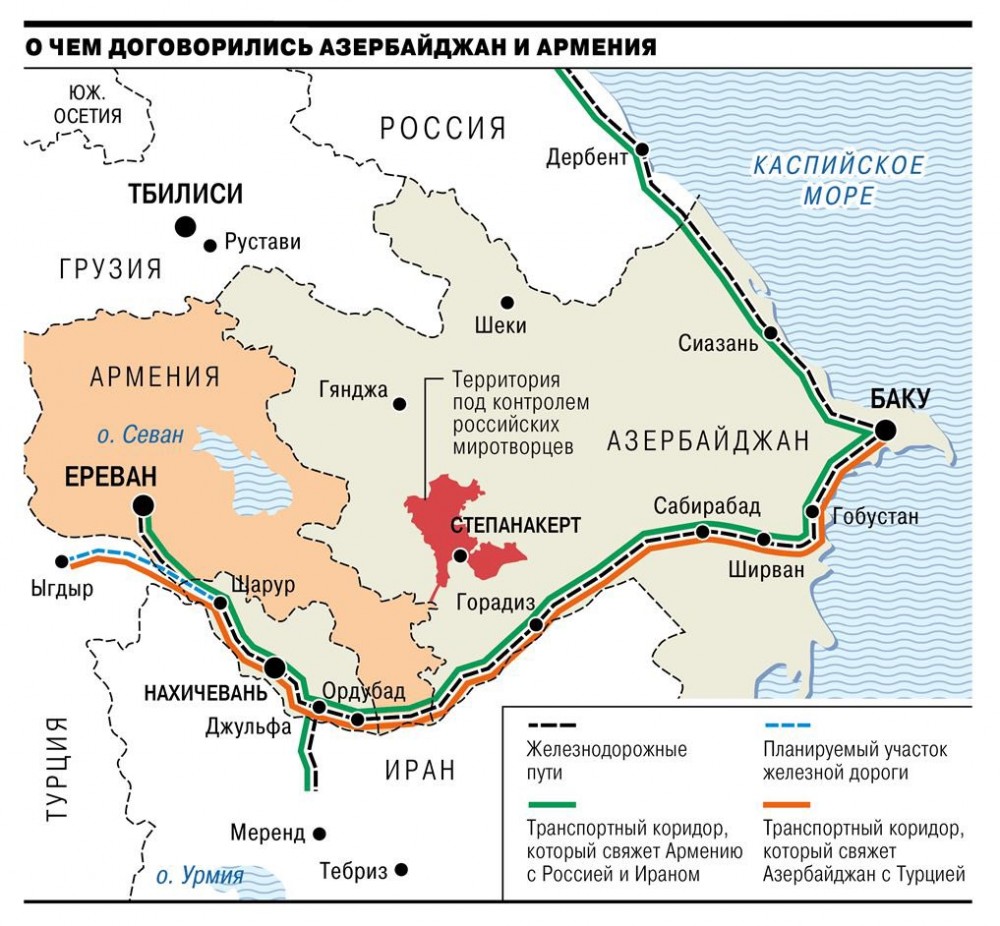
Let us start with the fact that the transport and infrastructure projects outlined at the 11 January trilateral meeting in Moscow are still far from being implemented and launched in a "safe mode". This whole thing can be frightened off by various factors related to the behavior of the Russian "peacekeepers" in Karabakh, and Moscow (not) taking into account the interests of Baku or Ankara, and with the intra-Kremlin confrontation around the further moderation of the Karabakh issue. I do not think that the talks in Moscow went so smoothly: the purely economic part of the bi- / trilateral talks highlighted in the communique should not deceive anyone. In other words, Georgia has time to "prepare" and respond to new challenges and risks.

It is obvious that in the event of a full-fledged launch of the intended routes, the role of the Baku-Tbilisi-Kars (BTK) will decrease and may be assigned an auxiliary or alternative role. An alternative one, including for Russia, since its accession to the BTK was designated even before the new geopolitical picture in the South Caucasus. The Georgian economy will not be greatly affected.

The situation with the railway to Armenia through Abkhazia is much more interesting. On the one hand, the full-scale launch of new transportation routes neutralizes the weight of the Abkhazian section of the road both for Russia and Armenia. The Kremlin can relax and ease the pressure on Tbilisi in this regard. However, in this could be an oversimplified scenario. On the contrary, the Kremlin will try to pull Tbilisi into "mutually beneficial regional projects" under its auspices, speculating on its "constructive role" in resolving the most difficult regional conflict, Karabakh. Moscow`s objective is to return Tbilisi to its sphere of interests, by destroying the latter`s European and Euro-Atlantic aspirations. In this regard, Moscow's situational allies will be both Yerevan and indirectly Baku (hanged by the "peacekeeping" hooks). This is not about forecasts which will work or not, but rather about the logic of the Kremlin's further actions, which is actually easy to read. Another question is how the system of checks and balances will be built to defend own interests.

It is also obvious that in such conditions, further rapprochement between Tbilisi and the EU / NATO will provoke tough opposition from the Kremlin. The success of Georgian initiatives will largely depend on the level of Turkey's position in NATO. In the meantime, Tbilisi continues to remain neutral to the regional developments, due to lack of its influence on them and the protracted internal political anabiosis…

Originally published here. 

 

Related work

Expert opinion

US foreign policy before midterm election

As the US midterm election is approaching, the correlation between President Trump’s statements and actual US policies, gets more and more uncertain. And while his occasional eccentricities on Twitter or during rallies with supporters, have become part of a po...

Murad Muradov, 27 October 2026

Expert opinion

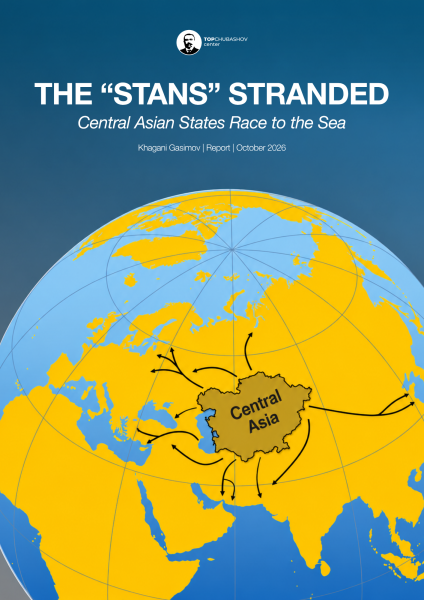
Connecting Central Asia and the South Caucasus

On November 15, Azerbaijan formally joined the Central Asian Consultative Meetings, expanding what was known as the Central Asian Five (C5) into a Central Asian Six (C6). Many in Central Asia find it surprising. But when viewed through the lens of recent geopo...

Gulkhanim Mammadova, 1 December 2025

Expert opinion

Azerbaijan joins the C5: implications for Eurasian regional architecture

When the long-standing C5 format of Central Asian cooperation formally expanded into a C6 on 15 November in Tashkent, Azerbaijan’s accession was framed as a natural extension of historical and linguistic affinities. Yet behind the rhetoric lies a structural tr...

Gulkhanim Mammadova, 21 November 2025

Expert opinion

Kazakhstan joins the Abraham Accords: Pragmatism or Symbolism?

Kazakhstan’s accession to the Abraham Accords—anticipated in some political circles—may still raise eyebrows. Unlike the original signatories, who were establishing relations with Israel from scratch, Kazakhstan has long maintained cordial ties with the Jewish...

Rusif Huseynov, 9 November 2025

Expert opinion

13 June attack: quick comments

In the most extensive attack on Iran since the country’s 1980-88 war with Iraq, Israeli forces have launched multiple waves of nationwide bombings. The attack is ongoing and believed to be the opening shots of a wider campaign to degrade Iran’s military comman...

Murad Muradov, 13 June 2025

Expert opinion

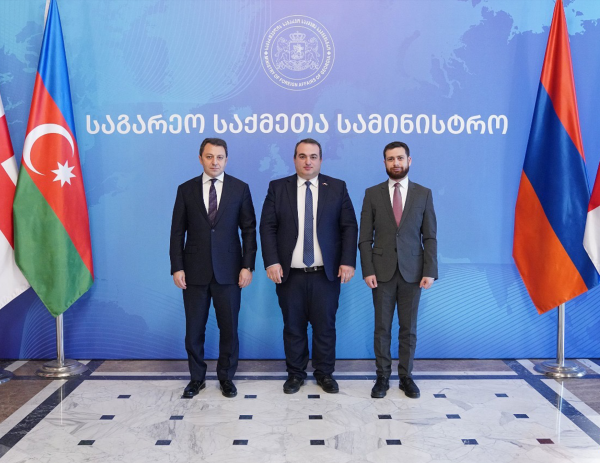
Historic First in Tbilisi: Armenia, Azerbaijan and Georgia trilateral talks

On April 17, Tbilisi hosted the first-ever formal trilateral meeting between the foreign ministries of Armenia, Azerbaijan and Georgia. According to official statements, the primary aim of the meeting was to create a platform for open dialogue and to explore p...

Gulkhanim Mammadova, 17 April 2025

Expert opinion

Munich speech, 18 years later

The Munich speech of the U.S. Vice President J. D. Vance will definitely enter the textbooks of the future as one of the harbingers of a new historic period. This speech has been arguably more shocking than Vladimir Putin’s diatribe he made on the same stage 1...

Murad Muradov, 19 February 2025