

Connecting Central Asia and the South Caucasus
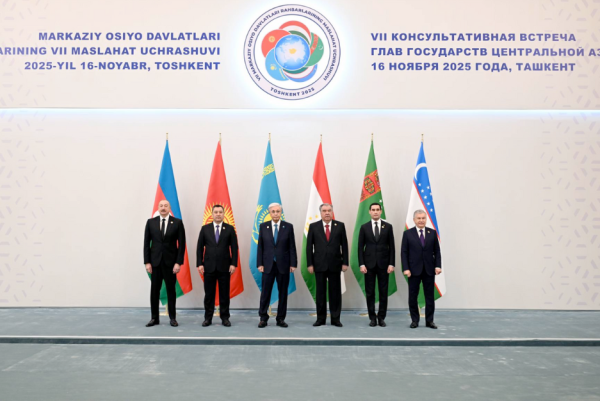
On November 15, Azerbaijan formally joined the Central Asian Consultative Meetings, expanding what was known as the Central Asian Five (C5) into a Central Asian Six (C6). Many in Central Asia find it surprising. But when viewed through the lens of recent geopolitical shifts, this development becomes far less surprising and, perhaps, entirely logical.
Why now? Over the past five years, three interlinked dynamics have reshaped the regional balance, which, in its turn, has opened new opportunities for Azerbaijan-Central Asia cooperation. First: since 2022, as the war in Ukraine consumed Moscow’s priorities, Russia’s influence in the South Caucasus has receded. Second: growing turbulence in the Middle East and a relative decline in Iran’s capacity to project power have loosened the constraints on regional actors. Third: the resolution of some core elements of the Armenia-Azerbaijan conflict and significant progress in normalisation have laid the foundations for a reimagined regional order, one no longer defined primarily by conflict.
Together, these shifts pushed or encouraged Azerbaijan to step forward from the position of a small power toward that of a middle power. Ontologically, Azerbaijan has begun to see itself as a middle power, which would be capable of shaping regional dynamics- not through dominance but rather through cooperation.
Given this evolution, Azerbaijan faced a new question: where can we realistically apply this new agency? The South Caucasus, for all its geopolitical salience, remains limited in scope by size and structure. Central Asia, in contrast, is geographically vast, demographically significant, economically promising, and, most importantly, deeply connected to Azerbaijan through cultural similarities, a shared historical past, similar communication patterns, and compatible economic structures.
These factors now encourage Azerbaijan to expand its strategic thinking toward Central Asia. Azerbaijan increasingly views itself as an extended part of the Central Asian region, almost an “enlarged Central Asian country.” Today this is becoming a key foreign policy project. The same three dynamics have also strengthened the sovereignty and agency of Central Asian states. For the first time in decades, they, too, can act with greater independence.
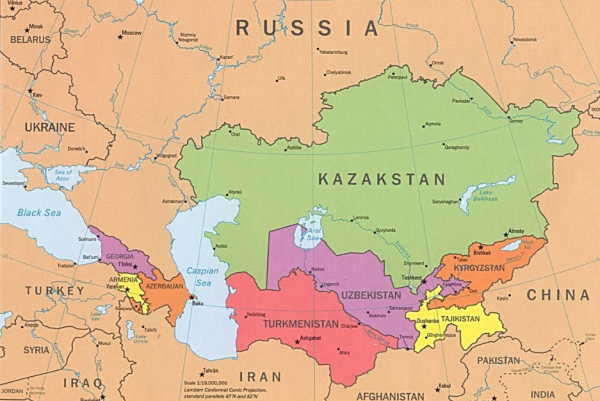
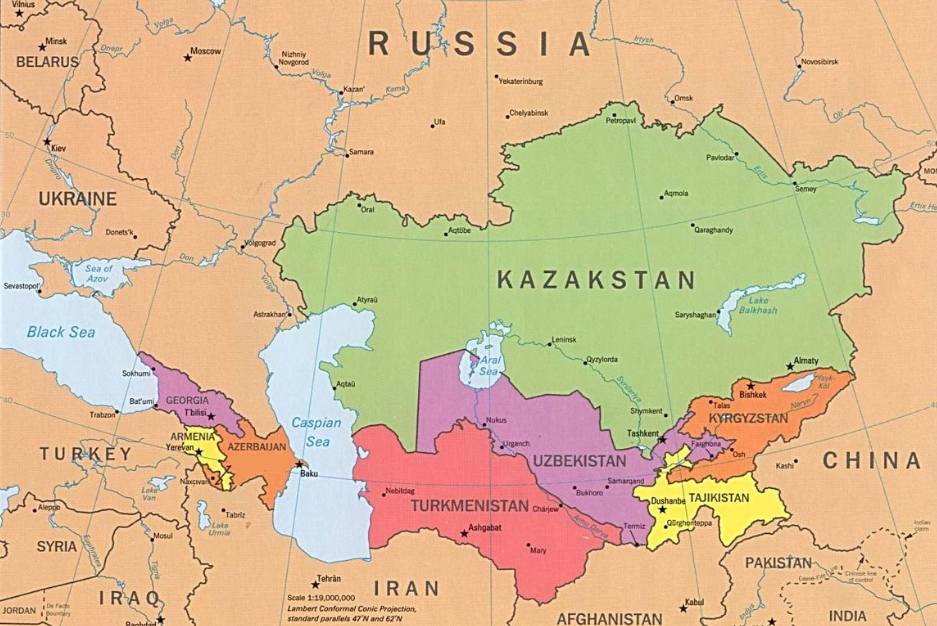
At the same time, Central Asian states themselves have grown more assertive, more independent. The same three dynamics have also strengthened their sovereignty and agency. This opens up opportunities for Azerbaijan and Central Asia to jointly connect the South Caucasus and Central Asia into a single geopolitical space. But at present, there is no appropriate institutional framework for such cooperation. Existing platforms, for example, the Organization of Turkic States, exclude Tajikistan, Armenia and Georgia, while Turkmenistan participates in a limited fashion as an observer. There is no “5+3” mechanism that brings all eight countries together. To build a truly integrated region, there is a strong case for establishing a new, more inclusive institutional mechanism. A “5+3” platform would offer formal infrastructure for cooperation.
But institutions alone are not enough. For meaningful transformation, mental maps must change.
We should move beyond inherited colonial-era labels and perceptions meant to limit the agency of the regional countries and exacerbate divisions that, historically and culturally, have been porous.
Deconstructing them is a precondition for building a shared regional identity.
What needs to be done:
1. Communication and people-to-people exchange
Until now, social mobility between the two regions has been minimal. There has been little academic exchange, cultural or youth collaboration, or people-to-people interaction. For integration to be more than a strategic narrative, we need concrete channels: exchange programs, joint research, cross-regional youth networks, cultural festivals, anything that builds familiarity, trust, and shared mental horizons.
2. Economic integration
Sustainable peace begins with economic interdependence. Integrating Armenia, for instance, into Central Asia’s economic networks would create material incentives for cooperation.
3. Leverage Central Asia’s peacebuilding experience
Unlike global powers or external mediators, Central Asia offers comparable historical trajectories and regionally relevant peacebuilding practices. Community-based reconciliation, confidence-building mechanisms, and neutral mediation can be adapted to the South Caucasus context.
4. Shared environmental and water management strategy
Water and environmental issues bind both Central Asia and the South Caucasus. Central Asian experience in managing transboundary water conflicts and climate challenges could guide the creation of regional environmental institutions, shared water commissions and cooperative resource‑management models.
All in all, Azerbaijan’s accession to Central Asian Consultative Meetings is the beginning of a long-term project to reimagine the South Caucasus and Central Asia not as separate peripheries, but as an interconnected geopolitical and cultural space. For this, we need both an institutional framework and a transformation of minds. And Azerbaijan can become a bridge to connect these two regions.