

Electoral window and escalation vector between US-Israel and Iran
The confrontation between the United States and Israel on one side and Iran on the other in the waters of the Persian Gulf is currently unfolding along a complex trajectory of protracted coercion and mutual limitation of capabilities.
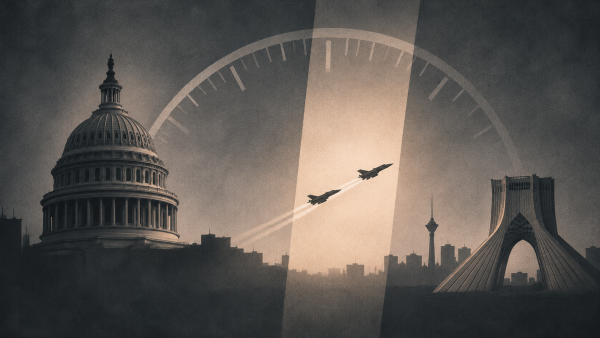
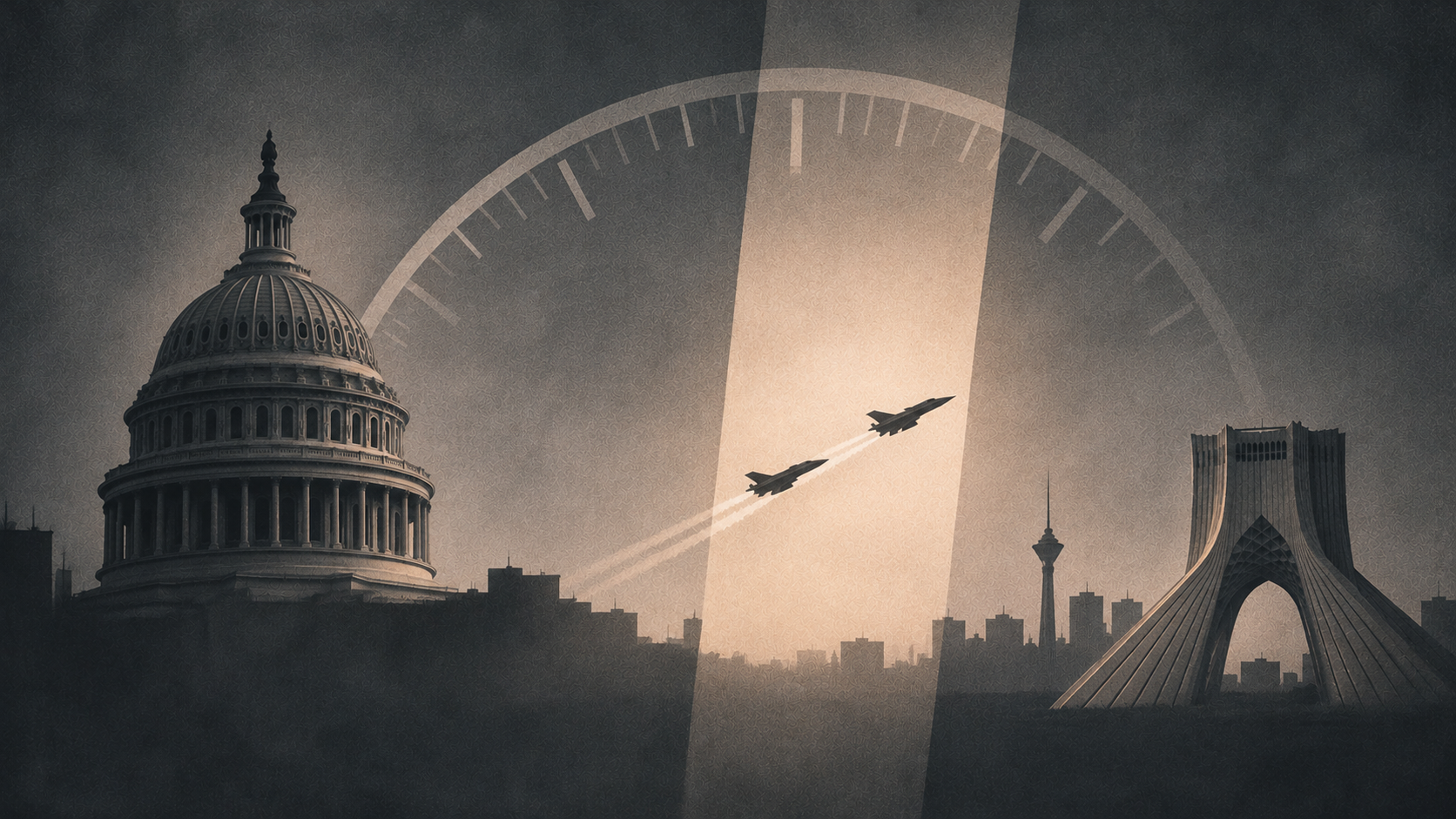
In the third ten days of October 2026, the military-political situation in the region is increasingly characterized by a shift toward a phase of latent preparation by the allies for potential large-scale combat operations against the Islamic Republic. The key political damper holding the parties back from an immediate transition to massive strikes is the coincidence of electoral calendars in Israel (parliamentary elections on 27 October) and the United States (midterm elections to Congress on 3 November).
Nevertheless, within the temporary window that has formed, the parties to the conflict are combining local kinetic incidents, cyber reconnaissance, and the probing of air-defense systems with intensive shuttle diplomacy and the reconfiguration of cross-border logistical routes.
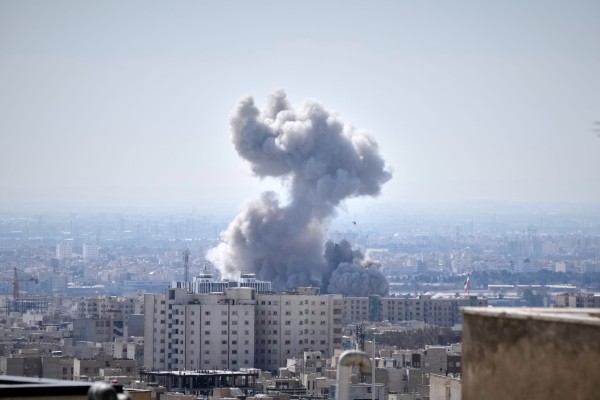
In the Strait of Hormuz, the situation continues to be characterized by elements of a “managed conflict.” At present, there remains a high intensity of local combat clashes, preparations, exercises, reconnaissance activities, and periodic reports of explosions and tanker strikes.
The Position of the United States and Israel
On 19 October 2026, an unannounced meeting took place at Uvda Air Base between U.S. Secretary of Defense Pete Hegseth, Israeli Prime Minister Benjamin Netanyahu, and Israeli Defense Minister Israel Katz. According to some reports, representatives of the UAE were also present. Officially, the talks were devoted to coordination of offensive and defensive actions against regional threats.
At the same time, media reports subsequently indicated that the United States is seeking to prevent unilateral Israeli strikes against Iranian energy and nuclear infrastructure before the midterm elections on 3 November (most likely primarily in order to avoid a price shock on the global fuel market).
Within Israel itself, the military command, including Chief of the General Staff Eyal Zamir, largely concurs that the risks associated with a potential harsh Iranian retaliatory strike could force the postponement of the parliamentary elections, thereby provoking an internal political crisis. Netanyahu himself stated on 14 October that there were no plans to launch a preemptive strike immediately before the elections; however, he provided no clear guidance regarding the period after the completion of voting.
Diplomatic Deadlock
Attempts at a political settlement of the Iranian crisis continue to rest on the legacy of the Islamabad Memorandum of June 2026.
It is worth recalling that this 14-point document provided for a suspension of military operations, the launch of negotiations on a comprehensive agreement, the lifting of the American naval blockade, and the normalization of shipping through the Strait of Hormuz, while postponing the most difficult issues of the nuclear program to the final stage. However, a deficit of mutual trust and disputes over the sequencing of concessions led Washington and Tehran to publicly announce the suspension of their commitments as early as July.
On 18 October, Iranian Foreign Minister Abbas Araghchi unexpectedly declared readiness to open the Strait of Hormuz within six days after the United States accepted Iranian conditions and to resume negotiations on the seventh day.
Tehran’s main current demands include the cessation of the blockade of Iranian ports, the removal of restrictions on oil exports, and an end to hostilities on regional fronts. The key obstacle, however, remains the divergence in the agenda: Washington insists on addressing the parameters of the nuclear program from the very outset of negotiations, whereas Tehran proposes first resolving issues of maritime security.
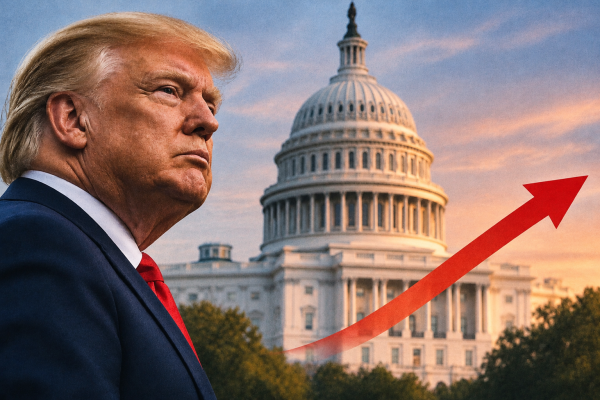
U.S. President Donald Trump continues to maintain intrigue, promising “victory one way or another” and a resolution of fuel prices for American consumers immediately after the earliest possible end of the war. In media interviews, Trump also gives rather vague and often deliberately non-specific answers regarding the Iranian issue and the timing of possible strikes, at times even stating openly that he is simply not permitted to discuss certain matters and that “he will see.”
The Nuclear Case Problem
In parallel, the crisis of the verification system along the IAEA line is intensifying. In its report of 1 September, the Agency stated that it was impossible to establish the precise volumes, composition, and location of Iranian stocks of enriched uranium due to the lack of necessary access and information. Tehran, in its official objections, points to the impossibility of ensuring a standard inspection regime under conditions of ongoing military attacks and constant external threats from the United States.
Nevertheless, it is analytically necessary to distinguish between the absence of the possibility to confirm the non-diversion of uranium (a), a proven fact of the diversion of materials (b), and the existence of a finished nuclear weapon (c). As a result, the loss of IAEA inspection control undermines the foundation of trust and expands the space for hard-line interpretations on the part of Tehran.
Consequently, a paradox of the power-based approach arises: the physical destruction of ground facilities is capable of temporarily reducing Iran’s technical potential but does not ensure international control over the materials (uranium), whereas a sustainable settlement requires the restoration of accounting mechanisms and regular inspections.
Financial-Logistical Pressure and the Pakistan-Iraq Contour
Washington continues to intensify economic coercion of Tehran by employing mechanisms of control over Iraq’s financial system through dollar clearing by the U.S. Federal Reserve System. Under direct pressure from the American administration and U.S. Special Envoy Tom Barrack, the Iraqi authorities, after introducing restrictions at the Shalamcheh crossing in September and reducing air traffic, proceeded to close the Ash-Shib border crossing. The U.S. objective is clearly to reduce the number of functioning land border crossings between Iraq and Iran to a minimum. This decision also aims to cut Tehran’s direct hard-currency revenues and undermine the financial base of pro-Iranian Shiite formations that control cross-border flows with Iraq.
As an asymmetric response, Iran recently attacked four tankers in the northern part of the Persian Gulf; the strike on one of the vessels directly in Iraqi territorial waters served as a direct signal to Baghdad regarding the unacceptability of full adherence to the American sanctions regime. A similar scenario of border-point closures has been unfolding on the Pakistani side during the same period.
In mid-October, Pakistan also temporarily suspended the Taftan and Gabd-Rimdan crossings on the border with Iran, citing security considerations and the fight against smuggling; international observers, however, also pointed to possible U.S. pressure aimed at intensifying Tehran’s economic isolation. As a result, thousands of trucks accumulated at the border, causing discontent among businesses (especially in Karachi) and a spike in liquefied petroleum gas (LPG) prices. According to open sources, traffic is now being restored.
Simultaneously, the United States is expanding targeted sanctions against structures servicing Iran’s logistics. For example, on 15 October the U.S. Treasury imposed sanctions on the Iraqi International Development Bank for Investment and Finance (IDB) for providing financial channels to Iran; on 21 October sanctions were announced against the law firm Karnakis & Karnakis (Panama and Greece) and related ship operators and maritime agents for concealing the true owners of tankers and facilitating the transportation of Iranian goods.
Regional Maneuvering
Middle Eastern states are also undertaking independent attempts to prevent the confrontation from escalating into an uncontrollable regional war. In particular, on 23 October, within the framework of a meeting in Istanbul, the foreign ministers of Turkey, Egypt, Pakistan, and Saudi Arabia held talks with European colleagues (the R4 format), emphasizing the priority of de-escalation, the security of commercial shipping, and the inadmissibility of Houthi attacks on infrastructure.
In parallel, Qatar has also strengthened its mediation mission. Earlier, a government aircraft (Qatar Amiri Flight) landed in Tehran for negotiations, reflecting Doha’s efforts to convey the parameters of de-escalation and to protect its own territory (where the American Al Udeid base is located) from possible retaliatory strikes by the IRGC in the event of the outbreak of hostilities.
The activation of Russia in October was also noteworthy. The visit of Russian Foreign Minister Sergey Lavrov to Tehran immediately after a meeting in Bahrain consolidated Moscow’s status as a communication hub between Iran and the Gulf monarchies amid the expansion of trade and economic ties with Iran.
The culminating event of mediation diplomacy is considered to be the meeting of the parties of the Mecca Trio with Iran’s senior political echelon in Tehran on 26 October 2026. Iran was represented by Abbas Araghchi, Ali Bagheri Kani, and Mohsen Rezaei. President Masoud Pezeshkian later joined the talks. Pakistan was represented by Army Chief Asim Munir. Also present were the head of Turkey’s National Intelligence Organization (MİT) İbrahim Kalın and Saudi Defense Minister Khalid bin Salman. Notably, this meeting is intended to systematically concretize and bring closer the positions of the parties of the Mecca Trio, as well as to hear Iran’s position regarding the further development of the situation, preferably without allowing a potential future conflict to spill over into a broadly regional plane.
This meeting is particularly relevant against the backdrop of Iran’s overt threats—specifically those voiced by General Rezaei—regarding possible strikes on American interests and internet cables in the waters of the Strait of Hormuz as an asymmetric response to the United States. Consequently, the question of the “limits of a probable asymmetric strike” by the Islamic Republic is also a subject of risk-scenario assessment.
Internal “Reshuffles” in Iran
In recent weeks, certain reshuffles have been observed within Iran’s military-political establishment. The new Supreme Leader Mojtaba Khamenei has carried out a series of changes in the country’s military leadership. Generals Yahya Safavi and Ahmad Vahidi—two key figures who had recently strengthened their positions in the country’s political and military circles—were transferred to new posts primarily responsible for the protection of civilian facilities.
In parallel, the role of the regular army (Artesh) in military operations has been expanded. Vahidi was replaced by General Mostafa Izadi, another experienced commander from the ranks of the IRGC. Notably, on 26 October, while the Iranian side was negotiating with the participants of the Mecca Pact, Mojtaba Khamenei held a meeting with the aforementioned Iranian military commanders.
It is becoming evident that Iran is preparing for escalation and, in all likelihood, intends to draw conclusions from the current situation and ready itself for the worst-case scenarios.
Scenarios and Key Indicators
It should be noted that, despite the obvious indicators and preparations on both sides, escalation before the elections is unlikely. Thus, depending on the development of the electoral processes in Israel and the United States, three main scenarios are discernible among military decisions after 3 November.
- Partial package de-escalation, involving the achievement of an agreement on mutual steps that would include the temporary lifting of the blockade of Iranian ports and sanctions restrictions in exchange for the resumption of IAEA inspections, coupled with the cessation of attacks on vessels in the area of the Strait of Hormuz. The probability of this scenario is primarily constrained by deep mutual distrust and disputes over the prioritization of the nuclear issue relative to questions of maritime security.
- A protracted war of attrition also remains one of the realistic scenarios, in which the United States would maintain the current model of limited force pressure, supplementing it with pinpoint kinetic strikes, sabotage of communications, cyberattacks, and the employment of a “shadow fleet,” without transitioning to a massive air operation. This scenario, however, carries a constant risk of escalation due to unforeseen incidents and environmental disasters.
- The highest-risk scenario is the transition to a large-scale air-space operation—that is, the delivery of coalition U.S.-Israeli strikes against Iranian nuclear and military infrastructure immediately after the completion of voting in the United States on 3 November or slightly later within a week. It is highly probable that the allies’ “symbolic primary targets” would be Iranian nuclear facilities and Mount Kolang (Pickaxe).
Operational readiness for such a scenario is indicated by large-scale cyber reconnaissance, the systematic probing of Iranian air-defense positions with false targets, and the completion of coordination among the United States, Israel, and regional partners. There are also serious arguments that, in the first hours of the operation, the United States would conduct something similar to the operation already carried out in Venezuela, employing a so-called “secret weapon”—the “discombobulator”—which, according to Trump’s words, some military analysts interpret as a powerful device capable of disabling all radar systems within seconds and even inducing “Havana syndrome” among enemy personnel.
Thus, further indicators of the development of the situation will be the implementation of concrete agreements, the intensification of mediation by regional actors, changes in the level of access granted to IAEA inspectors, the dynamics of U.S. sanctions lists, as well as shifts in the intensity of cyberattacks and the disposition of coalition forces in the CENTCOM area of responsibility. At the same time, the potential collapse of the Islamic Republic as a result of any of the three scenarios remains unlikely (if not equal to zero). It should also be noted that potential chaos across such a vast geography as “Iran,” combined with unpredictability and disorder, is advantageous to neither Turkey, nor Pakistan, nor Saudi Arabia, nor other countries of the region.