

Topchubashov Center
Expert opinion 2 min read

The assassination of Mohsen Fakhrizadeh and Iran-West relations

The assassination of Mohsen Fakhrizadeh and Iran-West relations
Toms Rātfelders Expert Published

Listen to this article Read by an AI voice

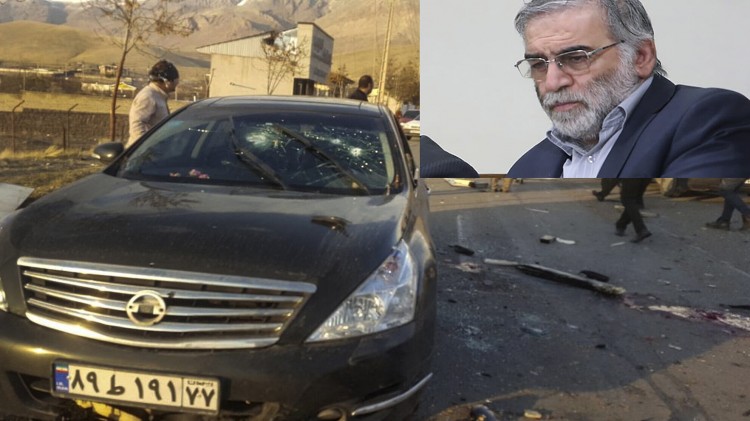
The murder of Iranian nuclear scientist Mohsen Fakhrizadeh is another episode in deteriorating relations between the United States and Iran. Although there is currently some unclarity regarding the perpetrators responsible, the principal motivation behind the attack is likely tied to the results of the U.S. presidential election. The apparent (though not yet confirmed) president-elect, Joe Biden of the Democratic party, has stated his intention to return to the Joint Comprehensive Plan of Action (JCPOA) the Trump administration left on May 2, 2018. This has created certain discontent among the opponents of the deal, which might have attempted to hinder the restoration of political dialogue between the two nations.

On a certain level, this approach has worked. Iranian ruling regime currently faces the choice between two options. 1) responding to the attack but making it very hard for Biden administration to contribute to creating an environment where certain sanctions could be lifted, 2) not responding to the attack, but risking to further strain its already strained legitimacy among the people. In this context, it should be noted that the attack can be seen as a certain failure of the Iranian security apparatus to protect its high-ranking officials.

This dilemma could be why Iran currently has adopted the position of "respond, but not now." Namely – there is a possibility that Iranian retaliation eventually will take place, but currently, the clerical regime is more interested to see whether it would be possible to capitalize on the leadership change in Washington to secure certain economic benefits. Nevertheless, the patient approach has not helped to do much about the fact that hard-liners have now gained additional ammunition to criticize the Rouhani administration for its dialogue-oriented approach to the West. There have also been attempts to show the assassination of Fakhrizadeh in the light of his own personal unwillingness to negotiate with the U.S. These factors are likely to continue to play a role in the run-up to the Iranian presidential election to be held in June 2021 and thus can also help to determine the future of Iranian foreign policy course. 

 

Related work

Expert opinion

US foreign policy before midterm election

As the US midterm election is approaching, the correlation between President Trump’s statements and actual US policies, gets more and more uncertain. And while his occasional eccentricities on Twitter or during rallies with supporters, have become part of a po...

Murad Muradov, 27 October 2026

Expert opinion

Connecting Central Asia and the South Caucasus

On November 15, Azerbaijan formally joined the Central Asian Consultative Meetings, expanding what was known as the Central Asian Five (C5) into a Central Asian Six (C6). Many in Central Asia find it surprising. But when viewed through the lens of recent geopo...

Gulkhanim Mammadova, 1 December 2025

Expert opinion

Azerbaijan joins the C5: implications for Eurasian regional architecture

When the long-standing C5 format of Central Asian cooperation formally expanded into a C6 on 15 November in Tashkent, Azerbaijan’s accession was framed as a natural extension of historical and linguistic affinities. Yet behind the rhetoric lies a structural tr...

Gulkhanim Mammadova, 21 November 2025

Expert opinion

Kazakhstan joins the Abraham Accords: Pragmatism or Symbolism?

Kazakhstan’s accession to the Abraham Accords—anticipated in some political circles—may still raise eyebrows. Unlike the original signatories, who were establishing relations with Israel from scratch, Kazakhstan has long maintained cordial ties with the Jewish...

Rusif Huseynov, 9 November 2025

Expert opinion

13 June attack: quick comments

In the most extensive attack on Iran since the country’s 1980-88 war with Iraq, Israeli forces have launched multiple waves of nationwide bombings. The attack is ongoing and believed to be the opening shots of a wider campaign to degrade Iran’s military comman...

Murad Muradov, 13 June 2025

Expert opinion

Historic First in Tbilisi: Armenia, Azerbaijan and Georgia trilateral talks

On April 17, Tbilisi hosted the first-ever formal trilateral meeting between the foreign ministries of Armenia, Azerbaijan and Georgia. According to official statements, the primary aim of the meeting was to create a platform for open dialogue and to explore p...

Gulkhanim Mammadova, 17 April 2025

Expert opinion

Munich speech, 18 years later

The Munich speech of the U.S. Vice President J. D. Vance will definitely enter the textbooks of the future as one of the harbingers of a new historic period. This speech has been arguably more shocking than Vladimir Putin’s diatribe he made on the same stage 1...

Murad Muradov, 19 February 2025