

Should the Groningen gas field be reopened?
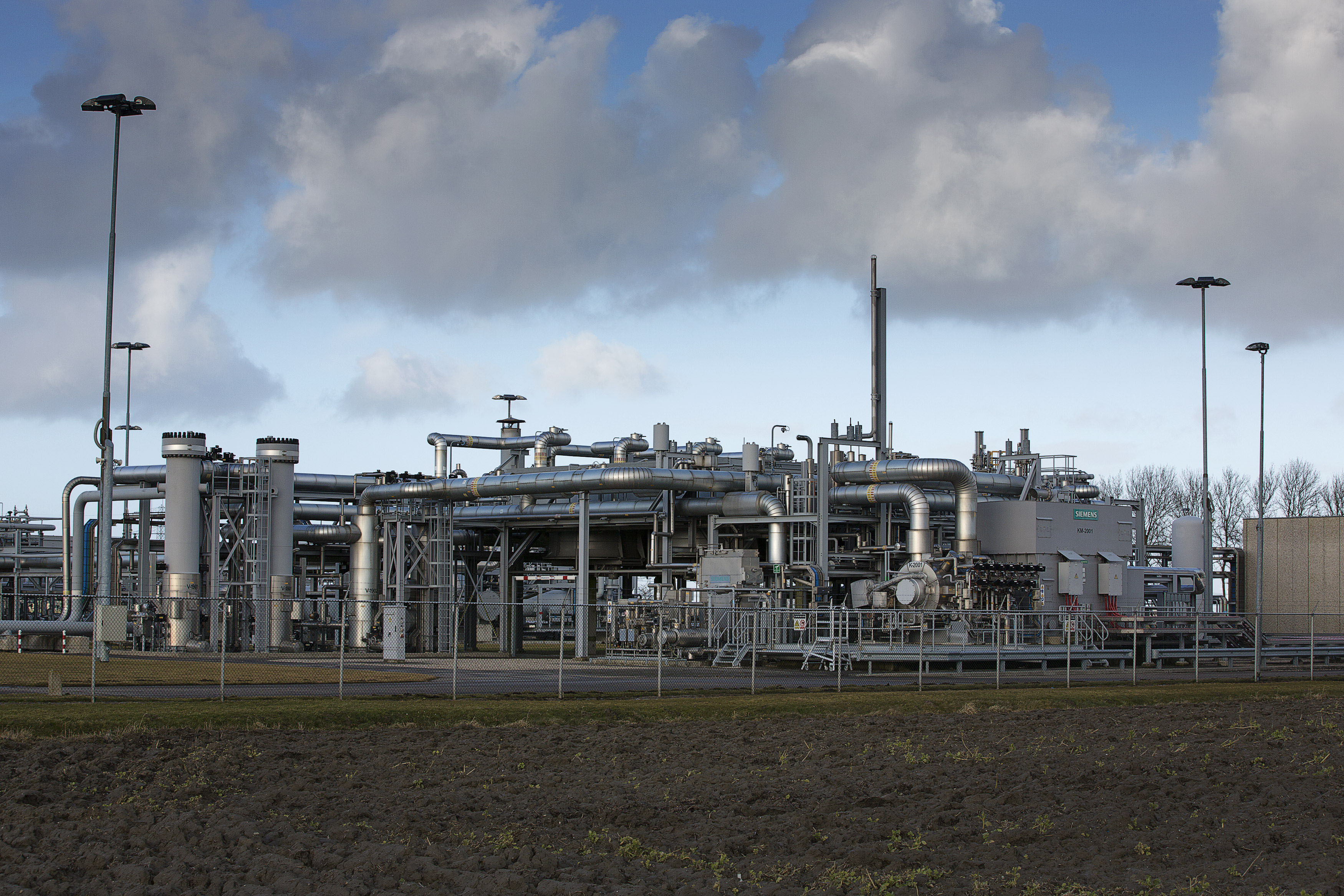
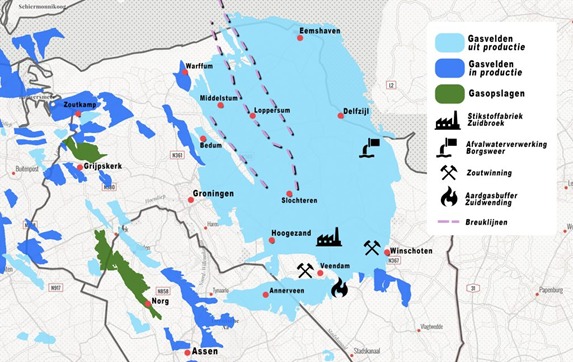
Het Groningenveld (the Groningen gas field) is the biggest gas field in Europe and belongs to the top 10 biggest gas fields in the world with around 2.800 billion m³ of gas.
Since the 19th of April 2024, the gas field has been closed and it has been forbidden to extract new gas in this field, because the extraction of gas has caused a lot of earthquakes in the Dutch province of Groningen. However, since the war in Iran started and the prices of oil and gas went up, the heated debate has started again: should the Netherlands open the gas fields in Groningen again?
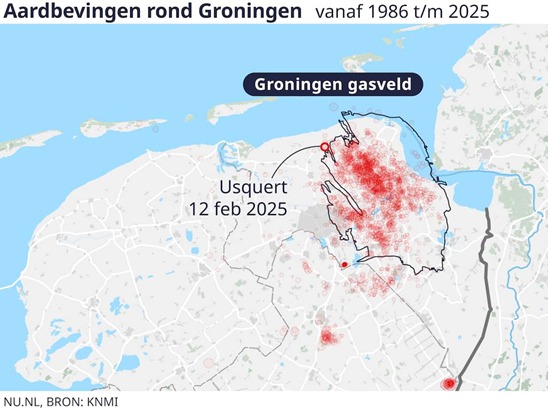
The extraction of gas in the region has caused many earthquakes. To this day, over 1700 earthquakes have occurred in the area. In November 2025, one of the strongest earthquakes ever happened in the area, with a power of 3.4 on the Richter scale. Due to the gas extraction, the ground subsides, which in turn causes earthquakes. This process precipitated the adoption of a new law in 2024 that stopped (with some small exceptions) all the gas extraction in Groningen.
However, since the war against Iran started and gas prices have skyrocketed, causing the emptying of the Dutch gas reserves, there are more and more people arguing that the Netherlands should re-launch the gas extraction.
At this moment, the Netherlands is still producing some natural gas. However, it is mostly being bought from countries such as Norway, Qatar and the United States. Due to the war in Iran, the gas from Qatar has stopped entering the country. The U.S. has proved in the last couple of months of being an unreliable partner. (1) Next to that, the way the U.S. is extracting gas is also way more polluting, since they use the so-called method of fracking: water, sand and chemicals are being injected into deep rock formations to make it easier to extract the gas. This method is way more polluting and causes stronger earthquakes than the way the Dutch used to extract their oil.
Norway is being seen as a reliable gas partner, however, their gas is flowing into the Netherlands via pipes that go underneath the North Sea. If NATO ever enter a war, those pipes are an easy target to destroy to stop a big portion of the European inflow of oil and gas.
At this moment, the gas field in Groningen is closed in a way that prevents its return to exploitation. The wells are being closed with 2 metal lids and hundreds of meters of concrete. The closing of the wells has started in 2024 and is expected to finish between 2035-2039. In total there are around 300 wells and to this day, around 70 of them have been filled.
Some political parties, such as the right-wing FvD, currently holding 7 out of 150 seats in the Dutch parliament, insist the government fully reopen the Groningen gas field and extract gas as it was done before. Another right-wing party JA21 (currently 9 out of 150 seats) is also against its closure.
However, the main point of the discussion is whether the Netherlands should not fully close the Groningen gas field in case of an emergency. Not necessarily to use the gas field to its full potential, but only as an emergency measure in case there is a deficit of gas.
Since the war in Iran has started, the Dutch gas reserves have reached the lowest point ever, only being filled at 5.8%. (2)
The reopening of the gas field in Groningen is quite controversial a topic. Ever since it was discovered in 1959, the Dutch government has gained around EUR 400bn from the gas produced there, using it for infrastructural projects and sponsoring a welfare state. In 2006 the Queen’s Commissioner of the province of Groningen made the quote: “The Netherlands is Belgium with gas, or Belgium is the Netherlands minus gas”, to show how much the gas has financially benefited the Netherlands. (3) However, most of the money has been used in the development of the Dutch welfare state and infrastructure projects in the whole country (often outside of Groningen). Only a small portion of the profit made has been used in Groningen. A 2023 research shows that 84% of people from Groningen feel like their opinion weights less than opinions from people living in the Randstad (the West of the Netherlands, an area with cities such as The Hague, Amsterdam, Rotterdam and Utrecht) and 77% of people from Groningen feel subordinated and distant from national politics, compared to the west. (4)
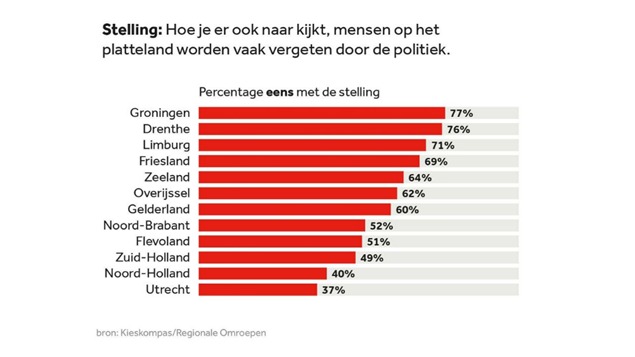
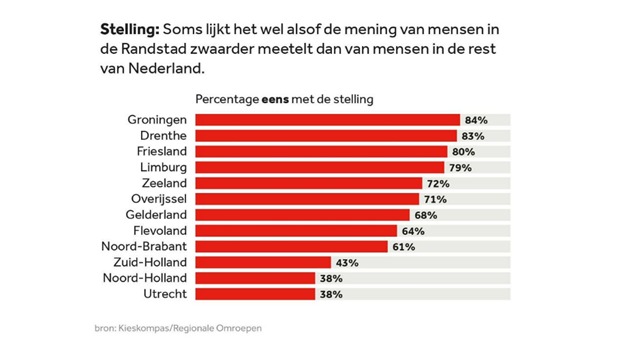
Because most of the profit has been used by the Dutch government, the earthquakes caused by the gas extraction are hitting the people from Groningen extra hard. With the profit their houses have not been made stronger, which causes them to crack when there is an earthquake. The Dutch government did reserve money to pay for the reconstruction of the damaged houses and to give financial compensation for people who suffered mentally due to the earthquakes. However, the reconstruction of the houses in the areas where the gas was extracted will take at least until 2034 (5), and the houses are then only reconstructed to survive earthquakes that will still happen due to the past extraction of gas.
If gas is extracted again, the earthquakes will probably intensify. No people have died in an earthquake yet, however, research from the University of Groningen shows that tens of thousands of people have gotten mental health issues dues to the earthquakes and on average 16 people die every year due to stress caused by the earthquakes. (6) Because of all these reasons, the Dutch government has decided to fully stop extracting gas forever in the Groningen gas field in 2024.
However, due to the low gas reserves, experts are saying it is not a good idea to fully close the gas fields in a way that they can never be used again. They propose to keep them open in case of an emergency. 68% of Dutch people are also in favour of keeping the gas fields open in case of an emergency. One of the participants in this research is saying: “I feel sorry for the people of Groningen, but there is too much hassle in the world to pour concrete into our gas wells”. Surprisingly, this research also shows that 47% of people in Groningen are also in favour of keeping the gas fields open in case of an emergency, but only on very strong conditions; the gas can only be used in the Netherlands, all the profits should go to the province of Groningen and only in very extreme conditions (e.g. hospitals not working due to a gas shortage) can the gas be extracted again. (7)
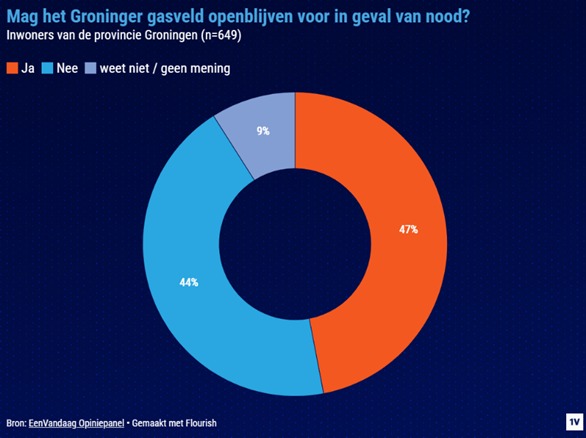
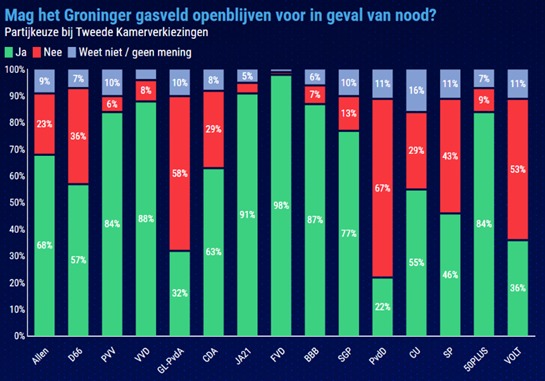
The Dutch government is against keeping the gas fields open in case of an emergency, however, research shows that voters of the parties in government are actually in favour of keeping the fields open.
Figure 6 shows that people that voted for D66, VVD and CDA (the parties in government) are in favour of keeping the gas fields in Groningen open in case of an emergency. The figure also shows that mainly right-wing voters support keeping the fields open, whereas voters of green parties (Groenlinks-PVDA (Green socialists) and PVDD (Party for the Animals)) very strongly object. (8)
In a short term, the Groningen gas field will like stay closed, and the sealing of the wells will keep happening. The current Dutch government has made it clear that they are against keeping the field open in case of an emergency, saying it is ‘socially unacceptable’ towards the people of Groningen. Maybe a change of government, that to a more right-leaning one, could’ve stopped this process. However, the question is how many wells have not been closed and locked forever at that point.
The discussion of keeping the Groningen gas fields open in case of an emergency is very heated. With the war happening in Iran and the high gas prices, people see the importance of keeping an energy security buffer for the Netherlands. This dilemma shows that in times of crisis, the hardest choices are those where security and justice directly clash.
Sources
1. The USA has even threatened to stop all the inflow of gas to Europe due to new potential European climate laws.
2. RTL Z (2026) Gasvoorraad daalt tot 5,8 procent, laagste niveau in tien jaar tijd https://www.rtl.nl/nieuws/economie/artikel/5582231/gasvoorraad-daalt-tot-58-procent-laagste-niveau-tien-jaar-tijd
3. Andere Tijden (2006) Aardgas als smeerolie https://anderetijden.nl/aflevering/404/Aardgas-als-smeerolie
4. NOS Nieuws (2023) Wantrouwen in politiek grootst in Zeeland en Limburg https://nos.nl/collectie/13923/artikel/2464118-wantrouwen-in-politiek-grootst-in-zeeland-en-limburg
5. NOS Nieuws (2025) Versterking huizen Groningen kost jaren extra, 'het lange wachten sloopt mensen' https://nos.nl/artikel/2562667-versterking-huizen-groningen-kost-jaren-extra-het-lange-wachten-sloopt-mensen
6. Rijksuniversiteit Groningen (2026) Meer angst- en depressieklachten in Groningen door aardbevingen https://www.rug.nl/about-ug/latest-news/news/archief2026/nieuwsberichten/0331-umcg
7. Kester, J. (2026) Gaskraan Groningen toch openhouden voor geval van nood? Ruime meerderheid is voor, Groningers zijn verdeeld https://eenvandaag.avrotros.nl/opiniepanel/uitslagen/gaskraan-groningen-toch-openhouden-voor-geval-van-nood-ruime-meerderheid-is-voor-groningers-zijn-verdeeld-162948
8. Kester, J. (2026) Gaskraan Groningen toch openhouden voor geval van nood? Ruime meerderheid is voor, Groningers zijn verdeeld https://eenvandaag.avrotros.nl/opiniepanel/uitslagen/gaskraan-groningen-toch-openhouden-voor-geval-van-nood-ruime-meerderheid-is-voor-groningers-zijn-verdeeld-162948