

The strains and balances in Italy-United States relations in an era of U.S. assertiveness
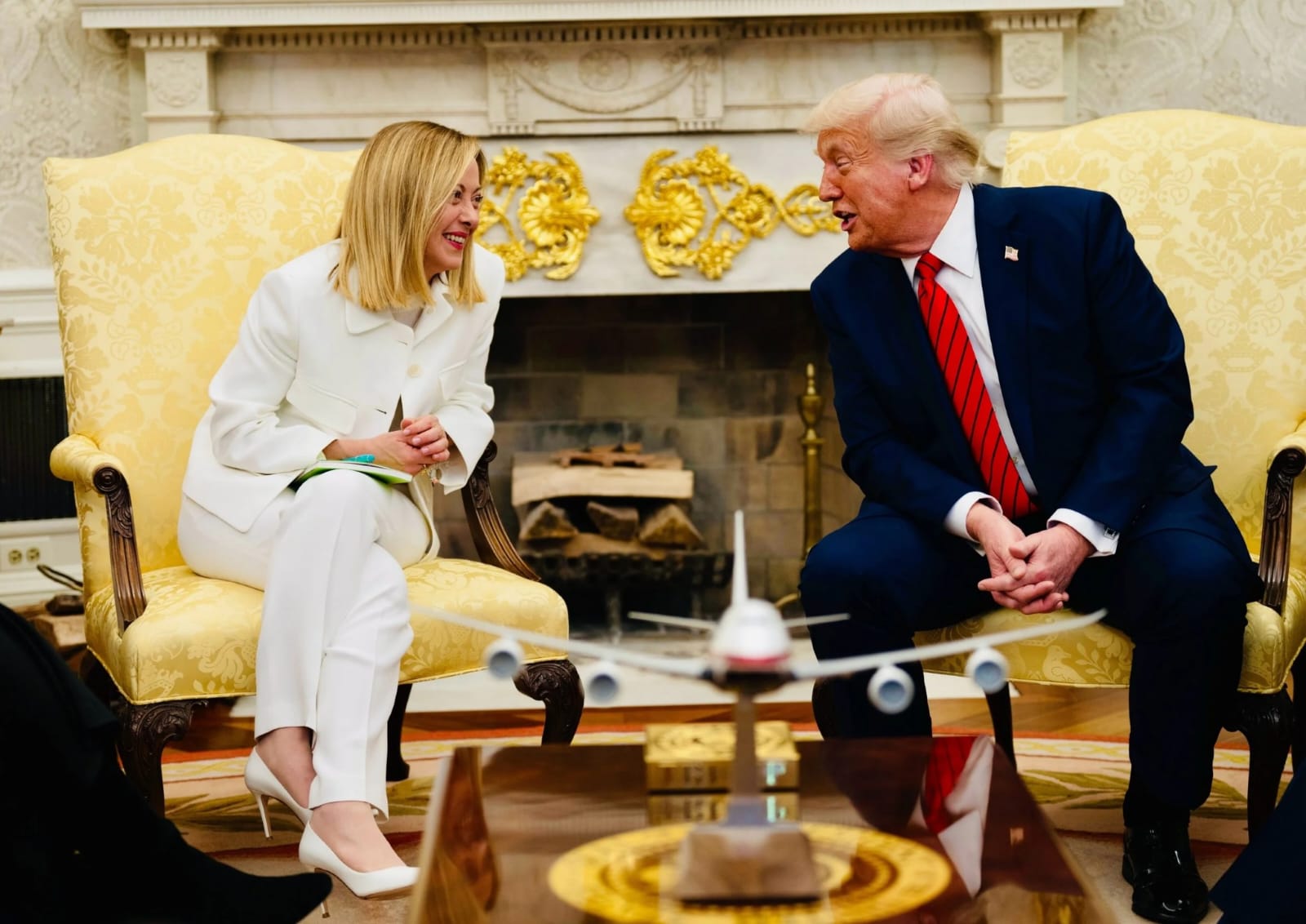
Italy and the United States enjoy a long-standing friendship rooted in shared democratic values, close cooperation in NATO, and deep cultural and economic ties. Yet the current phase of transatlantic relations is testing that friendship in unexpected ways. From Venezuela to Greenland and to the new U.S.-led Board of Peace, Rome is facing a U.S. foreign policy that is assertive and unpredictable, and that puts Giorgia Melonis’ government in a position of having to carefully balance between pleasing the transatlantic allies - whose approach is increasingly at odds with traditional multilateral norms - and defending national interests. The bonds holding this relationship together are still strong, but recent developments are exposing strains that reflect broader questions about the future of global order and Italy’s own strategic priorities.
On Venezuela, the Italian government emerged as Europe’s most visible supporter of the Trump administration’s rationale for a robust response. Prime Minister Giorgia Meloni openly stated that Rome saw merit in what the United States described as a defensive intervention against “hybrid attacks” on U.S. security emanating from statal actors linked to drug trafficking.
If Venezuela proved Italian support for U.S. actions, the evolving discourse on the Arctic has pulled Rome into a very different strategic space. Italy recently adopted a comprehensive Arctic Strategy, outlining why the region matters to Italian interests and how Rome plans to engage through the three pillars of security, scientific research, and economic development. In the strategy, the government acknowledges that the Arctic is no longer peripheral but a zone of intensifying geopolitical competition, a shift that can be explicitly linked to Russia’s invasion of Ukraine, deeper Russia-China ties, and a growing Russian military footprint in the region. Finland and Sweden’s accession to NATO has further altered the regional security balance. Within this context, Italy defines itself as a non-Arctic state that does not seek a permanent military presence there but intends to contribute to multilateral deterrence and defence alongside NATO and the European Union. Meloni framed the policy around preserving the Arctic “as a zone of peace, cooperation, and prosperity”.
Italy’s newly adopted Arctic strategy helps explain why Trump’s repeated remarks on Greenland were closely followed in Rome and across Europe. His suggestion that the United States could seek greater control over the island immediately raised concerns among European partners and prompted a coordinated response. Danish and Greenlandic representatives travelled to Berlin and Paris to consult with key allies, reaffirming that Greenland’s status and Denmark’s sovereignty were not open to negotiation. Trump’s statements also left open the possibility of using military leverage (which was later reversed at his speech at Davos) and framed Greenland as a strategic asset in the broader competition with Russia and China in the Arctic.
For Italy, which has been trying to position itself as a supporter of multilateral governance in the region and works through NATO and EU frameworks, the U.S. confrontational approach towards Greenland contrasted sharply with its own vision for Arctic engagement.
Besides forcing Meloni to walk on a tightrope in order not to compromise Italy-U.S. relations, the Greenland episode also revealed disagreements within Italy’s own governing parties. Traditionally, the League Party, led by Matteo Salvini and forming part of the governing coalition, has aligned with Trump’s positions in most areas. In this context, when the U.S. administration announced threats of tariffs on European allies that had deployed troops to Greenland, League Senator Claudio Borghi celebrated the U.S. tariff announcement as beneficial to Italy’s economy. At the same time, Guido Crosetto, Italy’s Defence Minister from Meloni’s party, Brothers of Italy, replied on X that those same European countries are Italy’s biggest commercial and industrial partners, implying that punitive measures would also hurt Italy. Meloni herself joined other European leaders in signing a declaration alongside Emmanuel Macron, Olaf Scholz, Pedro Sánchez, Donald Tusk, Keir Starmer and Mette Frederiksen to express objection to expansionist American initiatives in Greenland. Although she attempted to downplay tensions by describing Trump’s rhetoric as a “miscommunication” and emphasising the message was intended to signal firmness to Moscow and Beijing, she ultimately characterised the tariff threats as wrong and damaging to the alliance cohesion.
Another flashpoint has been the Board of Peace, the international initiative launched by Trump at the World Economic Forum in Davos in January 2026. Officially designed to promote peace and conflict resolution, the Board has been framed by the U.S. as addressing crises such as the war in Gaza and potentially wider global conflicts. The charter was signed by a group of countries, though many Western democracies expressed caution or refusal. In this regard, Italy cited constitutional and legal concerns. Article 11 of the Italian Constitution rejects war as a means of resolving disputes and commits Italy to international peace and justice while allowing for limitations of sovereignty only in conditions of equality with other states. Meloni’s government has pointed to these constitutional provisions as the basis for scepticism that the Board’s founding statute, which vests considerable executive authority in the chair and lacks equal footing among members, can be reconciled with Italian law. At the same time, Meloni emphasised that Italy remains interested in the overarching project, avoiding to openly oppose Trump’s initiative.
In practice, Meloni has been trying to keep the door open to Washington without signing up to an initiative that raises uncomfortable legal and political questions, both at home and vis-a-vis other European partners.
However, there was another moment when Italy pushed back on U.S. rhetoric more directly. When Trump recently suggested that European countries had been marginalised in NATO operations in Afghanistan, Meloni responded with an unusually firm statement, writing that such assertions minimising NATO allies’ contributions were unacceptable, especially when coming from a partner nation, and underlined that respect is essential to sustain solidarity at the heart of the Atlantic Alliance. Although Meloni’s response maintained a diplomatic tone, it was way sharper than the usual conciliatory language Italy reserves for sensitive transatlantic disagreements, and one of the few episodes when she confronted Trump’s actions.
This pattern of calibrated criticism does not mean Italy and the United States are at loggerheads. Far from it. But it does show the difficulty Italy faces as it seeks to maintain a privileged relationship with Washington while affirming its own commitments, its alignment with European partners, and its broader strategic interests and ambitions. Rome has so far managed to avoid open clashes, but the space for diplomatic manoeuvre is narrowing. As U.S. foreign policy becomes more assertive, Italy may find that ambiguity is no longer enough, and that even trusted partnerships require clearer limits to remain sustainable.