


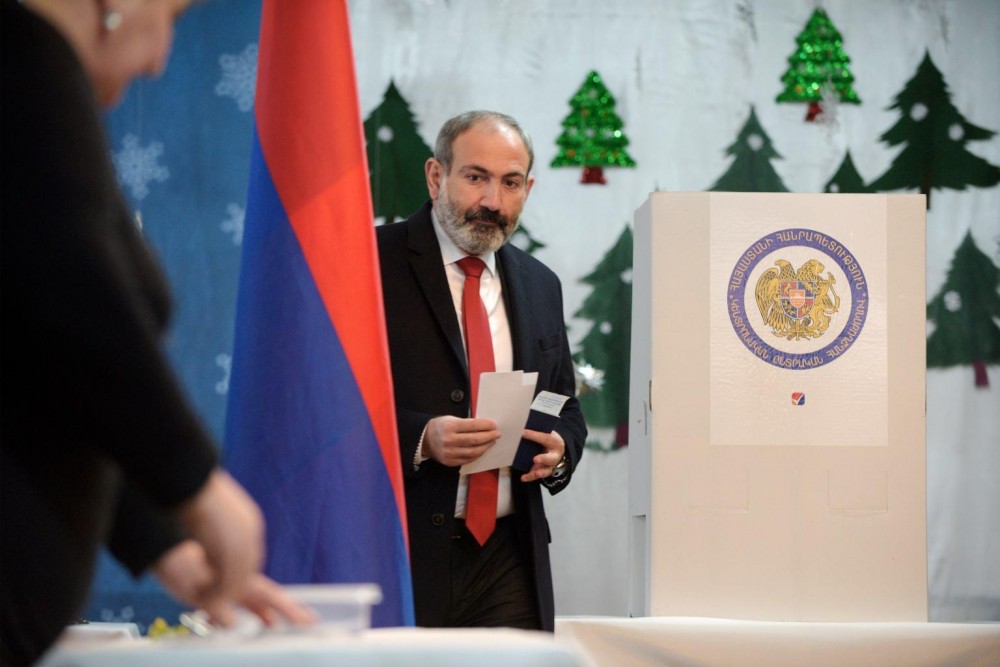

Armenia’s Acting Prime Minister Nikol Pashinyan won the reelection in a landslide on June 20. After the preliminary results were declared, Pashinyan took to Twitter to claim that Civil Contract will have a constitutional majority in the parliament and will form a government led by him. His Civil Contract party is expected to get 71 seats in the new parliament, followed by Robert Kocharyan’s Armenia Alliance with 29 seats and Serzh Sargsyan’s I Have Honour bloc with seven representatives.
Pashinyan’s victory is unique in a sense that it rarely happens to incumbent leaders to win an election in a landslide just seven months after losing a war to an existential enemy. Majority of Armenians, to the surprise of many, seem to prefer economic and political reforms under Pashinyan’s rule to the populist nationalist rhetoric of the old guard led by Kocharyan and Sargsyan. Surprisingly, the ball is in Pashinyan’s court now and many will depend on the policy choices he will make with regard to domestic and external developments.
Democratic regime change is not yet a norm in the post-Soviet space due to the array of factors emanating mostly from the shared Soviet legacy. Whenever we see one, however, questions arise as to what kind of balance will the new leadership strike between democracy and state building in domestic politics and democracy and security in the context of regional power configurations. Records show that the new elites find it difficult to deal with the legacies of the old regime through democratic means and instead opt for gradual consolidation of power at the expense of stronger and more open institutions. Pashinyan’s three year tenure as prime minister showed that he had not been quite successful in this sphere. His statements during the rallies were not promising too as he called his followers to replace the velvet mandate with a steel one in case they win the election and claimed that he would punish the members of the old regime who used their office for political gain. He did not shy away from publicly claiming that there would be vendettas against his political rivals.
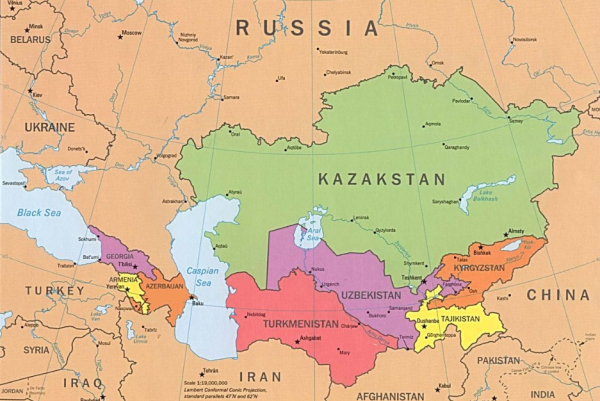
In the foreign policy arena, Pashinyan has the unique opportunity to marry his domestic economic development strategies with the reconciliation efforts put forward by Azerbaijan, Russia, and Turkey after the end of the 44-day war in 2020. The opening of transportation corridors between the two countries might bring Armenia out of the regional isolation and further contribute to peace and stability in the region. Majority voting in favor of Pashinyan indicates that Armenian population are mostly aware of the politico-economic repercussions of the vicious circle Yerevan frequently finds itself in with regard to the Nagorno-Karabakh conflict and want to have better economic opportunities that could best be achieved through region-wide connectivity projects. All in all, Pashinyan will open a new page in the history of Armenian democracy and regional cooperation and whether he will be successful remains to be seen.