
Topchubashov Center
Expert opinion 1 min read

Libya`s transitional government and geopolitics

Libya`s transitional government and geopolitics
Javidan Ahmadkhanli Expert Published

Listen to this article Read by an AI voice

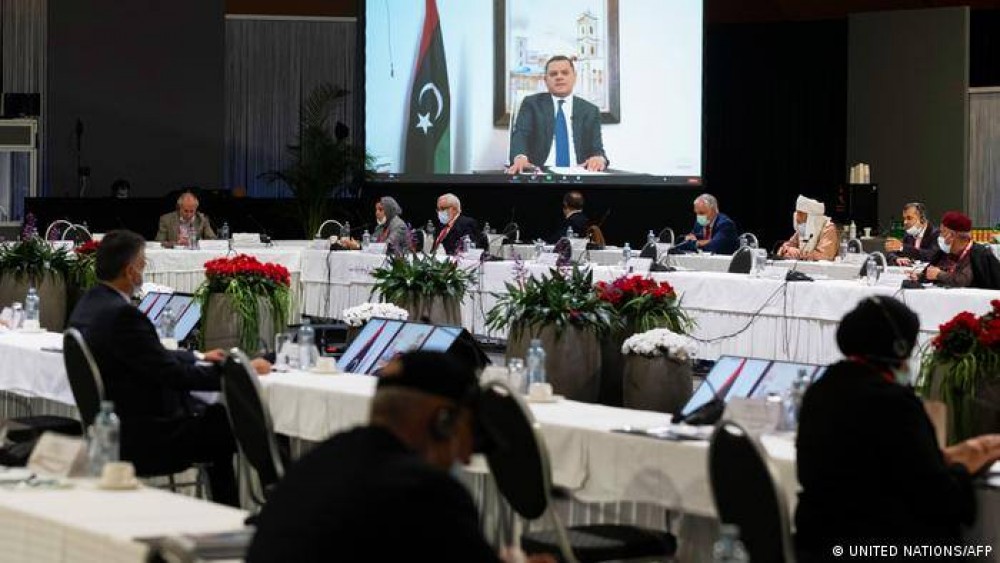
Last Friday, Libyan political elite and tribal leaders elected a new transitional government through the UN mediation. The results came surprisingly: Mohammed al-Menfi was elected president of the transitional government, and Abdulhamid Dbeibeh prime minister. One of the leading figures in the Libyan process, Turkey-backed Fathi Bashagha, and the Paris-Cairo duo-backed Aguila Saleh were left out. 

Many suppose that Turkey has benefited from the latest process. In his first statement, the new prime minister Dbeibeh, who is said to have business ties with the Muslim Brotherhood, described Turkey as a friend and brother, as the biggest partner. Interestingly enough, Dbeibeh hails from the Turkish-controlled Misrata region. 

Yet, it is too early to draw any serious conclusions. The new government must form a cabinet in three days, and in three weeks, Hafter-controlled House of Representatives will have to entrust in that cabinet. The transitional government must ensure that national elections are held in December, 10 months later. 

Therefore, one can argue that in a situation where no one has won or lost yet, all foreign actors react positively to the government by Libya's domestic forces. However, the latest process does not mean that a middle ground has been established amongst foreign powers interested in Libya. 

Related work

Expert opinion

US foreign policy before midterm election

As the US midterm election is approaching, the correlation between President Trump’s statements and actual US policies, gets more and more uncertain. And while his occasional eccentricities on Twitter or during rallies with supporters, have become part of a po...

Murad Muradov, 27 October 2026

Expert opinion

Connecting Central Asia and the South Caucasus

On November 15, Azerbaijan formally joined the Central Asian Consultative Meetings, expanding what was known as the Central Asian Five (C5) into a Central Asian Six (C6). Many in Central Asia find it surprising. But when viewed through the lens of recent geopo...

Gulkhanim Mammadova, 1 December 2025

Expert opinion

Azerbaijan joins the C5: implications for Eurasian regional architecture

When the long-standing C5 format of Central Asian cooperation formally expanded into a C6 on 15 November in Tashkent, Azerbaijan’s accession was framed as a natural extension of historical and linguistic affinities. Yet behind the rhetoric lies a structural tr...

Gulkhanim Mammadova, 21 November 2025

Expert opinion

Kazakhstan joins the Abraham Accords: Pragmatism or Symbolism?

Kazakhstan’s accession to the Abraham Accords—anticipated in some political circles—may still raise eyebrows. Unlike the original signatories, who were establishing relations with Israel from scratch, Kazakhstan has long maintained cordial ties with the Jewish...

Rusif Huseynov, 9 November 2025

Expert opinion

13 June attack: quick comments

In the most extensive attack on Iran since the country’s 1980-88 war with Iraq, Israeli forces have launched multiple waves of nationwide bombings. The attack is ongoing and believed to be the opening shots of a wider campaign to degrade Iran’s military comman...

Murad Muradov, 13 June 2025

Expert opinion

Historic First in Tbilisi: Armenia, Azerbaijan and Georgia trilateral talks

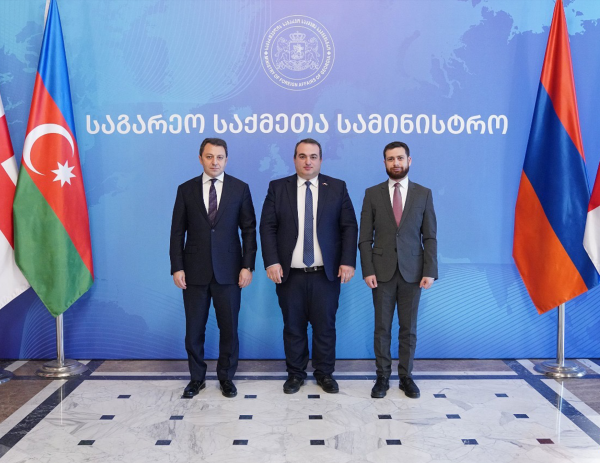
On April 17, Tbilisi hosted the first-ever formal trilateral meeting between the foreign ministries of Armenia, Azerbaijan and Georgia. According to official statements, the primary aim of the meeting was to create a platform for open dialogue and to explore p...

Gulkhanim Mammadova, 17 April 2025

Expert opinion

Munich speech, 18 years later

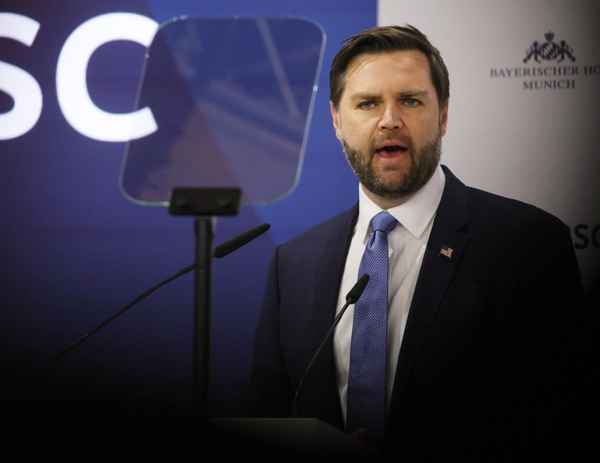
The Munich speech of the U.S. Vice President J. D. Vance will definitely enter the textbooks of the future as one of the harbingers of a new historic period. This speech has been arguably more shocking than Vladimir Putin’s diatribe he made on the same stage 1...

Murad Muradov, 19 February 2025