

Topchubashov Center
Expert opinion 2 min read

Forced reintegration: Nagorno-Karabakh case

Forced reintegration: Nagorno-Karabakh case
Rusif Huseynov Co-founder, Director Published

Listen to this article Read by an AI voice

The demise of the Soviet Union and Yugoslavia in Europe triggered not only a parade of sovereignties on the ruins of the two former confederations but also generated ethnic/territorial problems and breakaway regions. While some of them have eventually turned into frozen conflicts and unrecognized entities (Transnistria, Abkhazia, South Ossetia, Donbas) and a special case, sui generis in the form of a universally recognized state (Kosovo), yet other conflict patterns ended with the reintegration of breakaway provinces into their parent states. 

Except for the Gagauz Republic, a semi-independent entity (1990-1994), which opted for peaceful reintegration with Moldova, other cases in the Balkans and Eurasia constituted rather forced reintegration of three proto-states run by warlords, through a war: Republic of Serbian Krajina (1991-1995), now part of Croatia; Republika Srpska (1992-1995), now part of Bosnia and Herzegovina (it is a complicated matter and subject to further discussion); Chechen Republic of Ichkeria (1991-2000), now part of the Russian Federation. 

Another notable example of the forced reintegration in recent history happened in South Asia, where the Sri Lankan authorities coercively restored full sovereignty over the entire island in 2009 (26 years after the onset of the conflict), by extinguishing the statehood aspirations of the Tamil militants. 

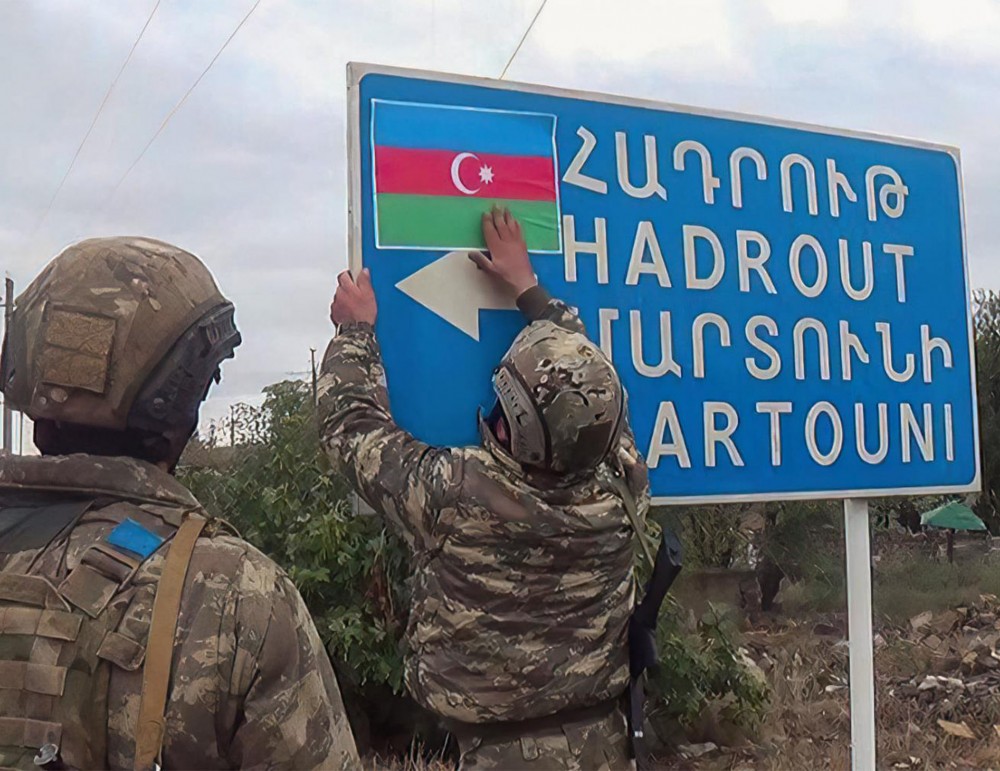
Nagorno-Karabakh, the hottest out of all the frozen conflict in the post-Soviet space, has become a flashpoint since September 27, when the Azerbaijani army launched the successful de-occupation campaign. Having tolerated fruitless talks for the past 26 years, which were used by the Armenian side simply to protract the skewed post-1994 status quo, Azerbaijan finally managed to breach it after a month of fighting. The Azerbaijani military restored the country`s sovereignty over a vast piece of land and the border with Iran, ironically assuming the responsibility for implementing UN Security Council resolutions dating back to 1993 and forcing the withdrawal of Armenian armed groups from Azerbaijan`s territories.

 

Related work

Expert opinion

US foreign policy before midterm election

As the US midterm election is approaching, the correlation between President Trump’s statements and actual US policies, gets more and more uncertain. And while his occasional eccentricities on Twitter or during rallies with supporters, have become part of a po...

Murad Muradov, 27 October 2026

Expert opinion

Connecting Central Asia and the South Caucasus

On November 15, Azerbaijan formally joined the Central Asian Consultative Meetings, expanding what was known as the Central Asian Five (C5) into a Central Asian Six (C6). Many in Central Asia find it surprising. But when viewed through the lens of recent geopo...

Gulkhanim Mammadova, 1 December 2025

Expert opinion

Azerbaijan joins the C5: implications for Eurasian regional architecture

When the long-standing C5 format of Central Asian cooperation formally expanded into a C6 on 15 November in Tashkent, Azerbaijan’s accession was framed as a natural extension of historical and linguistic affinities. Yet behind the rhetoric lies a structural tr...

Gulkhanim Mammadova, 21 November 2025

Expert opinion

Kazakhstan joins the Abraham Accords: Pragmatism or Symbolism?

Kazakhstan’s accession to the Abraham Accords—anticipated in some political circles—may still raise eyebrows. Unlike the original signatories, who were establishing relations with Israel from scratch, Kazakhstan has long maintained cordial ties with the Jewish...

Rusif Huseynov, 9 November 2025

Expert opinion

13 June attack: quick comments

In the most extensive attack on Iran since the country’s 1980-88 war with Iraq, Israeli forces have launched multiple waves of nationwide bombings. The attack is ongoing and believed to be the opening shots of a wider campaign to degrade Iran’s military comman...

Murad Muradov, 13 June 2025

Expert opinion

Historic First in Tbilisi: Armenia, Azerbaijan and Georgia trilateral talks

On April 17, Tbilisi hosted the first-ever formal trilateral meeting between the foreign ministries of Armenia, Azerbaijan and Georgia. According to official statements, the primary aim of the meeting was to create a platform for open dialogue and to explore p...

Gulkhanim Mammadova, 17 April 2025

Expert opinion

Munich speech, 18 years later

The Munich speech of the U.S. Vice President J. D. Vance will definitely enter the textbooks of the future as one of the harbingers of a new historic period. This speech has been arguably more shocking than Vladimir Putin’s diatribe he made on the same stage 1...

Murad Muradov, 19 February 2025