

Armenia-Azerbaijan Track 2: the ice is melting
Before the 2020 Karabakh War, the Armenia–Azerbaijan Track 2 diplomacy existed more as an aspiration than a lived reality. Dialogues were episodic, heavily mediated by third parties, geographically distant from the region, and largely disconnected from actual decision-making. Mutual visits were rare to the point of being unthinkable – exceptional and often sensationalized – and when they did occur, they tended to be symbolic rather than substantive.
The 2020 war shattered this already fragile framework. Repairing and rebuilding confidence required considerable effort, yet in the first couple of years after the war, the overall environment between Armenian and Azerbaijani experts remained tense, nervous, and far from constructive. Over time, however, this began to change. Thanks to the perseverance of Armenian and Azerbaijani experts determined to restore broken channels of dialogue, as well as the sustained efforts of international organizations that – despite widespread pessimism – continued to bring specialists together across different venues, formats, and sequences of meetings, space for engagement slowly reopened. Quietly but unmistakably, the ice is melting.
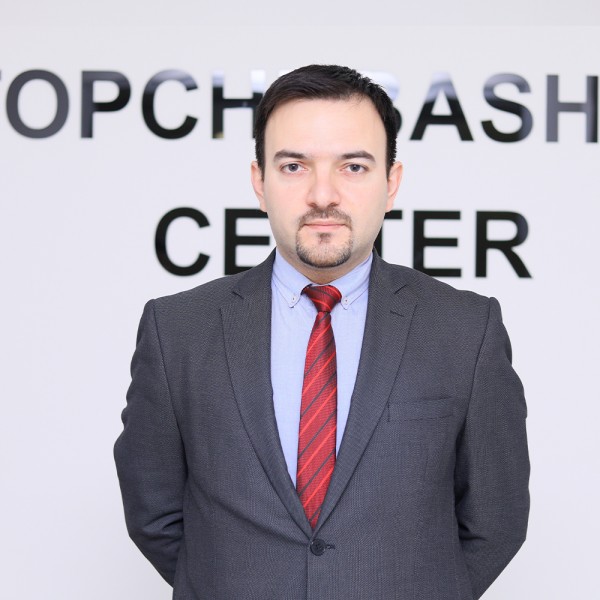
Over the past few months, a series of developments has reshaped the landscape of Armenian–Azerbaijani expert-level engagement. What makes this moment distinctive is not merely the resumption of dialogue, but the emergence of direct, reciprocal, and government-supported Track 2 interactions, a qualitative shift that would have seemed implausible even a year ago. The first sign came in September, when Murad Muradov, Deputy Director of Topchubashov Center, participated in the NATO Rose-Roth Seminar in Yerevan. A sensation in media, the visit carried symbolic weight: an Azerbaijani expert engaging openly in Armenia’s capital under an international format, with the tacit acceptance of both sides.
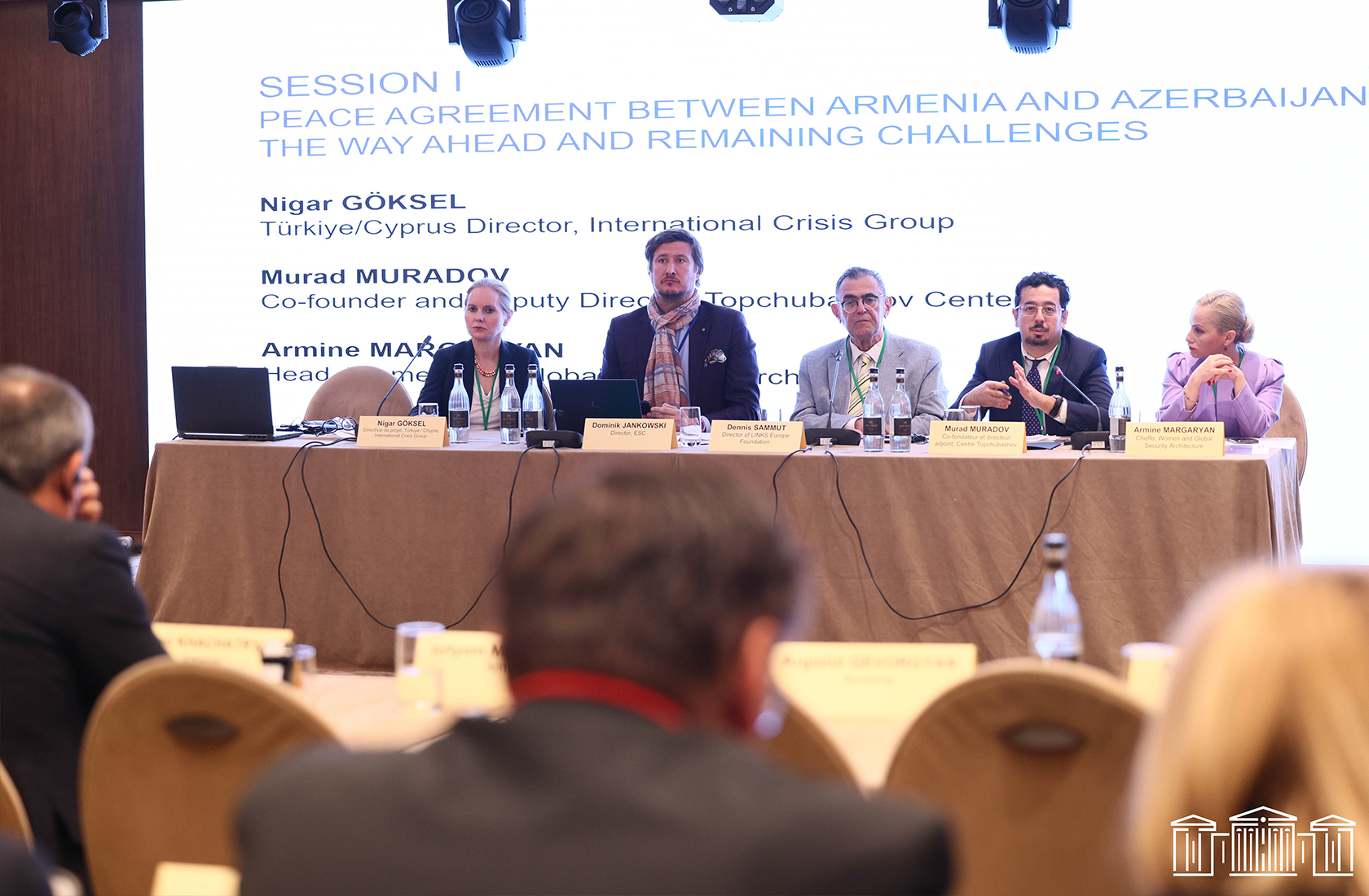
Murad Muradov speaking during the NATO Rose-Roth Seminar in Yerevan, Armenia.
A more consequential step followed in October with the launch of the Armenia–Azerbaijan Peace Bridge initiative. For the first time, a group of five Azerbaijani experts, including Topchubashov Center Director Rusif Huseynov, flew directly from Baku to Yerevan for a structured dialogue with Armenian counterparts on 21-22 October. This was not a meeting on neutral ground, nor a side event at an international conference abroad. It was a direct visit, organized as such, and openly acknowledged.
Momentum continued in early November, when Rusif Huseynov and Zaur Shiriyev, another Azerbaijani expert, traveled to Yerevan to speak at the Orbeli Forum, a government-supported international conference. Their participation underscored a growing normalization of expert presence across borders, even in semi-official and public-facing settings.
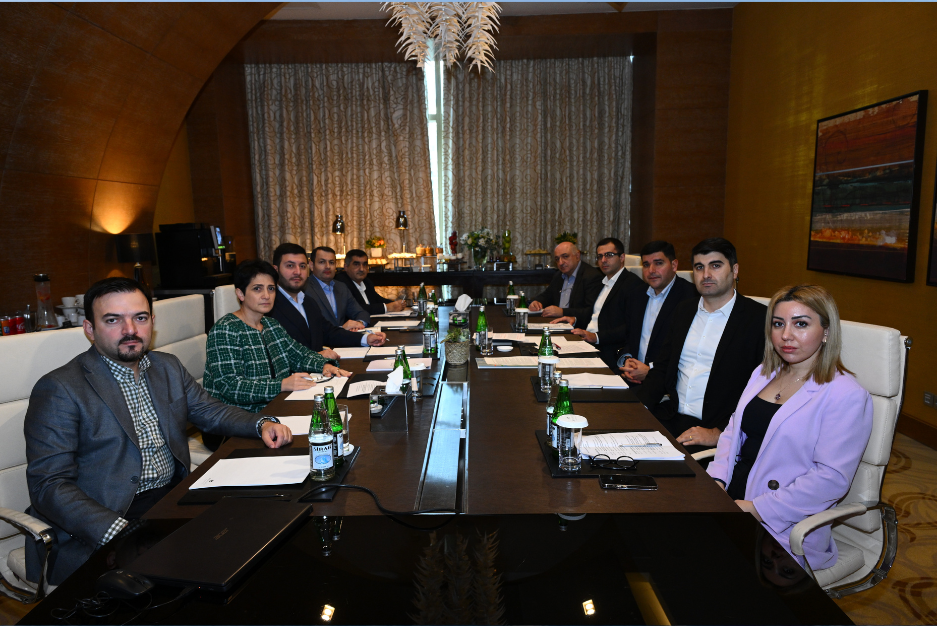
Crucially, this was not a one-way street. On 21–22 November, Armenian participants of the Peace Bridge initiative paid a reciprocal visit to Baku, completing a cycle of mutual engagement that remains unprecedented in the post-war period. This visit continued the discussion launched a month before and focused on concrete projects the parties had agreed to jointly conduct in the next half a year. Taken together, these visits signal more than confidence-building measures. They reflect a structural shift in how Track 2 diplomacy is conceived and practiced in the South Caucasus.

Visit of Armenian experts to Baku, Azerbaijan, accompanied by Azerbaijani experts, including Rusif Huseynov.
One of the most striking features of this new phase is the explicit support of both governments. This support is neither accidental nor contradictory to the current stage of the peace process. On the contrary, it is entirely logical.
Today, the Armenia–Azerbaijan peace process is fundamentally state-driven as the core issues – peace deal, border demarcation, connectivity projects – fall squarely within the prerogative of governments. Political will, not civil society initiative, is the decisive variable. In such a context, think tanks, expert communities, and NGOs are catching up and adapting to it, seeking spaces where they can add value without overstepping their role.
Moreover, without governmental backing, the recent mutual visits would have been impossible. Security arrangements for Armenians in Baku and Azerbaijanis in Yerevan required individualized, pre-approved protocols. Within the Peace Bridge initiative, governments went further – allocating separate aircraft, covering accommodation and logistical expenses, and facilitating meetings with senior officials, including Armen Grigoryan, Secretary of the Security Council of Armenia, in Yerevan and Hikmat Hajiyev, Assistant to the President of Azerbaijan, in Baku. These were not symbolic gestures; they were concrete investments in controlled, confidence-based engagement.
Importantly, the Peace Bridge does not amount to monopolization. Other Armenian–Azerbaijani and regional Track 2 efforts continue to exist, whether bilaterally or with third-party facilitation by organizations such as CMI, HD, GSCP, or LINKS Europe. These formats play a valuable role, particularly in sustaining dialogue over time, introducing comparative perspectives, and engaging broader networks.
Yet it would be disingenuous to deny that the Peace Bridge currently enjoys a structural advantage. Government backing simplifies organizational hurdles, grants proximity to senior decision-makers, and provides participants with first-hand insights into official thinking. In a transitional moment like the present, proximity matters.
Meanwhile, the revival of Track 2 (or Track 1.5 as the governments` support is acknowledged) diplomacy should not be romanticized. Expectations must remain realistic. Such engagement will not negotiate borders, draft peace treaties, or resolve security dilemmas. Those responsibilities lie with governments, and rightly so.
The danger lies not in underestimating Track 2, but in overloading it with tasks it cannot perform.
Where the expert community can make a meaningful contribution is elsewhere. First, through policy-relevant recommendations grounded in empirical research rather than political posturing. Second, through joint studies and co-authored analyses that model cooperation and normalize disagreement without demonization. Third, through narrative work – challenging zero-sum framings, humanizing the “other side,” and gradually preparing societies for the psychological transition from conflict to coexistence.
This last point is perhaps the most underestimated.
Peace agreements are signed by governments, but peace is lived by societies. Years of war, trauma, and securitized discourse have produced deeply entrenched perceptions on both sides. Track 2 platforms – especially those involving direct, face-to-face interaction – can begin to erode these barriers in ways official diplomacy cannot.
The current thaw in Track 2 engagement should be understood as both an opportunity and a test. Its sustainability will depend on three factors: continued governmental tolerance, responsible behavior by participants, and the ability of expert communities to demonstrate relevance without politicization. If handled carefully, this phase can help align societal discourse with political reality, reducing the risk that future agreements are undermined by public backlash or misperception. If mishandled – through inflated expectations, performative activism, or instrumentalization – it could reinforce skepticism on all sides.
The ice between Armenia and Azerbaijan is not gone. But it is cracking. Mutual visits, once unimaginable, are becoming frequent. Direct conversations, once taboo, are now possible. In a region where symbolism often precedes substance, this matters. Track 2 is no longer frozen. The task now is to ensure that as the ice melts, it reveals solid ground rather than thin water.