

Moldova at a strategic crossroads: how the revival of the union debate reveals Moldova’s geopolitical uncertainty
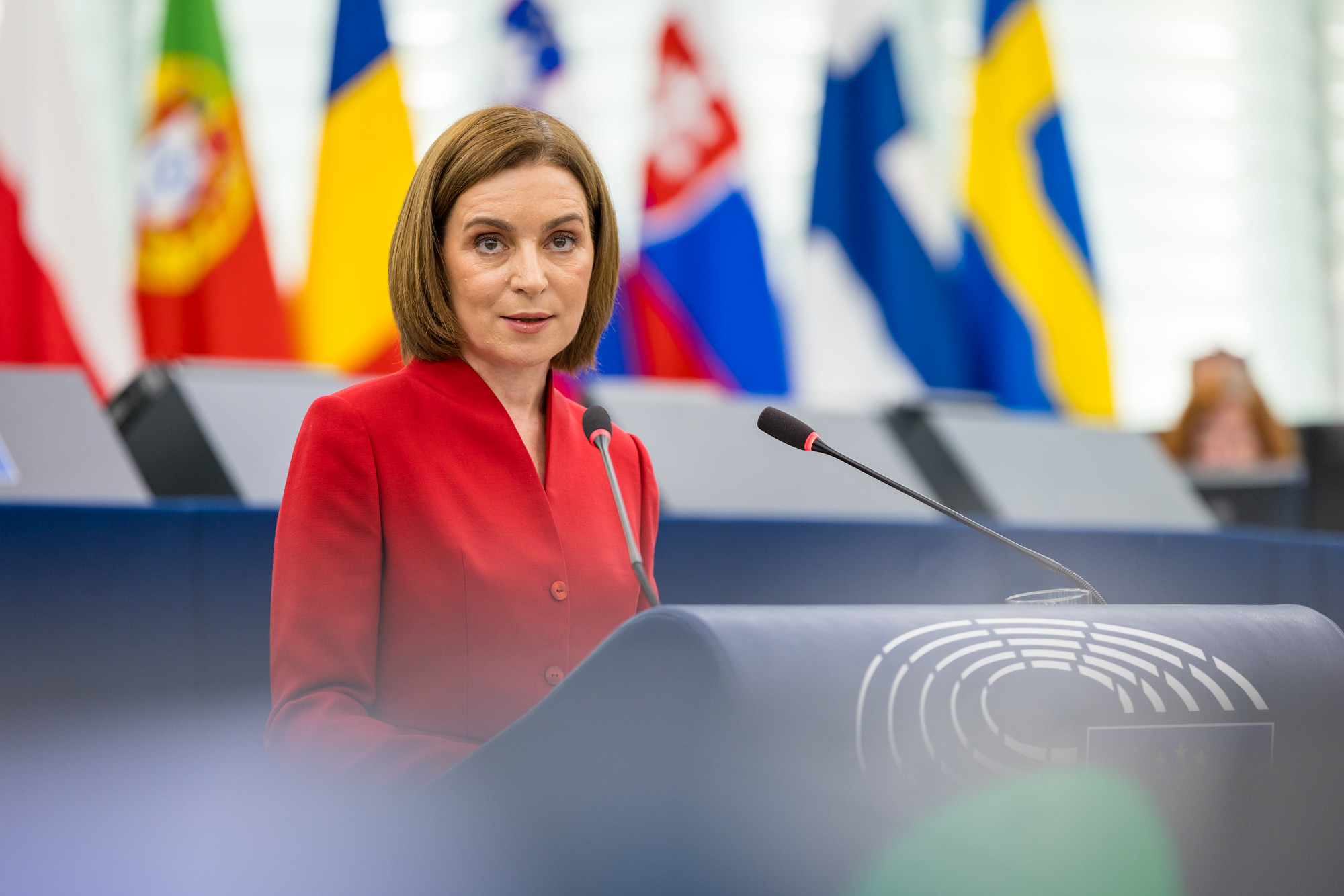
In early 2026, Moldovan President Maia Sandu's remark unexpectedly rekindled a highly sensitive and historically charged issue: the potential unification with Romania. During a public interview, she said she would personally support such a move if it were decided in a national referendum. While presented as a personal view rather than an official policy, the statement quickly resonated throughout the region.
Reactions from political figures in Chișinău, Bucharest, and Moscow demonstrate that even a tentative comment can influence a complex geopolitical landscape, with interpretations rooted in each actor's strategic interests. In Moldova, where sovereignty, identity, and geopolitical alignment are deeply intertwined, this incident sparked a debate that moved beyond a personal remark and into the realm of regional political and strategic discussion.
More broadly, Maia Sandu's remark offers a revealing snapshot of Moldova’s contemporary political environment, where questions of European integration, Russian influence, and national identity remain deeply intertwined.
The Debate in Chișinău: Polarisation and Public Opinion
The political repercussions of Sandu’s remark were swiftly evident in Chișinău, where the country’s relations with Romania and its enduring strategic outlook have historically been among the most contentious issues in internal discussions.
Though the subject has been raised previously, most notably by Sandu herself in 2016 and 2018, the President’s statement on the British podcast The Rest is Politics elicited strong reactions from Moldova’s political opposition.
Former President Igor Dodon, the leader of the Pro-Russian Party of Socialists, accused Sandu of undermining Moldova’s sovereignty, asserting that considering a union contradicts the President's constitutional role as guarantor of national sovereignty and territorial integrity, as stipulated in Article 77 of the Moldovan Constitution.
In addition to reflecting Moldova’s longstanding internal divide between pro-European actors and parties favouring closer relations with Russia, the debate also points to deeper societal dynamics in which Moldova and Romania are linked not only by language and history, but by a dense web of social connections. One of the clearest indicators of this is dual citizenship: in a country of around 2.4 million people, roughly 1 million citizens have acquired or are in the process of obtaining Romanian passports, with the practical benefits of access to the European Union’s labour market and freedom of movement.
Yet these social ties do not necessarily translate into political support for reunification.
According to recent polling data from IMAS, approximately 52% of Moldovans oppose unification with Romania, whereas roughly 30% support it in a hypothetical referendum.
In contrast, support for the nation's European trajectory remains substantially higher; surveys consistently demonstrate that a decisive majority of Moldovans endorse European Union membership.
This discrepancy highlights the central paradox within Moldova’s domestic discourse.
Cultural affinity with Romania coexists with a political inclination towards European integration as an autonomous state.
In this context, President Sandu’s statement did not introduce a new political initiative; rather, they once again highlighted the underlying divisions that continue to shape Moldova’s strategic trajectory.
Regional Responses: Caution in Bucharest
The debate did not remain confined to the Moldovan political arena; given the topic's sensitivity and the increasing tension in the region, it quickly spread beyond Chișinău.
In Bucharest, the dominant tone was one of caution. Romanian political leaders have repeatedly avoided endorsing the prospect of immediate reunification, reiterating their consistent support for Moldova’s sovereignty and European integration. The cautiousness was also confirmed by President Nicușor Dan, who emphasised that any decision regarding Moldova should be taken by Moldovan citizens, stressing that Chișinău’s European path remains the most realistic framework for closer integration between the two states.
Beyond the debate over reunification, Dan's statement solidifies the political stance maintained in Bucharest over recent years, during which Romania has remained Moldova’s closest political and institutional ally. As repeatedly affirmed in Bucharest's political discourse, Romania has consistently been one of the most active supporters of Moldova’s European path. This support encompasses direct financial aid, collaborative initiatives in education and healthcare, infrastructure investments, energy projects, and technical assistance initiatives designed to align Moldova with the standards of the European Union.
This approach could also reflect a strategic calculation in Bucharest. Openly advocating for reunification could risk intensifying Moldova’s internal political polarisation while simultaneously reinforcing narratives promoted by pro-Russian actors and regions that frame European integration as a threat to Moldovan sovereignty.
For this reason, Romanian policymakers have increasingly prioritised Moldova’s gradual integration into European structures rather than presenting territorial reunification as an immediate political objective.
Moldova Between War and Integration: A Strategic Vulnerability
Although it is merely a personal statement and unlikely to develop into a definitive political initiative in the near future, the importance of the debate over Moldova’s future orientation becomes clearer when viewed within the wider regional security context. The timing of President Sandu’s remarks aligns with renewed diplomatic engagements between Washington and Moscow regarding the conflict in Ukraine, alongside an increasing willingness among certain political leaders to cautiously reinstate communication channels with the Kremlin.
In this ever-changing geopolitical landscape, Chișinău must reconsider strategies to attract and maintain international attention, especially regarding EU integration, while also handling the influence of neighbouring powers. Beyond structural issues such as ongoing economic instability, reliance on external energy sources, and insufficient military capabilities, which have repeatedly made Moldova vulnerable to external pressures, Chișinău's fragility also stems from its unresolved territorial conflicts.
While different in weight and status, the separatist territory of Transnistria and the autonomous region of Gagauzia have, for different reasons, long represented a thorn in the flesh of Moldovan internal and external politics.
The silent but inherent pressure exerted by Tiraspol, which since the 90s has operated as a de facto state with Russian political backing, signifies for Chișinău a continued Russian troop presence and a strategic foothold for the Kremlin, useful for influencing Moldova’s political trajectory and the broader European Union's Eastern frontier.
At a time when Russia’s broader influence across the post-Soviet space has been increasingly challenged, the Kremlin continues to view Moldova and its breakaway and autonomous regions as important geopolitical levers for limiting the country’s alignment with Euro-Atlantic structures.
Unsurprisingly, then, this perception has also been reinforced in official rhetoric, with the Foreign Minister, Sergey Lavrov, warning that any scenario leading to Moldova’s political merger with Romania would be “destructive to Moldovan statehood,” framing the debate within the broader geopolitical competition shaping Eastern Europe.
On the other hand, against this background, Chișinău has never concealed its accelerated political orientation towards Europe and its distancing from the Moscow-led regional framework, reflecting the government’s strategic change in interests. Simultaneously, the European Union, despite remaining silent on Sandu's declaration, has increased its political, financial, and energy support for Moldova, bolstering the country’s institutional resilience and advocating for its path toward EU membership.
This is why Moldova’s strengthening partnership with the European Union has increasingly been seen not only as an economic and political project, but also as a strategic response to the country's inherent internal and external pressures and vulnerabilities.
Beyond the remark: Moldova’s strategic Crossroads
Maia Sandu’s remark ultimately reveals more than a hypothetical political scenario. Rather than signalling an imminent project, the episode underscores how profoundly Moldova’s future trajectory is rooted in and influenced by the country’s political, social, and geopolitical landscape. The reactions that followed, from domestic political actors to regional stakeholders, revealed the persistent tensions between cultural affinity with Bucharest, the desire for European integration (supported by half of the population) and the enduring influence of broader geopolitical rivalries shaping Eastern Europe.
In this regard, despite being hypothetical, the debate carries potentially important strategic implications.
Were this discussion ever to evolve into a referendum leading to political integration with Romania, Moldova would effectively become part of the institutional and security framework of both the European Union and NATO. Such a development would shift the geopolitical frontier of the Euro-Atlantic space eastward toward the Dniester River, raising complex questions about the status of Transnistria and Gagauzia, a hub of Russian influence, whose elites could trigger legal proceedings to demand self-determination if Moldova ceases to exist.
Moldova’s trajectory will likely depend less on the revival of historical debates over reunification than on its capacity to strengthen domestic resilience while navigating an increasingly complex regional environment.
The interplay between internal stability, sustained European support, and the evolving security landscape in Eastern Europe, especially in light of the continuation and the outcome of the war in Ukraine, will ultimately shape the strategic options available to Chișinău in the years ahead.