

Railroad to Peace: A Promising TRIPP for Azerbaijan
After the Second Karabakh War, Armenia-Azerbaijan normalization talks have been structured around three main tracks: peace agreement, border delimitation and demarcation, and the restoration of transport connectivity. While each of these tracks continues to face political and technical challenges, the connectivity agenda has advanced the furthest. Recently, trains carrying Russian and Kazakh grain have transited Azerbaijani territory to reach Armenia, marking a practical step toward restoring cross-border transport links. Baku and Yerevan have also secured international support for connectivity projects that will not only reconnect their economies but also integrate them into wider regional value and supply chains.
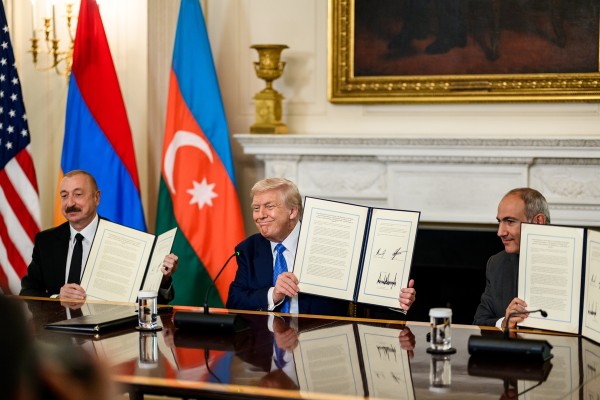
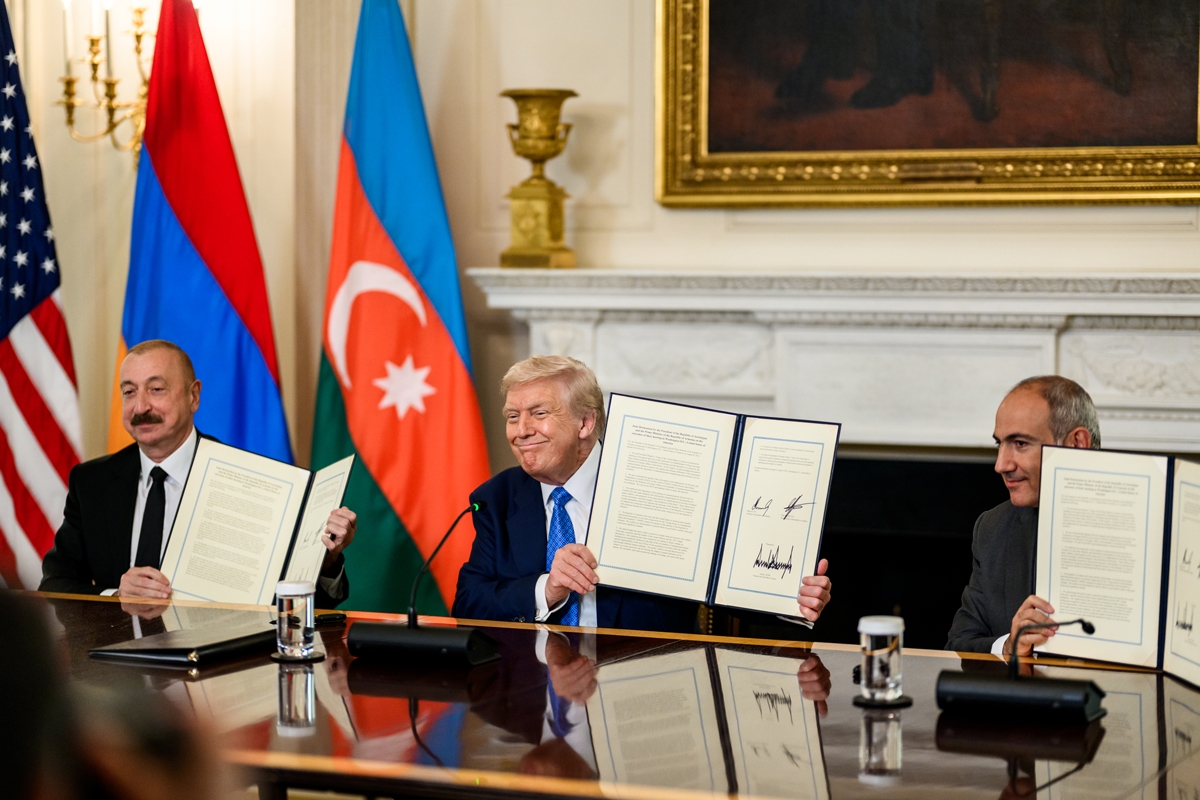
This is where the TRIPP comes in. On August 8, 2025, Armenian and Azerbaijani leaders signed the Washington Declaration at the White House, pledging to reopen transport routes between the two countries. Under the agreement, the route linking mainland Azerbaijan to Nakhchivan via Armenian territory was formalized as the “Trump Route for International Peace and Prosperity.”
By recognizing Armenia’s sovereign rights over the territory through which the route passes, while meeting Azerbaijan’s demand for unimpeded access to its Nakhchivan exclave, the arrangement attempted to strike a middle ground between Yerevan’s Crossroads of Peace initiative and Baku’s Zangezur Corridor project.
For both sides, U.S. involvement provides not only much-needed financial support but also a political guarantee that raises the costs of non-compliance.
At first, however, many observers doubted whether Washington would follow through on its TRIPP-related commitments. Accordingly, the U.S.-facilitated Washington Declaration looked like a diplomatic low-hanging fruit for the Trump administration, more a short-term PR victory than a durable strategic investment in a region often viewed as peripheral to U.S. interests. The perception was reinforced by Washington’s simultaneous engagement in crises in Ukraine, the Middle East, and East Asia, which seemed to leave little political bandwidth for sustained involvement in the South Caucasus. Furthermore, the U.S. military intervention in Venezuela created an impression that Washington would prefer a return to a Yalta-style division of the world into great power spheres of influence, deferring to Russia’s primacy in its so-called near abroad. Such hegemony would cast a shadow on the long-term viability of the TRIPP project.
Yet recent developments suggest that Washington’s commitment may be deeper than many initially assumed. In February, U.S. Vice President James Vance visited Armenia and Azerbaijan, one of the highest-level American visits to both countries in decades, signaling Washington’s willingness to take tangible steps to advance the project. On the eve of the trip, Armenia and the United States unveiled the TRIPP Implementation Framework, a non-binding document outlining the mechanisms through which the initiative will be realized. At the center of the plan is the TRIPP Development Company, a U.S.–Armenian joint venture tasked with constructing and operating railways and other infrastructure along the corridor for the next 49 years. Giving the U.S. companies an inroad to the region, the initiative also supports Yerevan’s broader effort to diversify its heavy economic dependence on Russia.
In Yerevan, Vance emphasized Washington’s intention to mobilize private capital and international partners to accelerate the project’s implementation. He also highlighted TRIPP’s potential to facilitate the normalization of Armenia’s relations with both Azerbaijan and Turkey. In Baku, meanwhile, U.S.–Azerbaijan cooperation on TRIPP was framed as part of Washington’s broader effort to strengthen Trans-Caspian connectivity, with Azerbaijan serving as a pivotal link.
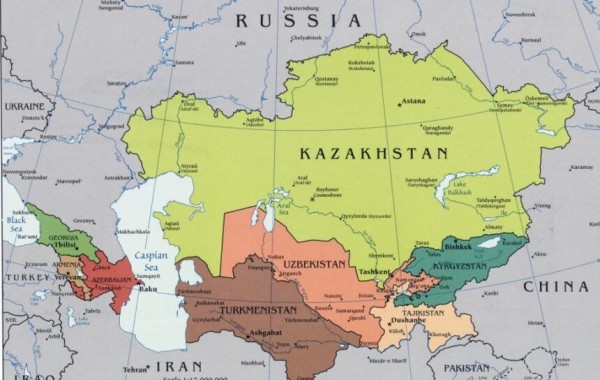
As Central Asia gains strategic importance in the U.S.–China competition over critical raw materials, Washington has growing incentives to develop resilient supply chains to the region, which elevates the significance of the Black Sea–Caspian Sea corridor in U.S. strategic thinking.
Armenia and Azerbaijan themselves possess critical mineral reserves that, if successfully developed, could be integrated into these emerging regional supply chains through TRIPP.
Azerbaijan’s interests in TRIPP
For Baku, TRIPP represents an opportunity to consolidate the gains of the post–Second Karabakh War landscape. First, the corridor promises to provide Azerbaijan with long-sought unimpeded access to its Nakhchivan exclave, whose economy has for decades remained largely isolated from regional markets. The route also aligns with Baku’s broader plans to revitalize the recently liberated territories in southwestern Azerbaijan, through which the new rail and road networks are expected to pass. Yet most importantly, TRIPP would deepen Azerbaijan’s physical connectivity with its regional ally, Turkey. In 2025, Ankara started the construction of the 224-kilometer Kars-Dilucu railroad that will connect it with Nakhchivan. At a time when the South Caucasus is increasingly squeezed between the war in Ukraine to the north and the Iran-Israel war to the south, such a link offers Baku a strategically valuable outlet to connect with its regional and global partners.
TRIPP also adds a valuable southern leg to the South Caucasus branch of the Middle Corridor, the emerging transport route linking China with Europe through Central Asia and the South Caucasus. As traditional trade corridors running through Russia’s rail network and the Suez Canal have been facing mounting disruptions in recent years, the Middle Corridor has gained renewed strategic importance. In this evolving landscape, Baku increasingly views the route not merely as a transit node but as the backbone of a broader economic corridor connecting the South Caucasus with Central Asia. The vision extends beyond container shipments to encompass energy links, digital infrastructure, and critical raw materials supply chains. Reflecting this broader ambition, the TRIPP Implementation Framework also envisages the construction of electricity grid connections, oil and gas pipelines, and fiber-optic networks alongside the restoration of rail and road connectivity between Armenia and Azerbaijan.
No less significant are geopolitical dividends that TRIPP could deliver for Baku. By linking the initiative to Donald Trump’s transactional approach to diplomacy, both Armenia and Azerbaijan were able to use the momentum of the Washington Declaration to strengthen their ties with the United States and encourage a greater American presence in the South Caucasus. For Azerbaijan in particular, the shift has helped elevate relations with Washington, which were badly strained during the Biden administration, to the level of a strategic partnership. Deeper engagement with the United States could also pave the way for easing the restrictions imposed under Section 907 of the Freedom Support Act, a relic of the 1990s that has long limited U.S. government assistance to Azerbaijan because of the conflict with Armenia. More broadly, a growing American footprint in the region provides Baku with a stronger Western vector to balance the influence of Russia and Iran.
Much as it did in the 1990s, Azerbaijan seeks to anchor multiple great powers in regional economic and security frameworks so that none of them can dominate the South Caucasus. Today, Baku possesses greater economic and geopolitical leverage and new connectivity initiatives such as TRIPP may further expand its room for strategic hedging.
TRIPP can also strengthen Azerbaijan’s evolving partnership with the European Union. In recent years, Baku-Brussels relations have faced significant strains, particularly after Azerbaijan used force to restore full control over the Karabakh region in September 2023. Relations were further complicated by concerns in some European circles that Baku might resort to military means to open the Zangezur Corridor through southern Armenia. The emergence of TRIPP as a compromise framework, however, helps shift that narrative by embedding regional connectivity within a cooperative and internationally backed initiative. For the European Union, the project also aligns with its broader strategic priorities in the eastern neighborhood. Brussels’ first-ever Black Sea Strategy, adopted in May 2025, underscored the importance of the Black Sea–Caspian Sea corridor as part of Europe’s wider effort to diversify supply chains away from dependence on Russia and China. A stable South Caucasus is essential to that vision, and TRIPP offers a complementary link to trans-Caspian connectivity. Reflecting this convergence of interests, the EU and Azerbaijan agreed in January to launch a feasibility study under the Global Gateway initiative for the development of the Nakhchivan railway project.
For Azerbaijan, TRIPP is also tied to its “winning the peace” strategy after the Second Karabakh War. Baku’s logic is that Armenia’s integration into regional economic frameworks – supported by different power centers – would significantly raise the costs of any future revanchist challenge. By embedding Armenia in a network of trade, infrastructure, and energy links, Azerbaijan hopes to make the postwar status quo more durable. In this sense, Baku recognizes that long-term stability requires that Armenia, too, benefit from the emerging regional order.
Looming challenges
When TRIPP was declared in Washington in August 2025, many observers immediately pointed to obstacles that could derail the initiative. Chief among them were the potential for domestic backlash in Armenia and opposition from Russia and Iran, both wary of a U.S.-backed project expanding Washington’s footprint in the South Caucasus. More than half a year later, these concerns have not subsided. If anything, they have become more pronounced, raising serious questions about the project’s long-term viability.
A poll conducted by the International Republican Institute (IRI) in Armenia in early February found that only 24 percent of respondents fully supported the TRIPP initiative, while 34 percent were categorically opposed to it. With parliamentary elections scheduled for June, rising political tensions in Armenia are likely to further complicate the project’s domestic reception. At the same time, both Armenia and Azerbaijan have seen their relations with Russia deteriorate over the past year, adding a layer of geopolitical uncertainty. Moscow retains several levers of influence over the corridor’s future, including the presence of Russian border guards along parts of the route, Armenia’s membership in the Russian-led common customs system, and the control of the country’s railway infrastructure by a subsidiary of Russian Railways.
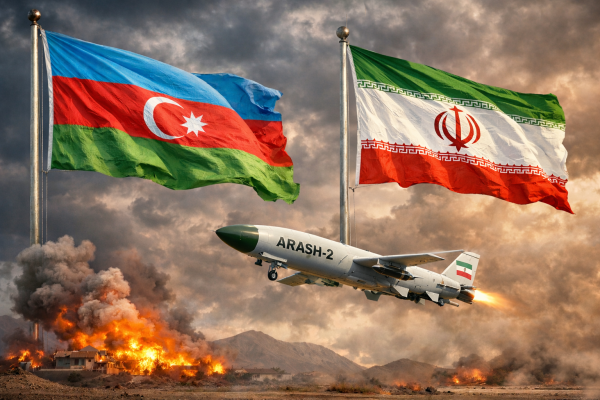
An even greater source of uncertainty may emanate from Iran. When TRIPP was first announced in August 2025, Ali Akbar Velayati, the foreign policy adviser to Iran’s late Supreme Leader Ali Khamenei, denounced the initiative and warned that Iran would turn the corridor into a “graveyard for American mercenaries.” Since February 28, the war between Iran and the United States has escalated dramatically, with both sides striking major economic infrastructure across the Persian Gulf.
As the war’s geographic scope expands, projects associated with a growing U.S. footprint in the region, including TRIPP, could increasingly fall within Tehran’s strategic radar. Even if the war ends soon, the conflict is likely to cast a long shadow over the regional investment climate, potentially complicating the realization of large-scale connectivity projects such as TRIPP.
Interestingly, the wars unfolding to the north and south of the South Caucasus may also create further incentives for cooperation between Baku and Yerevan. Armenia’s main trade outlets to global markets, routes running through Iran and Russia, now lie along the fault lines of major geopolitical confrontations, increasing the urgency of developing alternative channels such as TRIPP to preserve economic resilience. Azerbaijan, for its part, seeks reliable access to its key regional ally, Turkey, at a time when the regional balance of power is in flux. For both countries, the corridor therefore offers more than a transit route. It represents a potential anchor for economic stability in an increasingly turbulent neighborhood. The challenge ahead will be to embed TRIPP within a broader regional trade architecture, allowing Baku and Yerevan to earn from its economic benefits while avoiding costly backlashes from the regional powers.
The article's Polish version is HERE.