

Washington's “Absolute Resolve”: Shaking global order viewed from Azerbaijan
On January 3, the U.S. launched a lightning-speed operation in Venezuela, which lasted for about two and a half hours and ended with the capture of the country’s president Nicolas Maduro together with his wife. The couple was brought to New York where they are indicted with drug smuggling and will face a trial soon. The sheer audacity and cutting-edge precision of the operation stunned the whole world, which has not seen anything comparable for decades. But as the situation in Venezuela seems to be quite stable two weeks later and U.S. President Trump is already distracted with other international crises, it is time to reflect upon the lessons the world should learn, and estimate potential long-term consequences.
On the surface, the stunning American success in Caracas seems to have significantly hurt the reputation of Russia and China, both of whom had been to a certain extent patronising Maduro’s government. While no one would expect from them to enter a confrontation with Washington over Venezuela, Moscow’s and Beijing’s inability to anticipate and prevent the operation, as well as the fact that no attempt at resistance was made, emphasized the limits of their power projection and must have instilled deep concern in those governments of the Global South countries who have been relying on Russian or Chinese security guarantees. Reaction from Moscow was very restrained; Beijing was more outspoken, accusing the U.S. of acting like a “world policeman” and calling for the release of Nicolas Maduro, but was still far from convincing.
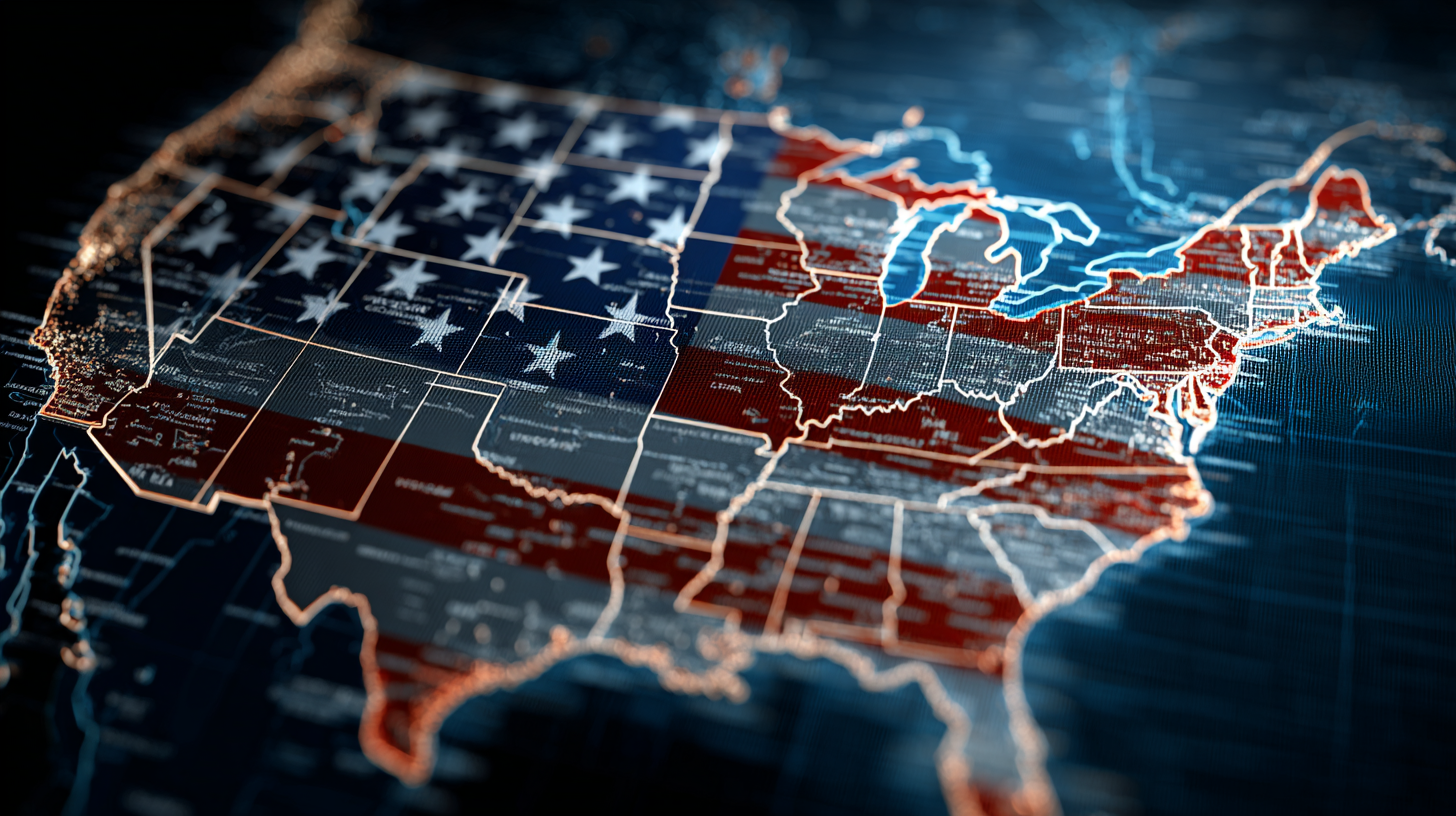
Such muted response triggered a resurgence of the narrative of “division of the world” between the three strongmen, Trump, Putin and Xi. This narrative implies the tacit consent of the latter two to the American takeover of Venezuela in accordance with the so-called “Donroe doctrine”, Donald Trump’s rebranding of the 200-year-old concept that envisaged Washington’s exclusive dominance over the Western hemisphere.
While this vision is definitely there – the White House has posted several pictures referring to America as “our hemisphere” since then – this narrative also insists that most possibly, the White House in response would green-light Moscow’s offensive in Ukraine (and potentially in other parts of the former USSR) and China’s absorbing of Taiwan. Many media have taken up this narrative, and some high-profile Russian experts actively flirt with it, forgoing the traditional criticisms of Washington’s neocolonialism and even of the recent capture of tankers carrying Russian oil.
However, this scenario is hardly true. First of all, the Trump administration’s ultra-pragmatic worldview can’t fail to notice the contrast between the successful operation in Venezuela and Russia’s aborted attempt to “take Kyiv in 3 days” that ended up in the bloodiest European war since 1945. While this administration may not be against Moscow’s expansionism in its “Near Abroad” in principle, supporting it against the background of its obvious inability to win would be meaningless. Moreover, the failure of overwhelmingly Russian-supplied Venezuelan air defence systems should be another reason for Washington not to consider Russia as an equal partner in dividing the world; instead, it seeks to impose itself as an ultimate arbiter in the Ukrainian war, which doesn’t really fit the image Russia has been trying to project. In fact, the “Donroe doctrine”, while asserting the American status in the Western hemisphere, doesn’t have to mean the withdrawal from the rest of the world; it rather wants to establish Latin America as a quiet backyard which can be the stable supplier of natural resources for U.S. economy which would sustain Washington’s status as the greatest power.
Moreover, American elites can hardly ever be satisfied with sacrificing its hegemony in Eurasia for the sake of elusive global “entente” which can hardly be sustainable. Yes, the 2025 U.S. National Security Strategy prioritises the Western Hemisphere as its core theatre, but it also makes clear that Washington will maintain a “vigilant posture in the Indo-Pacific” and prevent any single power from dominating regional waters.
Any assumption that a U.S. “pivot” to the Americas equates to ceding Asia to China is inconsistent with Washington’s renewed commitments to the defence of its treaty allies, including the Philippines. While American hegemony in the oceans is not a vital threat to Beijing per se, it would definitely put a cap on China’s economic and technological growth and revive the ghost of Western colonialism that has been driving the CPC’s quest for full strategic sovereignty for decades.
Finally, one should not forget that the “spheres of influence” approach to global governance can be functional only given the presence of a minimal set of universally accepted rules. It cannot be built while major powers are engaged in the active dismantling of remaining conventions. Indeed, the capture of an acting president, not in wartime but for criminal charges, by U.S. special forces broke the taboo on targeting heads of state (Panama’s General Noriega, arrested for the same charges on the same day of 3 January 36 years earlier, was not leading the country de jure). It is likely that other states might try to emulate this example at some point, which can lead to the uncontrolled spiralling of conflicts and exacerbation of global disorder. Definitely, the Caracas operation will spur disillusionment with international law and norms even among those actors who have been trying to stay within their framework until now, first of all Europe. For China, the narrative around reunification with Taiwan will probably shift further away from the dilemma of whether to break international order and undermine its reputation of a predictable actor, towards a merely pragmatic contemplation of the plausibility of a potential attack and its consequences. In turn, it means for Beijing an even stronger emphasis on pursuing a pro-active foreign policy with the purpose of building an ecosystem of favorable countries that would make it resilient against potential U.S. sanctions.
After an initial shock, many governments, particularly of the so-called “middle powers”, will race to bolster their security to protect themselves from potential interventions.
The example of North Korea, which, despite its radical rhetoric and constant threats against Seoul, remains immune to U.S. pressure, can become irresistible for other ambitious players. Türkiye is among them: President Erdoğan and the leader of Turkish nationalist party MHP, Devlet Bahçeli, on a number of occasions pondered about the need to acquire nuclear weapons. The intensification of Ankara’s security cooperation with Pakistan is interpreted as the signal that Türkiye is looking for a nuclear umbrella. The proliferation of nuclear weapons, which in theory intends to make the cost of war much higher, can create strong turbulence, posing the “haves” against “have-nots” and multiplying the risk of a conflict spiral.
Another consequence may be the replacement of hollowed-out and ineffective security blocks by a new generation of international unions. Some of the major existing blocks have been experiencing a severe crisis: Russian-led CSTO demonstrated its dysfunctionality during the Armenian-Azerbaijani 44-day war in 2020 and later in the context of Russia’s aggression against Ukraine, while NATO risks facing an existential crisis if the White House delivers on its announced intentions to take over Greenland, currently belonging to a NATO member-state, Denmark. Danish prime minister Mette Fredriksen expressed the significance of the moment, saying that “if the United States chooses to attack another NATO member militarily, then everything stops.” Some of the previous attempts to establish alternative hubs of global governance, such as BRICS, have also been unable to mount an adequate reaction to the recent US revisionism.
In the near future, we may expect the emergence of more robust blocks bringing together countries that share similar values and/or identities and are capable of enforcing a tougher discipline among its members.
For Azerbaijan, the Organization of Turkic States (OTS), which has been dramatically expanding its integration dynamics since 2021, can turn into such a vantage point for regional survival. In his recent interview, President Ilham Aliyev emphasized incentives to conduct regional military drills within the framework of the organization. At the same time, the inevitable process of securitization will draw massive resources, increasing the likelihood of global economic downturn. These grim prospects are exacerbated by the threat of massive trade wars looming on the horizon. Washington’s interest in controlling global communications, as well as the practice of arresting so- called “shadow tankers” carrying Russian, Venezuelan or Iranian oil, if retaliated by other major powers, can result in the disruption of global supply chains. This will make tightly knit regional blocks, mentioned above in the security context, the ultimate tool of economic and technological survival for the vast majority of states around the world that will shift to building semi-autarkic regional markets.
On a more positive note, the events in Venezuela may ring an alarm bell about the importance of domestic legitimacy and efficiency to many states currently suffering from their shortage.
The visible ease with which Nicolas Maduro was captured, attests to the deeply rotten and dysfunctional character of his government. To protect themselves from becoming an easy target for a larger power, many leaders will now have to put more effort in complying with the basic socioeconomic contract and make governance practices more inclusive and sustainable; the North Korean option requires huge investment into security along with decades of ideological work which most states simply cannot afford. In the long term, we may see that the logic of “survival of the fittest” proclaimed by Donald Trump with regards to international politics, can also play out in the context of governance and development.
Finally, the slump in oil prices, which some experts have already announced as the troops were storming the Presidential palace in Caracas, is not something inevitable. Even omitting the fact that restoring near-peak levels of oil output in Venezuela will take some serious time and that refinery capacity for this heavy, sulphur-reach blend remains limited globally, it is unlikely that prices per barrel in their 30s or even 40s are a desired thing in Washington. The White House wants greater control over the oil market rather than extremely cheap oil: the latter risks uncontrolled swings in investment and market behavior, hurt U.S. oil giants which are among Trump’s major supporters, and would also favor many industry-heavy, resource-importing countries that the U.S. usually views as rivals. Instead, we can expect a syndicate of the state with oil majors aiming to regulate output in Venezuela at the levels which won’t damp the price (assuming that Washington indeed exerts control over it in the long term), as well as stronger efforts to take Russian and Iranian oil from the market.