

Why Armenia’s Election Matters for Türkiye and Beyond
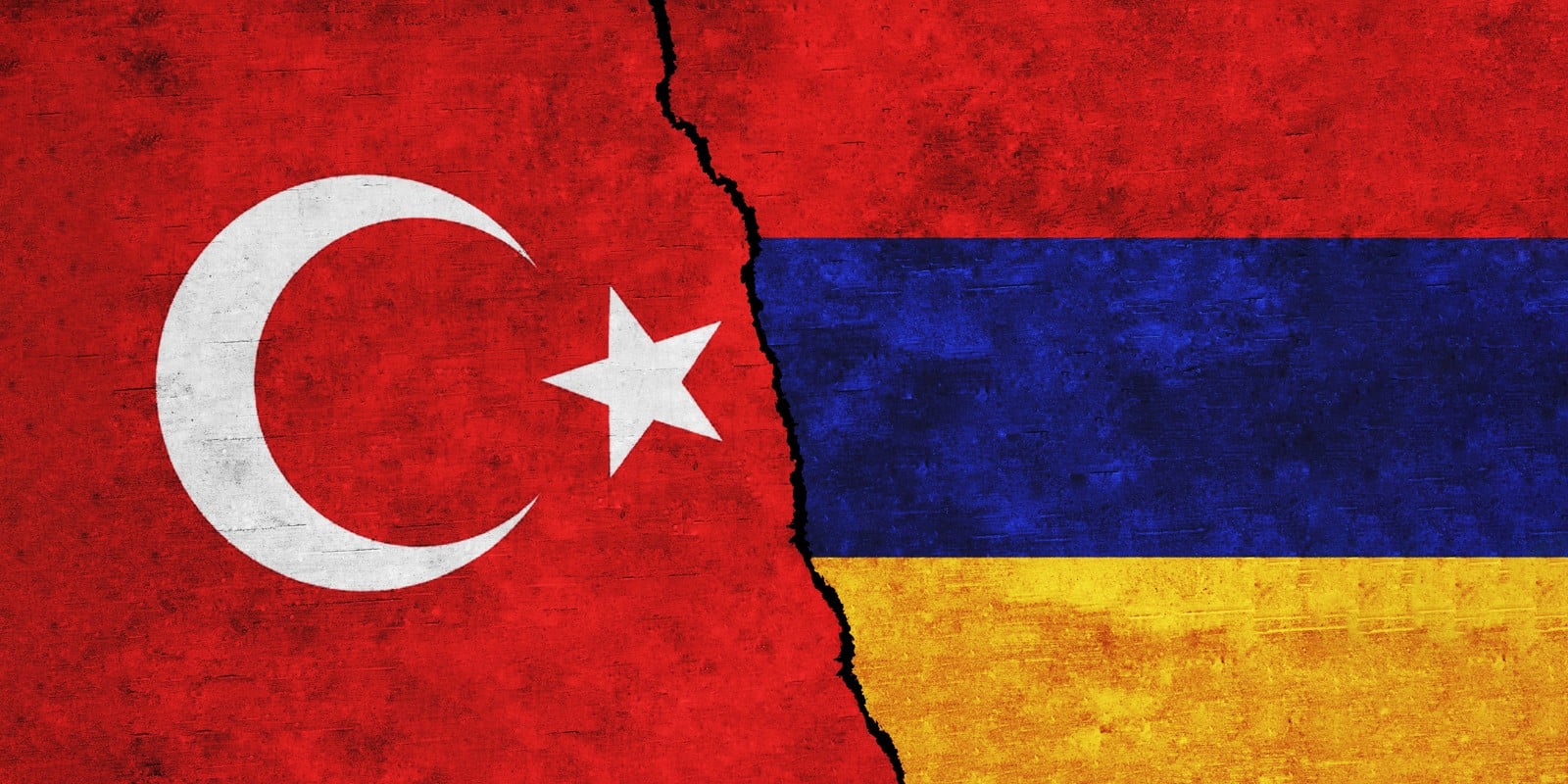
Armenia’s parliamentary election on June 7 is not merely a domestic contest between Prime Minister Nikol Pashinyan and his opponents. It is a pivotal moment in the remaking of the South Caucasus, where great and middle powers are competing to shape a new regional security architecture.
The implications extend far beyond the South Caucasus. At a moment when the United States, Russia, China, and regional powers are competing over trade corridors, energy routes, and geopolitical influence across Eurasia, Armenia has become an unlikely but important strategic crossroads.
For Türkiye, this election presents a strategic opportunity. Rather than viewing Armenia's opening to the West as a threat, Ankara can position itself as the principal facilitator of Armenia's regional integration. The election will help determine whether Armenia continues its cautious turn toward normalization with Ankara and Baku, deeper engagement with the West, and a more pragmatic foreign policy—or whether revanchist forces linked to the old Karabakh-centered political order regain momentum.
Pashinyan has framed this shift in unusually stark terms. During his campaign, he declared that ending the Karabakh movement was his “greatest service” to the Armenian people, arguing that Armenia is now “more independent than ever.” Whatever one thinks of Pashinyan’s domestic record, this statement captures the strategic transformation underway: Armenia is trying to move away from a politics built around historical grievance and territorial maximalism toward a state-centered realism based on recognized borders, connectivity, and regional normalization.
Armenia at the Center of a New Geopolitical Contest
Armenia has become one of the most consequential arenas of geopolitical competition in the South Caucasus. The election is not simply about who governs in Yerevan; it is also about which external vision of regional order will gain the upper hand.
Russia's objective remains relatively straightforward. Moscow seeks to preserve what remains of its post-Soviet sphere of influence and prevent Armenia from drifting further toward the West. Since the 2020 Karabakh War, however, Russia's position has weakened considerably. The Kremlin has struggled to maintain its traditional role as Armenia's primary security guarantor, creating political space for alternative partnerships and strategic realignments.
The United States, by contrast, views Armenia as part of a broader effort to reshape the post-war regional order. Washington has not offered Armenia NATO-style security guarantees, nor is it likely to do so. Instead, it has supported deeper political cooperation, defense modernization, and new connectivity projects designed to reduce Armenia's dependence on Russia and expand its links to global markets.
Armenia is also becoming part of the broader competition over Eurasian connectivity. The Middle Corridor does not simply compete with China’s Belt and Road Initiative; in some cases, it complements it. Yet its strategic value lies in offering Europe, Türkiye, and the United States alternative routes that are less dependent on Russia and Iran.
This emerging competition extends beyond the traditional great powers. Regional actors such as Türkiye and Iran increasingly view Armenia as a critical component of their own strategic calculations. As a result, Armenia has become a rare geopolitical arena where global and regional rivalries overlap and interact simultaneously.
Türkiye's Strategic Opportunity
For Türkiye, the election carries significance well beyond bilateral relations with Armenia.
Ankara has spent the last several years promoting the Middle Corridor, a trans-Eurasian transportation and trade network linking Europe to Central Asia through the South Caucasus. The success of this project depends not only on relations with Azerbaijan but also on the gradual stabilization and integration of Armenia into the region's economic architecture.
This is where Turkish and American interests partially converge. Washington wants to reduce the South Caucasus’ dependence on Russian-controlled routes while limiting Iran’s ability to shape regional connectivity. Ankara, meanwhile, seeks to turn the Middle Corridor into a durable east-west artery linking Central Asia, the Caspian basin, the South Caucasus, Türkiye, and Europe. A “normalized” Armenia would not replace Azerbaijan’s central role in this architecture, but it could help transform the region from a line of frozen conflicts into a functioning transit space.
From this perspective, Armenia's westward opening need not be interpreted as a threat to Turkish interests. On the contrary, a more connected and economically integrated Armenia could contribute to reducing Russian and Iranian leverage in the South Caucasus while creating new opportunities for regional trade and cooperation.
The normalization process between Ankara and Yerevan therefore has implications that extend far beyond the two countries themselves. It is increasingly tied to broader questions of connectivity, energy security, and the future balance of power across Eurasia.
Pashinyan appears to recognize this reality. He has repeatedly argued that normalization with both Türkiye and Azerbaijan is essential if Armenia is to pursue a balanced foreign policy and overcome its geopolitical isolation. Whether that vision survives the election may shape the strategic trajectory of the entire region.
Pashinyan, the Karabakh Elite, and Armenia's Strategic Reorientation
The most important challenge to Pashinyan comes not only from opposition parties but from a broader political tradition that dominated Armenian politics for nearly three decades.
Since the 1990s, Armenian public life was heavily influenced by political and security elites associated with Nagorno-Karabakh. Figures such as former presidents Robert Kocharyan and Serzh Sargsyan built much of their legitimacy on the military victory of the First Karabakh War and on a security-centered vision of the Armenian state. This political order became closely associated with oligarchic networks, entrenched patronage structures, and a hardline position on the Karabakh question.
The 2018 Velvet Revolution fundamentally challenged this system. Pashinyan's rise to power represented not only a change of government but also a challenge to the political dominance of the old Karabakh elite.
The Second Karabakh War accelerated this transformation. Armenia's defeat in 2020 forced difficult questions about the sustainability of long-standing assumptions regarding security, territorial claims, and relations with neighboring states. While Pashinyan initially employed nationalist rhetoric after coming to power, the post-2020 environment pushed his government toward a more pragmatic and realist approach.
Today, the core political divide in Armenia is no longer simply between government and opposition. It increasingly reflects a deeper debate about the country's future identity: whether Armenia should continue defining itself through unresolved historical conflicts and maximalist national projects, or whether it should pursue a state-centered strategy focused on internationally recognized borders, economic development, and regional normalization.
This debate extends beyond Armenia itself. Sections of the Armenian diaspora remain deeply invested in historical narratives and territorial claims that often diverge from the calculations of policymakers in Yerevan. The election will therefore serve as a referendum not only on Pashinyan's leadership but also on the broader strategic direction of the Armenian state.
A Vote on Armenia's Strategic Direction
The June 7 election is ultimately about far more than who occupies the prime minister's office in Yerevan.
At stake is the future orientation of a small state situated at the intersection of competing great and regional powers. Russia seeks to preserve influence. The United States hopes to encourage greater connectivity and strategic diversification. Iran aims to prevent a regional order that sidelines its interests. Türkiye sees an opportunity to advance normalization, strengthen regional integration, and reshape the geopolitical landscape of the South Caucasus.
Armenia is not merely an object of great-power competition. Under Pashinyan, it has increasingly attempted to leverage rivalries among larger powers to expand its own strategic room for maneuver. Armenia, meanwhile, is attempting to navigate these competing pressures through a multi-vector foreign policy unprecedented in its post-Soviet history. Rather than relying exclusively on a single patron, Yerevan is diversifying its security partnerships, expanding diplomatic options, and redefining its national priorities after the shock of the Second Karabakh War.
For Türkiye, the outcome matters because it will help determine whether the South Caucasus moves toward greater connectivity and normalization or returns to a politics dominated by isolation, dependency, and unresolved conflict.
The election is therefore best understood not as a routine democratic exercise but as a strategic choice about Armenia's place in an emerging regional order.