

Control without authority: Iran's bid to govern the strait of Hormuz
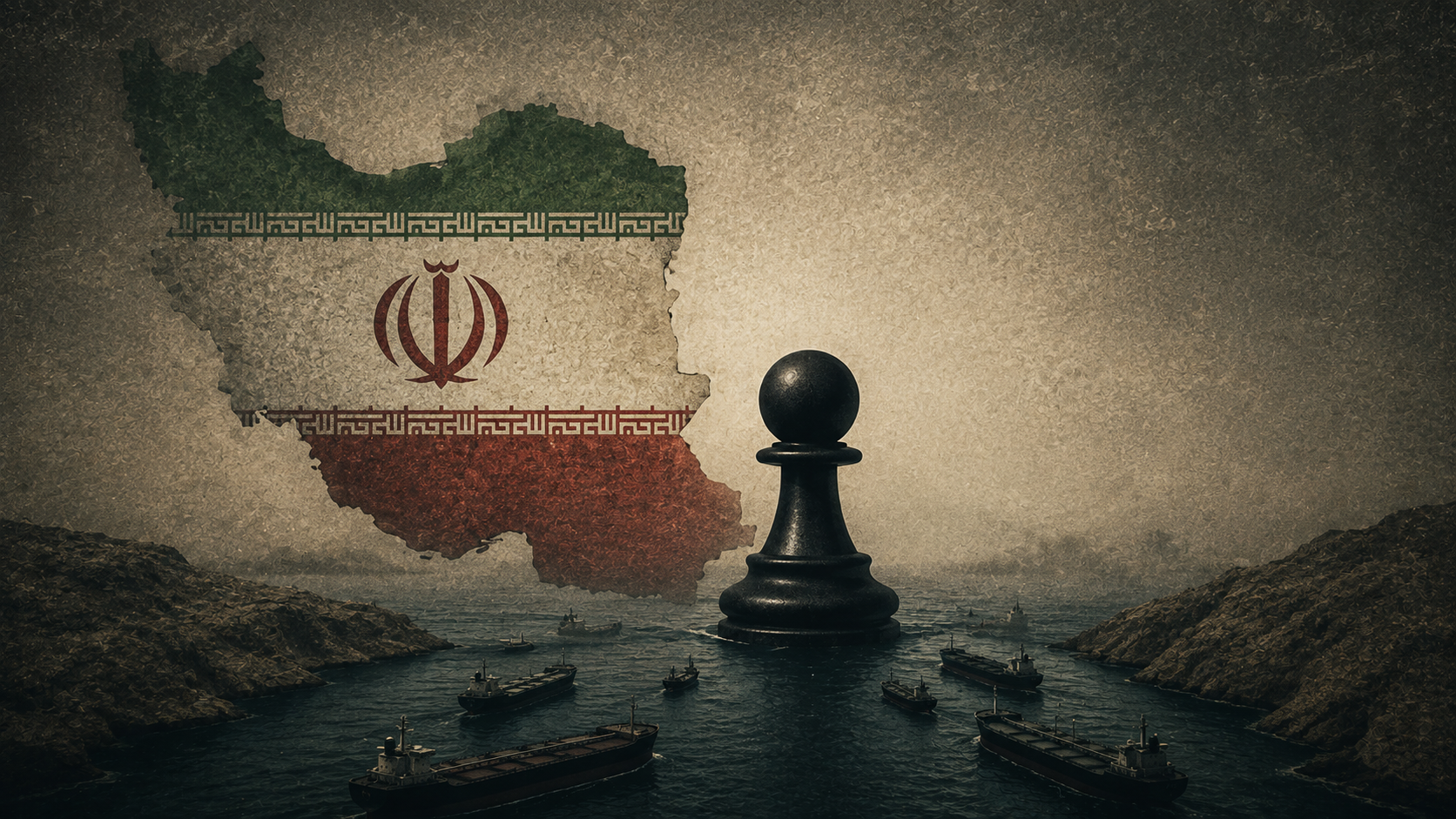
Recent military hostilities in the Persian Gulf have renewed attention on Iran’s position in the Strait of Hormuz. For decades, Tehran has viewed the Strait as an important strategic asset, both because of its role in global energy exports and its potential to deter external military pressure.
More recently, however, Iran has sought to expand its role in managing the waterway by turning temporary wartime security measures into a permanent system of administrative control, including vessel inspections and transit fees.
These efforts have met strong opposition from both regional states and the wider international community.
The modern legal framework governing international straits is codified under Part III of the 1982 United Nations Convention on the Law of the Sea (UNCLOS). Under Article 38, ships and aircraft of all states are entitled to pass through straits used for international navigation. Unlike the regime of innocent passage, transit passage cannot be suspended, delayed, or made conditional by coastal states during peacetime. The treaty also places clear limits on the financial authority of coastal states. Articles 26 and 42 prohibit governments from imposing tolls, transit dues, or other mandatory charges on vessels simply for exercising their right of passage through an international strait. Charges are permitted only when they correspond to specific services actually provided. These rules form the legal benchmark against which Iran's rights and obligations in the Strait of Hormuz must be assessed. In addition to Iran signing the UNCLOS in 1982, the central principles governing international straits are widely regarded as rules of customary international law. As a result, the obligation not to interfere with lawful transit is generally understood to bind all coastal states.
The legal framework cannot be separated from the geography of the Strait itself.
The deep-water channel required by Very Large Crude Carriers (VLCCs), which typically require draft depths of 20 to 25 metres, does not extend evenly across the Strait. Instead, the deepest navigable route lies in its southern section, within Omani territorial waters. These hydrographic realities were formally acknowledged in the 1968 Iran-Oman Maritime Agreement, which established traffic separation arrangements placing the principal shipping lanes inside Omani waters. The arrangement created an operational framework that has guided international navigation through the Strait for decades, with both inbound and outbound traffic following routes administered by Oman. The maritime boundary itself was later formalised in the 1974 Iran-Oman Delimitation Treaty, which adopted the median line as the boundary between the two states. Iran subsequently incorporated this position into domestic law through its 1993 Act on the Maritime Areas of the Islamic Republic of Iran. For nearly sixty years, this routing has formed the basis of commercial navigation through the Strait.
Strategic Rerouting and MoU frictions
The longstanding navigational arrangement in the Strait of Hormuz was disrupted during the recent military conflict in the Persian Gulf. Citing security concerns, self-defence, and mine clearance, the IRGC navy redirected international shipping away from the established deep-water route in Omani waters and into Iranian territorial waters, sending commercial vessels past Larak Island while rejecting European proposals to conduct joint mine-clearing operations in the area. Although temporary changes to navigation during armed conflict can be justified, Iran soon began treating these wartime measures as the basis for a more permanent system of control. To support this approach, Iranian authorities introduced new procedures through the Persian Gulf Strait Authority. Merchant vessels using the Larak Island route were required to submit documentation and receive authorization from Iranian maritime authorities before continuing their transit. In practice, these procedures went beyond maritime security. They reflected a broader effort to establish routine inspections, administrative oversight, and, eventually, the legal basis for charging transit fees.
These measures became one of the main points of disagreement in the diplomatic negotiations that followed the conflict. Diplomatic efforts focused on building a framework that could both prevent renewed conflict and restore confidence in maritime trade through the Gulf. However, the U.S. and Iran failed to implement Hormuz-related clauses of the Islamabad MoU. Intended to regulate security arrangements, mine-clearance operations, and navigation through the Strait of Hormuz, the clause quickly became the agreement’s most contested provision because Tehran and Washington interpreted its meaning in fundamentally different ways. For Iran’s political and military leadership, Clause 5 amounted to international recognition of Tehran’s leading role in administering security within the Strait. In their view, it affirmed Iran’s authority to inspect vessels, regulate maritime traffic, and oversee mine clearance operations as part of its responsibility for regional security. The United States, however, interpreted the provision much more narrowly. From the American perspective, Clause 5 was designed solely to safeguard freedom of navigation and facilitate coordinated or internationally monitored mine clearance efforts, without actually conferring any additional sovereign authority on either coastal state. This fundamental disagreement over the clause ultimately became the principal obstacle to implementing the wider memorandum, with neither side prepared to accept the other’s interpretations.
The dispute soon extended to direct negotiations between Iran and Oman. Iranian Deputy Foreign Minister Kazem Gharibabadi argued that the long-established shipping route through Omani waters was no longer acceptable and Iran would no longer recognize the existing arrangement. Oman responded by proposing a compromise that would divide the Traffic Separation Scheme equally between the two countries, placing half of the transit lanes in Omani waters and the other half in Iranian waters. Tehran instead sought to relocate most of the inbound and outbound shipping lanes into Iranian territorial waters. This position suggests that Iran’s objective extends beyond wartime security. It reflects an effort to translate temporary operational control during the conflict into a lasting legal and administrative role in governing navigation through the Strait.
Cognitive Errors and Self-Blockade
With the legal and diplomatic context established, the next question is whether Iran's broader strategy in the Strait of Hormuz is likely to achieve its intended objectives. A key assumption behind Tehran's recent approach is that relocating the Traffic Separation Scheme (TSS) into Iranian territorial waters would strengthen its influence over maritime traffic. Throughout the post-conflict negotiations, Iranian officials and military hardliners argued that hosting the main shipping lanes would allow Tehran to inspect vessels, regulate transit, and eventually impose transit fees. International maritime law and state practice, however, do not support this assumption.
In practice, hosting an international Traffic Separation Scheme brings responsibilities rather than additional sovereign rights.
Coastal states responsible for major shipping routes are expected to monitor vessel traffic, maintain navigational infrastructure, coordinate search and rescue operations, and respond to maritime accidents, including oil spills and collisions. These obligations are costly and are not offset by a general right to charge vessels for transit. Oman has carried these responsibilities for decades without acquiring authority to screen ships or collect tolls. Previously, Iranian policymakers generally accepted this arrangement, recognising that it reduced Iran’s own operational and financial burden.
Relocating the shipping lanes into Iranian waters would therefore increase Tehran’s responsibilities without providing the legal authority it seeks. The economic consequences reinforce this point. After Iran established the Persian Gulf Strait Authority (PGSA), the U.S. Department of the Treasury designated the organization under its Specially Designated Nationals (SDN) sanctions program because of its links to the Islamic Revolutionary Guard Corps (IRGC). The designation had immediate implications for the shipping industry. Lloyd's of London and several major Protection and Indemnity (P&I) Clubs indicated that vessels complying with PGSA authorization requirements, sharing cargo information with the authority, or paying transit fees to sanctioned Iranian entities risked losing insurance coverage.
These restrictions significantly reduce the practical value of Iran’s proposed regulatory system. Commercial shipping companies cannot operate without insurance, making compliance with PGSA requirements commercially unattractive, especially if fully sanctioned. Rather than creating a new source of revenue, mandatory clearance procedures risk diverting trade away from Iranian ports and increasing shipping costs throughout the Gulf. From an economic perspective, this policy is therefore more likely to impose costs on Iran than generate meaningful financial returns.
Iran's approach also reflects a broader misunderstanding of the difference between wartime powers and peacetime maritime governance. As former Iranian diplomat Kourosh Ahmadi notes, states engaged in an armed conflict may lawfully restrict navigation for military reasons under certain circumstances. Those powers, however, are temporary and tied to the existence of active hostilities. Attempting to preserve emergency wartime measures after the conflict ends places a coastal state at odds with the legal framework governing international navigation during peacetime. More broadly, Iran’s influence in the Strait of Hormuz has never depended on the location of the Traffic Separation Scheme itself. Its leverage has historically come from its military capabilities and its ability to threaten disruption during periods of crisis, including anti-ship missiles, fast attack craft, naval mines, and other asymmetric means. That leverage depends on the Strait remaining an essential and reliable route for global trade during normal conditions.
If commercial shipping is instead discouraged by permanent administrative restrictions or transit fees, Iran risks reducing the strategic importance of the very route it seeks to control while encouraging outside powers to support alternative shipping arrangements.
From that perspective, relocating the Traffic Separation Scheme offers limited strategic benefit while creating substantial legal, economic, and diplomatic costs.
Middle Ground and Cooperative Management
Resolving the dispute over the Strait of Hormuz will require moving beyond competing claims of exclusive control and focusing on practical arrangements that are consistent with international maritime law. The disagreements over Clause 5 of the Islamabad MoU and the location of the Traffic Separation Scheme show that neither full Iranian administrative control nor a simple return to the previous arrangement is likely to provide a lasting solution. A more durable approach should address the security concerns of the coastal states while preserving the principle of transit passage on which international shipping depends.
Kourosh Ahmadi suggests dividing responsibility for the Traffic Separation Scheme along the median line established by the 1974 Iran-Oman Delimitation Treaty. Under such a model, the inbound lane would remain within Omani territorial waters, allowing deep-draft vessels entering the Persian Gulf to continue using the existing deep-water route. The outbound lane, meanwhile, could be relocated north of the median line within Iranian territorial waters, giving Iran a recognised role in overseeing outbound traffic without allowing it to require mandatory permits, security questionnaires, or transit fees. Sharing responsibility for the routing system in this way would acknowledge Iran’s interest in a greater operational role while remaining consistent with the rules governing transit passage under UNCLOS.
A practical model for managing this arrangement already exists. The Strait of Malacca has long presented Indonesia, Malaysia, and Singapore with many of the same challenges found in the Strait of Hormuz, including heavy commercial traffic, environmental risks, and maritime security concerns. Rather than introducing unilateral tolls or requiring ships to obtain prior authorization, the three states developed the Cooperative Mechanism for the Straits of Malacca and Singapore under the International Maritime Organization (IMO). The system allows coastal states to cooperate on navigation safety without restricting the right of transit passage. A similar approach could be adapted for the Strait of Hormuz. Instead of requiring vessels to pay mandatory transit charges, shipping companies and major energy-importing states could make voluntary contributions to a jointly managed fund administered through the IMO or potentially a bilateral Iran-Oman commission. The money could be used only for services permitted under UNCLOS. Because participation would be voluntary and the funds would be used for specific maritime services rather than as a condition for transit, the arrangement would differ fundamentally from a unilateral tolling system. It would also reduce the risk of sanctions-related complications for shipping companies and insurers, allowing providers to continue offering Protection and Indemnity (P&I) coverage for vessels using the Strait.
More importantly, such a framework would give Iran a formal role in managing the waterway without undermining the legal principles governing international navigation.
It would also help share the financial burden on maintaining one of the world’s busiest maritime corridors while reducing the political tensions created by competing claims of exclusive authority.
The way the Strait of Hormuz is governed will have implications beyond the waterway itself. The arrangements adopted by Iran and the Gulf Arab states will influence not only navigation through the Strait but also the broader security environment in the Persian Gulf. A governance model based on unilateral control is likely to reinforce existing political tensions and make cooperation between the coastal states more difficult. Continued disputes over navigation, maritime security, and administrative authority would increase the risk of future crises and leave the Strait as a recurring source of regional instability. By contrast, a cooperative framework that gives both Iran and the Gulf Arab states a role in managing the Strait offers a more sustainable path forward. Shared responsibility, regular dialogue, and agreed rules for maritime governance could help reduce tensions and improve trust between the coastal states. Over time, cooperation in the Strait could also support broader regional efforts on maritime security, environmental protection, and economic connectivity, demonstrating that shared interests can be managed through cooperation rather than competition.