


Georgia to introduce an official stablecoin GEL₮: Can it be successful?
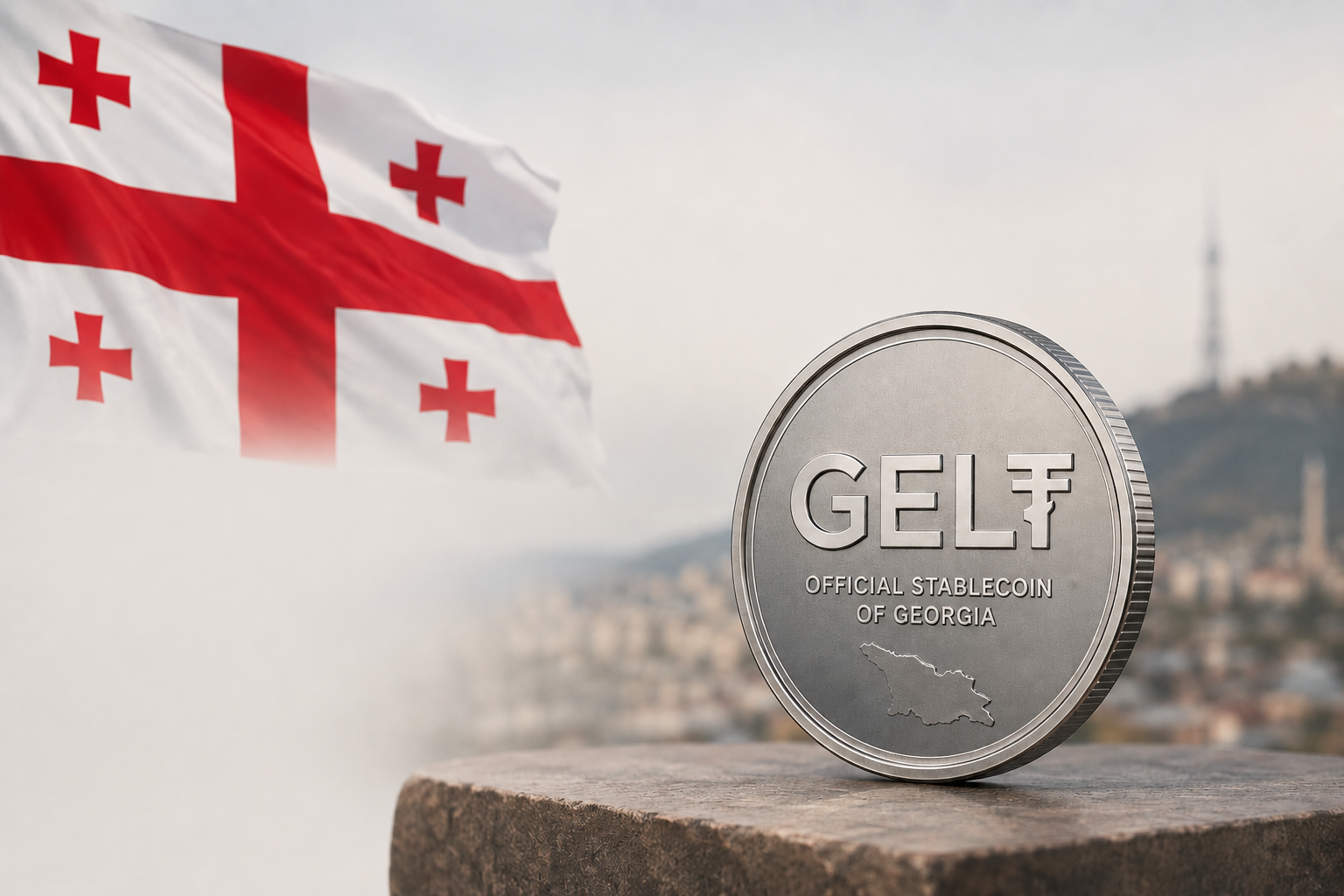
On the 25th of May 2026, Georgian prime minister Irakli Kobakhidze announced in a press conference that Tether, the world’s largest stablecoin issuer, will begin operations in Georgia with a digital version of the Georgian Lari; GEL₮. The new cryptocurrency will be pegged to the Georgian Lari with a value of 1:1. With this new expansion, the company will also invest in Georgia. These investments will be used to cover education, social programmes, and broader economic development, says the Georgian government. But what will this new development mean for Georgia?
A stablecoin is a cryptocurrency that is pegged to another currency, in this context to the Georgian Lari. This is done so that the cryptocurrency maintains its value and will not fluctuate in value overnight. The company of Tether is a blockchain-enabled platform that facilitates the use of fiat currencies in a digital manner. The company previously launched USD₮; a cryptocurrency pegged to the USD. According to Tether, USD₮ has a market capitalisation that is close to $190 billion.
GEL₮ is unlikely to reach a comparable market capitalisation for several reasons.
First of all, the Georgian economy is way smaller than the American one, so there will be fewer global users of the GEL₮, which will mean a lower demand. Second of all, most crypto trading is based on US dollar, not on Georgian Lari. Also, there are smaller liquidity needs, as fewer businesses and exchanges need GEL-dominated crypto, compared to USD-dominated crypto. Lastly, there likely will be a bandwagon effect, where people would prefer USD-dominated crypto, simply because its more used worldwide. Nevertheless, the GEL₮ can still be a success on the conditions that Georgia will become a major crypto hub, businesses adopt the GEL₮ heavily and smoothly and if the new cryptocurrency will be used a lot of cross-border trade.
What GEL₮, however, most likely will achieve is to make transfers cheaper, easier and faster.
The currency is designed for near-instant settlement, according to Tether. It is expected to support digital payments, both within Georgia and cross-border. Especially since Georgia’s tourism sector is growing quickly, this new development will be very beneficial for the country. Easier and cheaper payment systems may encourage tourists to spend more, as the transaction experience becomes more seamless. Additionally, cheaper money transfers also mean that more money stays within the country, since traditional cross-border payments mainly involve bank fees and currency conversion spreads. This will especially benefit owners of smaller businesses. Lastly, these new breakthroughs could potentially also attract a new form of tourism; digital nomads. Countries with smooth payment systems generally feel more ‘modern’ and convenient. This can attract young, digital travellers seeking for a cheap and smooth place to spend holidays or to work remotely.
For experts, the announcement of GEL₮ does not come as a very big surprise, as it is followed by several years of efforts of the Georgian government and the National Bank of Georgia to change legislation to create a clear regulatory framework for crypto businesses, payment services, and stablecoin infrastructure. The structure of GEL₮ is built around reserve management, redemption rights, issuer oversight and AML-compliance (Anti-money laundering). The currency should also comply with the American GENIUS-Act, a recent U.S. law aimed at creating a clear federal framework for stablecoins. This may enhance international regulatory compatibility and trust from the launching point onwards. The National Bank of Georgia also has welcomed the introduction of the GEL₮. Natia Turnava, Governor of the National Bank, stated that the bank maintains a strict regulatory framework for crypto that does not limit the sector, but instead ensures it is regulated in a clear and transparent manner.
The announcement of the cryptocurrency also aligns with the recent Georgian attempts to position the country more and more as a crypto-friendly country and as a financial centre for crypto aligned with international regulations. Substantial legislative changes in the last years have allowed a more crypto-friendly environment, which has made Georgia an attractive place for crypto investors.
For example, Georgian law allows crypto-based tax payments. The upcoming release of GEL₮ shows trust and interest in the Georgian government from international businesses. According to prime minister Kobakhidze, the partnership with Tether ‘shows that investors’ confidence in our country is gradually increasing’ and that ‘Georgia is a trustworthy and reliable partner for international companies’. With this partnership, the Georgian government is attracting technology investments, while maintaining oversight.
However, there are also risks to the adoption of GEL₮. The most important factor is trust. GEL₮ will not replace the Georgian Lari but will function as an additional financial instrument. It is also important to note is that GEL₮ is not a CBDC (Central Bank Digital Currency), but instead a privately-sector digital token (by Tether). If there is not enough trust in GEL₮, the adoption of the currency will most probably also be lower. A low adoption of GEL₮ will mean a weaker stability and a weaker utility of the currency. This will also in theory make it harder to maintain the 1:1 peg, since small activity in the market makes the system more vulnerable to price swings. It is thus very important for GEL₮ to succeed that it will get widely adopted by businesses, exchanges, tourists and payment apps. Another key risk is de-pegging, where the stablecoin temporarily deviates from its target value. During periods of market stress, panic-driven selloffs may emerge, liquidity can temporarily deteriorate, and arbitrage mechanisms may fail to restore price parity efficiently, resulting in short-term deviations from the 1:1 peg. Additionally, the Bank for International Settlements has warned that privately-issued stablecoins can negatively affect financial stability and monetary sovereignty. Lastly, as a privately issued stablecoin, GEL₮ would rely on the credibility and operational integrity of Tether, as it is not a CBDC. People will need to have trust in Tether that they manage the currency properly and that they will have enough reserves. If this trust is not there or will disappear, a scenario of the abovementioned de-pegging can occur.
Also important to note is that between 2021 and 2023 the National Bank of Georgia has explored the possibilities of a potential CBDC. A pilot phase has taken place with a digital Lari, however, a final decision about the implementation of this CBDC has never been made. After the pilot phase, the National Bank of Georgia framed the omission of the currency as a consequence of legal restrictions under Georgian law at the time.
The introduction of GEL₮ can potentially be a great factor for the growth of the Georgian economy, as with the partnership with Tether, Georgia is not only embracing digital financial innovation, but also signalling to international investors that the country is open to emerging financial technologies within a regulated framework. The currency could benefit the country’s economy greatly. However, there adoption of GEL₮ also comes with many risks and the success of the currency heavily depends on public trust. GEL₮ has great economic potential, but its success depends on Georgia’s ability to balance innovation with effective regulatory oversight. When the currency will be issued and some other important details, such as where reserves would be held, have not been announced yet. It will thus be a matter of time before it becomes clear whether GEL₮ will succeed or fail.