

The Black Sea fault line: how sanctions and fragmentation are rewriting the region's energy order?
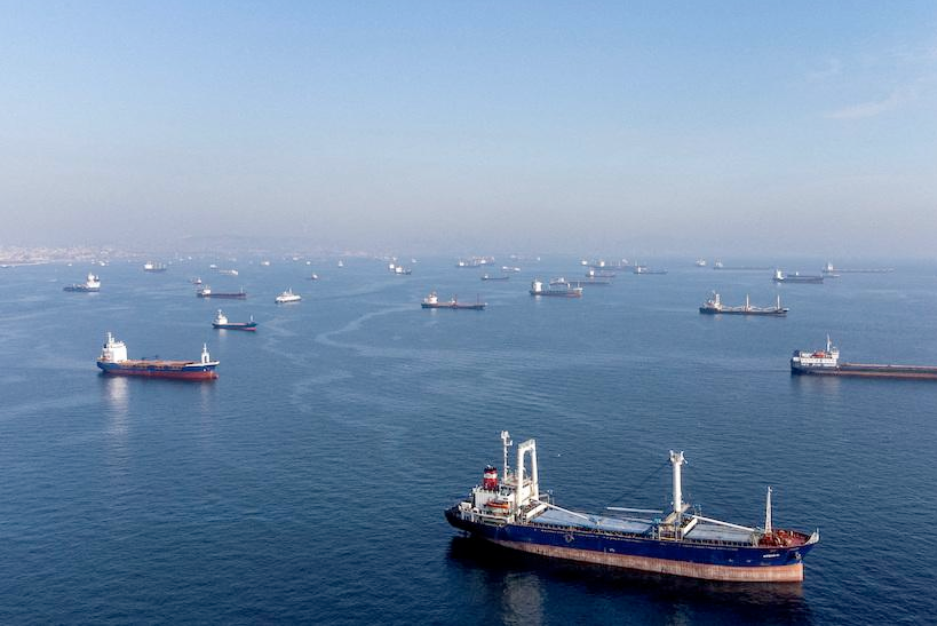
As Western sanctions on Russia intensify, targeting not only the country’s financial apparatus but also major companies and energy champions such as LukOil, Rosneft, and Gazprom Neft, the Black Sea has become the most dynamic fault line in Europe’s reconfigured energy landscape. The accelerated withdrawal of these Russian companies from the region is not simply the removal of a long-standing supplier that historically enabled Russian crude oil to reach the EU markets; it is the unravelling of an entire operational ecosystem built around financing, trading networks, and logistical integration. The failed sale to Gunvor, a Swiss-based commodity trader previously investigated for compliance risks and opaque affiliations, the consequent operational paralysis of Burgas and Petrotel refineries, and the freezing of LukOil-associated assets across Moldova and Kazakhstan manifest the same structural shock, with the forced dismantling of Russia’s logistical footprints at the EU’s periphery.
This shift coincides with the EU’s own strategic redirection. Since 2022, Brussels has dramatically diversified its supply sources, rerouting inflows from the Caspian, Central Asia, and the Middle East to compensate for the loss of Russian crude delivered through northern routes. In this new configuration, the Black Sea has shifted from being a peripheral corridor to an indispensable gateway, with facilities such as Burgas, Petrotel, and Constanța now functioning as central nodes in the continent’s post-Russian energy architecture.
At the same time, the dismantling of Russian-linked ownership has exposed significant governance gaps. As key assets transition away from their previous operators, they face uncertain legal and political status, fragmented supply chains, and weakened operational predictability. Bulgaria, Romania, and other coastal states have been compelled to intervene directly to preserve continuity, relying on emergency national administrators, temporary legislation, and exceptional oversight regimes. The result is a landscape where Europe’s diversification risks advancing on paper, whereas, on the ground, it cannot match the political transition of the infrastructures tasked with enabling it.
In this context, the Black Sea has become the frontline where Europe’s new energy order, especially at its peripheries, encounters its structural limits.
The systemic shock to the Black Sea energy order
The LukOil case clearly shows how sanctions create a secondary effect that is often overlooked: they disrupt not only ownership structures, but also the operational conditions on which these facilities depend. Once compliance risk escalates, sanctions make it uncertain whether access to credit, insurance, and grants will be available to sustain maritime services and crude oil deliveries. The result is a widening gap between the speed of the sanctions shock and the limited capacity of local institutions to govern the transition and guarantee long-term energy supply and stability to national and regional markets. In several Black Sea countries, particularly in Bulgaria, Romania, and Moldova, refineries and storage hubs are now planned to remain operational only through temporary national administrators, legislation, or ad hoc political guarantees, with the sole objective of avoiding shortages and mitigating the risk of supply disruptions, insolvency, and legal uncertainty while searching for new compliance investors.
The ongoing geopolitical shifts pose a formidable challenge for the region, marked not only by the exit of Russian operators but also by the glaring absence of a comprehensive, practical framework to address the aftermath. As sanctions unravel long-standing corporate and logistical networks, responsibility shifts to the physical infrastructure that has historically supported regional supply chains, now forced to operate under unprecedented uncertainty.
The effectiveness of national governments in managing uncertainty will play a critical role in determining the success of Europe’s diversification initiatives and the future of energy transit routes in the region. However, this process is currently not being driven at the EU level but rather through a mosaic of national approaches.
Each country responds to challenges based on its own regulatory frameworks, limitations, and political circumstances. This decentralized response creates a diverse landscape in which similar challenges can yield significantly different solutions, highlighting existing political divides and potentially accelerating domestic reforms and transitions.
Refineries in Transition?
The institutional strains generated by the sanctions shock have demonstrated that changes in ownership have led to distinct patterns of institutional adaptation among the Black Sea coastal states.
In Bucharest, the main priority has been to prevent disruptions in domestic supply. The public and institutional debate, which has remained relatively stable, has framed the future of the Petrotel refinery and Constanta port as a technical issue. Ensuring adequate stock levels and avoiding price increases and excessive fluctuations may make nationalization unavoidable. However, national authorities recognize that forced acquisition could impose significant financial burdens, especially during the inevitable transition period, potentially harming the refinery's short-term commercial prospects. Therefore, despite the words of the energy ministry's Bogdan Ivan, who advocated state control of national assets, Romania's challenge now is to balance US and EU provisions with the urgency of limiting state exposures. The result was an approach grounded in administrative pragmatism, where, despite political warnings, emergency legislation remains an option. Still, the most probable outcome is an accelerated sale under future favorable market conditions.
Bulgaria, instead, followed a markedly different path, having to deal with diverging internal political pressures and interests. The uncertainty surrounding the sale of Neftochim Burgas, driven by the failed attempt to transfer reliable ownership and the difficulty in identifying a buyer capable of taking over operations, was further amplified by widespread speculation about potential political and personal interests behind the process. As a result, what began as a technical transaction rapidly intersected with political polarisation, stirring the industrial impasse with the country’s political direction and institutional resilience. The Gunvor acquisition failure brought domestic factionalism to the surface, as the majority coalition expressly advocated state intervention, while political figures close to the GERB liberal-conservative party and president Rumen Radev emphasised the risk of excessive state intervention, warning that they might oppose EU legal norms that undermine public finances. Generally, local media perceptions clearly indicate that Sofia's environment is more fragile and less consensus-driven than Bucharest's, since, unlike in Romania, nationalization was carried out as a stabilizing measure and became a controversial issue.
In this environment, the refinery may act as a political accelerant. While Bulgaria is a member of both NATO and the EU, it has historically maintained strong ties with Russia, especially in the energy sector. These rifts, long debated even within the EU, have been brought to the fore by the Burgas crisis, which could accelerate a sharp political realignment and prompt decisions. The combination of rushed legislative action, internal veto dynamics, and public scrutiny that has shaped Burgas's transition illustrates how the management of downstream stress has become inseparable from broader questions of political identity and strategic orientation.
The EU’s strategic dilemma among regional fault lines
What emerges from the transition landscape is a deepening structural imbalance in which the European diversification strategy is increasingly dependent on Black Sea hubs' ability to maintain operational continuity under unprecedented stress. These infrastructures, long treated as complementary components in the continent’s energy system, are becoming decisive connectors in non-Russian crude oil flows. As Europe reshapes its supply mix, increasing volumes from the Caspian, Middle East, and Central Asia, relying more than ever on Black Sea refineries and ports has become essential, as they are the potential primary entry point into the EU market. Provisional governance arrangements, fluctuating risk conditions, and political volatility that mark the transition risk, however, undermine the Black Sea's shift from a transit corridor to a decisive arena in Europe’s energy-security architecture.
The shift, however, should not be confined to the regional level, as it highlights a fundamental dilemma for the European Union. While the infrastructure supporting its diversification strategy is European in terms of its territorial significance and importance, it is governed, owned, and regulated at the national level.
The contrast between Bucharest's efforts to accelerate sales to prevent a forced nationalization of Petrotel and Bulgaria’s controversial management of Burgas shows how the lack of a coordinated European framework could turn a shared structural shock into long-term disparities in the region’s energy landscape.
At the same time, the vacuum left by LukOil is being shaped by external vectors intersecting with national fragilities. In this context, emergency administrators and ad hoc interventions may ensure short-term continuity but cannot substitute for predictable governance. Without clearer European standards for transitional management and investment screening, the region risks drifting toward a more fragmented and politically exposed landscape, complicating the transition to post-Russian crude.
Thereby, treating the Black Sea as a coherent strategic basin rather than a set of isolated national nodes will be essential to prevent further fragmentation, preserve credibility, and engage regional powers through a more transparent, systematic approach. A structural turning point is therefore at hand, and the following developments will define whether the forced transition becomes the foundation of a more resilient regional order, in concert with EU neighbours such as South Caucasus countries and Central Asia ones, or the opening phase of more profound instability. Politically and institutionally, the outcome will depend on Europe’s ability to move from reactive crisis management to proactive institutional design as the window to shape the post-LukOil landscape is open but risks narrowing quickly.