

Iran’s strategic dependence on Emirati commercial infrastructure amid the war
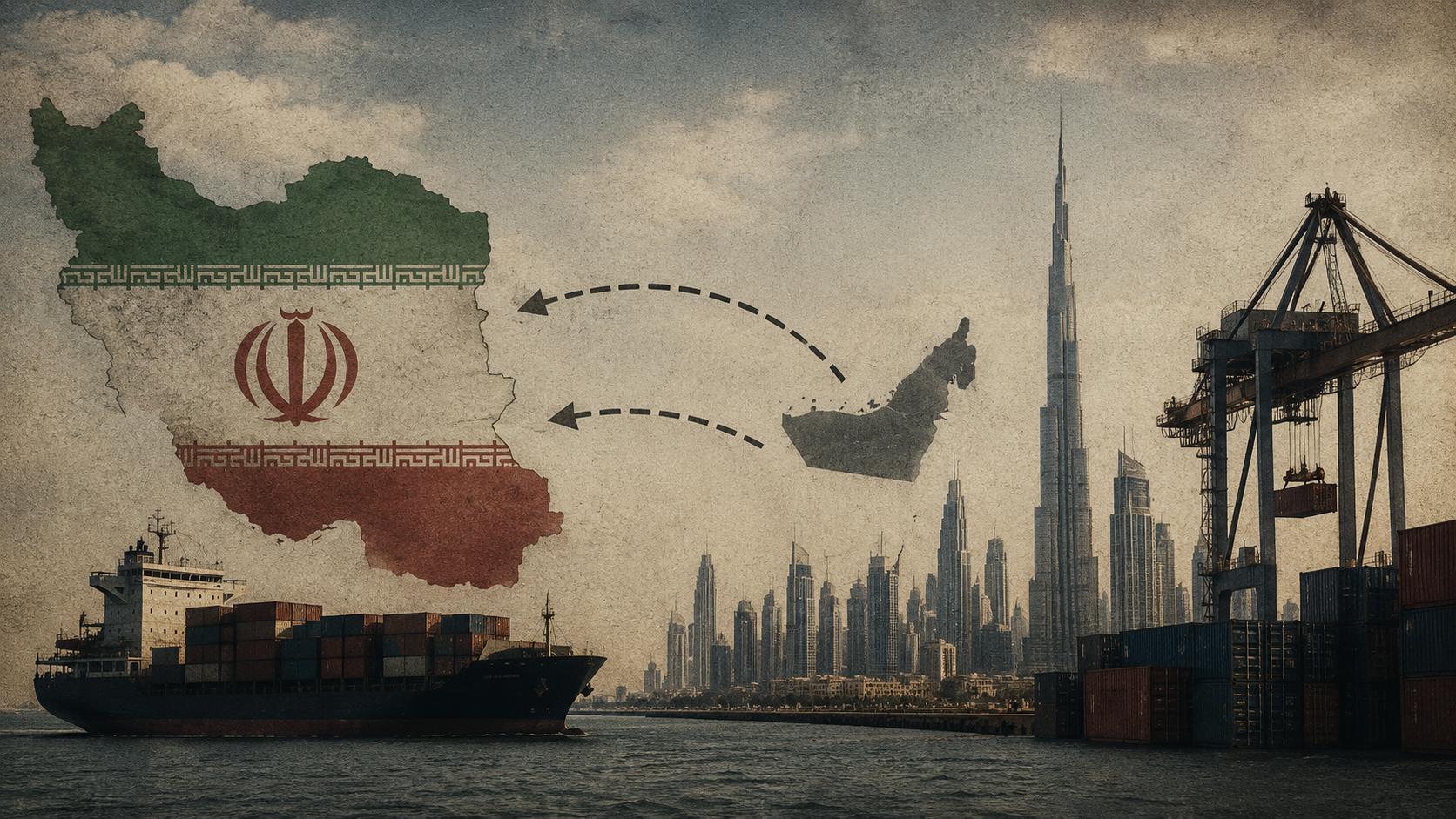
The minute regional tensions start to escalate in the ongoing U.S.-Iran conflict, the narrative that emerges from Tehran follows a well-known, unrelenting script: aggressive military posturing, drone and missile deployments in regional skies, and lofty proclamations of an anti-Western "Resistance Economy.” However, a completely different commercial reality emerges as soon as regional tensions ease. Officials at Iran’s Trade Promotion Organization (TPO) hurry to declare the priority clearance of thousands of Iranian cargo containers stuck in Dubai’s Jebel Ali Port instead of continuing their isolation narrative or promoting alternate trade networks. Simultaneously, Iranian aviation authorities prioritize air transit to the United Arab Emirates above all other foreign routes and work via diplomatic channels to quickly resume direct commercial flights between Tehran, Shiraz and Dubai.
This immediate pivot back to Emirati ports and airspace exposes Tehran’s strategic paradox. Iran’s domestic economy is still dependent on the United Arab Emirates’ superior logistics, deep-water port capacity and financial stability even at times when Iran uses asymmetric military threats to project power throughout the region. Moreover, despite Tehran’s overused rhetoric highlighting economic independence, Iran’s private and state trade companies are unable to supply domestic markets without access to the UAE’s commercial network.
Tehran may jeopardize regional security, but it cannot afford to cut off the Emirati lifelines that sustain its own economy.
This exact paradox marks a severe, unspoken restriction on Tehran’s geopolitical position.
Jebel Ali as the indispensable hub
DP World’s main deepwater facility in Dubai, the Port of Jebel Ali, is the center of Iran’s economic reliance. Although policy makers in Iran often emphasize their economic sovereignty narrative, actual trade data shows a completely different angle of things. With well over $20 billion in re-exported electronics, heavy industrial equipment, auto parts, and basic agricultural commodities each year, the United Arab Emirates consistently ranks as Iran’s top source of non-oil imports. The Port of Jebal Ali is more than just an option for Iranian state agencies and private merchants; it is the main link between Iran and global supply networks. Global manufacturers transport their products to Dubai first since major international shipping lines sometimes prohibit direct container landings to Iranian ports because of compliance issues and insurance obligations. Cargo is cleared, consolidated, and reshipped to ports like Bandar Abbas by local trading houses.
Tehran's margin of error is very small, as seen by the quick implications of any disturbance along this corridor.
Thousands of supply containers pile up at Jebel Ali's ports whenever shipping routes or customs clearances between Dubai and Tehran are blocked, causing rapid price increases and inventory shortages throughout Iranian domestic markets within days.
This operational reality draws attention to an indisputable fact: Iran's own outdated port infrastructure just cannot match the Port of Jebel Ali's size, automated cargo handling speed, and deepwater berth capacity. Iran's manufacturing and retail industries depend on the steady, effective flow of goods re-exported through the United Arab Emirates to stay open, regardless of political unrest.
Iran’s Plan B
Officials in Tehran have frequently advocated for a "Eurasian Pivot," a plan to replace Gulf shipping routes with overland transit corridors through Russia and Central Asia or eastward through Pakistan, in response to maritime vulnerabilities and external sanctions. Beneath the bold declarations, however, is a constant reality: these overland alternatives are unable to compete with marine commerce based in the United Arab Emirates due to serious structural impediments, high operating costs, and ongoing security issues.
The long-promoted International North–South Transport Corridor (INSTC), the northern cornerstone of this strategy, is still severely hampered by inadequate infrastructure within Iran.
Target completion dates for the 160-kilometer Rasht–Astara railway connection, which is crucial for directly linking Iran's rail infrastructure to Azerbaijan and Russia, have been continually pushed into the future due to years of finance disagreements and execution delays. The speed and cost benefits that rail transport is supposed to provide are eliminated when cargo traveling along the western INSTC route must go through expensive, time-consuming offloading and transfer between trains, trucks, and Caspian Sea vessels in the absence of a continuous rail link.
Alternatives that go overland via Pakistan have similarly difficult challenges. For specialized overland shipments, emergency measures such as transshipment corridors through border crossings at Taftan and Gabd-Rimdan provide temporary relief, but structural friction severely restricts the route. Because militants frequently target highways and railroad lines in Balochistan, armed security escorts are required when traveling through unstable territory. Furthermore, ongoing settlement conflicts and delays at customs are caused by the lack of operational banking routes between Tehran and nearby financial institutions. Above all, overland logistics are severely limited by size. Thousands of long-haul semi-trucks or freight railcars' worth of cargo may be carried by a single contemporary container ship that calls at Jebel Ali.
Direct short-sea marine freight across the Gulf is far less expensive per container than transporting goods across thousands of kilometers of rugged, dangerous overland terrain.
Tehran's Eurasian pivot will continue to be an unstable substitute for the deepwater capacity of Emirati logistical centers as long as Iran's overland transit networks are confronted by missing rail connectivity, expensive freight tariffs, and security threats.
Currency Anchor
Iran's dependence on the United Arab Emirates is largely dependent on monetary policy, which goes beyond logistics and port capability. The Iranian Rial's value has been significantly damaged by decades of persistent inflation, international sanctions, and poor internal economic management. Iranian traders need a reliable, liquid means of exchange in order to import manufactured products, food staples, and capital equipment from foreign markets. The UAE Dirham (AED) dominates that position and has become the preferred settlement currency for Iranian state entities and individual entrepreneurs in terms of regional cross-border trade. High-level Iranian trade delegations have regularly sought formal arrangements with Emirati authorities to support dirham-denominated clearing procedures, realizing that their domestic economy cannot function without access to a reliable regional currency anchor. This currency reliance is heavily dependent on Dubai’s established commercial ecosystem.
The UAE’s private trade houses, licensed exchange networks, and commercial clearing firms provide Iranian merchants with the deep foreign exchange liquidity they require to price contracts, hedge against Rial depreciation, and settle international accounts.
Tehran’s attempts to enforce the use of the Rial or organise direct local currency barter swaps with alternative trade partners have often failed owing to the secondary currencies’ severe volatility and lack of liquidity.
Furthermore, the UAE's tight adherence to global anti-money laundering frameworks and international regulatory norms demonstrates the unequal character of this financial relationship. While Iranian commercial actors rely on Emirati financial infrastructure for liquidity, the UAE maintains full institutional sovereignty over its banking regulations and free-zone environments. Tehran's internal economic stability is therefore inextricably linked to a foreign financial system that functions completely outside of its authority, leaving Iranian commercial life dependent on the stability and strength of the UAE Dirham.
Hormuz Paradox
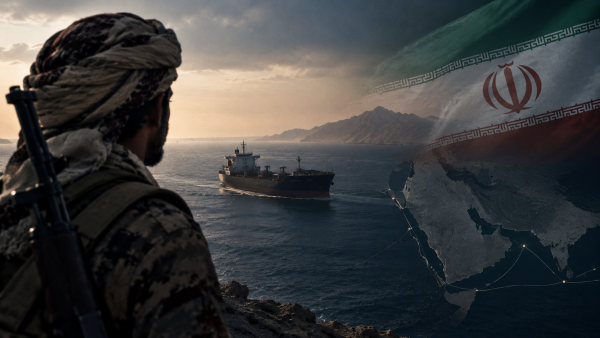
The narrow waters of the Strait of Hormuz highlight Tehran's fundamental paradoxical regional posture. When regional tensions rise, Iran's official language often uses threats to restrict or impede marine transport via the chokepoint as the ultimate geopolitical lever. However, in fact, this technique acts as an economic boomerang, placing an immediate, self-inflicted penalty on Iran's internal supply lines. When marine security in the Gulf deteriorates, international insurers promptly designate the waterway as a high-risk operating zone. War-risk shipping insurance premiums, which typically are 0.25% of the vessel's hull value, often rise to between 3% and 10% every transit during times of high tension. For a single contemporary $100 million container vessel or oil tanker, the surge raises insurance prices from around $250,000 to anywhere between $3 million and $10 million every journey.
Because Iran relies so heavily on feeder vessels transiting regional re-export centers such as Jebel Ali for basic capital equipment, raw materials, and consumer imports, these multi-million-dollar surcharges remain in place. Shipowners pass on the higher taxes to freight forwarders and charterers, who then pass it on to the landing price of products arriving in Iranian ports such as Bandar Abbas.
Rather than coercing foreign adversaries, Tehran's maritime brinkmanship directly causes internal inflation and supply constraints inside its own economy. Furthermore, frequent threats to maritime chokepoints encourage surrounding governments to hasten permanent structural bypasses, reducing Tehran's long-term influence.
The UAE has led this proactive shift, doubling the capacity of its Habshan-Fujairah (ADCOP) pipeline to transport crude directly to the Gulf of Oman and collaborating with DP World to expand east-coast container terminal capacity in Fujairah, which is located outside the Strait. While the UAE develops resilient multi-modal networks that completely bypass maritime chokepoints, Iran remains trapped within the very chokepoint it threatens to close.
Ultimately, Tehran's foreign policy is hampered by a basic structural mismatch: its military posture consistently undermines the same regional order, maritime security, and commercial infrastructure that its domestic economy relies on for existence. While Iran's official rhetoric continues to emphasize ideological self-reliance, the "Resistance Economy," and an imminent move toward Eurasian trade routes, cold economic arithmetic tells a quite different tale. Iran's overland options, whether via the International North-South Transport Corridor's poor, underfunded rail linkages or unsafe transit routes via Pakistan, cannot compete with the UAE's massive capacity, deepwater efficiency, and rapid cash. Every time Tehran raises tensions in regional chokepoints such as the Strait of Hormuz, it causes acute self-harm by triggering large war-risk shipping insurance premiums, increasing supply delays, and stoking domestic inflation for its own inhabitants.
For foreign strategists and regional observers, the strategic message is clear: Tehran lacks a credible economic "Plan B." The UAE has established an irreplaceable benchmark of global trade connectivity thanks to the size of the Port of Jebel Ali, the monetary stability of the UAE Dirham, and forward-thinking bypass logistics in Fujairah. As long as Tehran prioritizes regional brinkmanship above institutional change and economic normalcy, it will be locked in a self-defeating cycle of threatening a regional commercial framework that serves as its ultimate economic lifeline.